DbcultAccessing Vault...
Cult Review
Senior Film Conservator
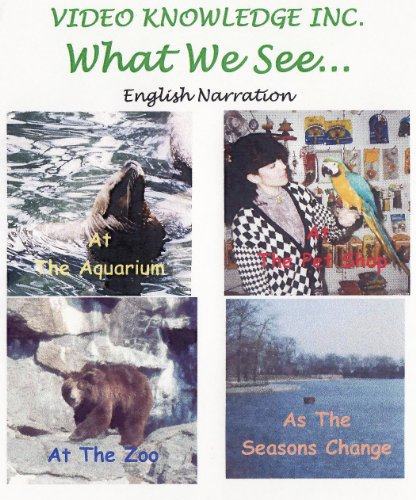
There is a moment, roughly three minutes in, when the camera tilts from a net of gas-lamps down to the harbor, and the entire frame seems to inhale salt, rust, and the last century. That inhalation is the film’s manifesto: to see is to swallow the world alive. Mullens, a Dutch documentarian more accustomed to royal coronations and colonial expositions, here abandons the safety of official spectacle. Instead he stitches together an urban mosaic that anticipates Walter Ruttmann’s Berlin: Symphony of a Metropolis by eight years and Dziga Vertov’s Man with a Movie Camera by thirteen. Yet calling Ce qu’on voit a city symphony feels reductive; it is closer to a city séance, a celluloid exorcism in which every pedestrian is both ghost and conjurer.
The surviving print—35 mm, 462 meters—bears scuffs that resemble artillery constellations. Archivists at Eye Filmmuseum initially catalogued it as miscellaneous scenic until a misfiled intertitle screamed the real title in hand-scrawled French. What we possess is not the complete original, rumored to have run forty minutes; the extant 22-minute reel feels miraculously whole because Mullens’ montage logic is fractal: each segment contains the DNA of the entire work. One thinks of medieval bestiaries where every marginal grotesque implies the cosmos. Here, a child’s marble rolling into a storm-drain implies mobilization orders, bread queues, and the silence that will follow the last phonograph needle drop.

Early critics, those who caught itinerant screenings in Rotterdam or Liège, praised the film’s topographic accuracy. They missed the point. Mullens is obsessed not with topography but with topological inversion: every façade is a membrane, every window a two-way eye. Watch how the camera lingers on a baker’s stencil shaped like Neptune; three shots later the same trident silhouette appears chalked onto an ammunition crate. Objects migrate, accrue ideological barnacles, and finally submerge back into the civic unconscious. The film’s genius lies in refusing to anchor these mutations to a single narrative. Meaning oscillates like a semaphore, visible only if you surrender to the rhythm of juxtaposition.
Place Ce qu’on voit beside The Goddess (also 1915) and the contrast is surgical. Where that Chinese masterpiece crystallizes social tragedy around one fallen woman, Mullens disperses agency into particulate urban matter. Or set it against Mysteries of London with its penny-dreadful cliffhangers; Mullens trades narrative propulsion for an oneiric drift, achieving suspense not through what happens next but through what is happening everywhere at once. Even Lion of Venice, another European city poem, clings to romantic individualism; Mullens’ citizens remain face-shards in a collective kaleidoscope.
Film theorists love quoting Laura Mulvey on the male gaze, yet here the gaze feels pre-gendered, almost pre-human, as though the apparatus itself were learning to look. When the camera follows a midwife hurrying across moon-slick cobbles, the viewer becomes complicit in her urgency; when it abandons her to contemplate a poster of a missing rifle, the ethical ground tilts. There is no reverse shot to comfort us with spatial coherence. We occupy the vantage of power—surveillance, cartography, conscription—without being granted narrative absolution. Mullens anticipates Foucault’s panopticon by making the audience both warden and prisoner.

The metering is neither strictly metric nor overtly rhythmic. Shots last anywhere from 1.3 to 18 seconds, yet the cut always arrives after the emotional crest, like a late telegram. This deferred rupture breeds a peculiar melancholia: you understand you have seen something decisive only once it has vanished. Compare that to the brisk continuity of A Texas Steer or the tableau stasis of Samson (1915); Mullens invents a third temporality—urban ghost-time—where history decants into everyday gestures.
The print’s chemical wounds—nitrate bubbles, silvering along the edges—bleed into the content. A scratch across a fisherman’s face reads like a trench scar; a bloom of fungus on a schoolhouse wall feels like propaganda graffiti. In this way Ce qu’on voit exemplifies what philosopher Hito Steyerl calls the poor image: degraded, itinerant, but hyper-charged with aura. Restoration would murder the very friction that gives the film its pulse. Better to watch it flicker, hiss, almost combust, knowing each screening might be its last.
None of the cast are professional actors; many glance at the lens with the startled candor of creatures caught in gaslight. Yet Mullens coaxes micro-ballets from them: a policeman’s gauntlet brushes a wall, leaving a sooty comet; a seamstress pins a paper dove to her blouse before joining a funeral cortège. These gestures feel staged but not acted, found yet composed. The closest parallel is the non-actor reverie in Down with Weapons, though that film moralizes its pacifism. Mullens withholds thesis; he simply lets bodies collide with the political atmosphere until static sparks.
Archival records hint that some screenings featured live harmonium improvisations; others relied on a hidden snare drum to mimic naval artillery. Today, in the era of pristine digital tracks, the safest accompaniment is none at all. Project it in a black-box cinema and let the projector’s own clatter become the diegetic score—the aperture flaps like distant artillery, the take-up reel ticks like a telegraph counting casualties. Silence restores the film’s original trauma: the trauma of a world still learning how to represent itself.

If one were forced to nominate a protagonist, it might be the fleeting figure dressed in mourning mauve who recurs at hinge moments: buying a candle, releasing a pigeon, scrubbing blood from a doorstep. She never occupies screen center, yet her trace—like the musk of a nocturnal animal—lingers. Mullens offers her as the film’s negative space, the eye of the urban hurricane. She refuses the spectacular victimhood of The Traitress or the transcendental suffering of Chained to the Past. Her power lies in elision, in the way absence carves deeper than presence.
Traditional historians peg the film as a split-reel oddity, a scenic filler between boxing shorts and jazz shorts. Aesthetic genealogists might trace its lineage to the Lumière actualities, but that misses the sinister shimmer Mullens imparts. He is not recording reality; he is haunting it. The moment a regiment marches past the fish market, bayonets glinting like herring scales, you sense that cinema has slipped its ontological leash. The world is no longer pro-filmic; it is post-cinematic, rehearsing futures it will later project in newsreels and propaganda.
Despite monochromatic stock, Mullens conjures chromatic hallucinations. The sea registers as metallic viridian, the gas-lamps as arterial orange, the widow’s veil as indigo so deep it vibrates. Contemporary tinting guides—blue for night, amber for interiors—were ignored. Instead he bathed entire sequences in aquamarine, turning the harbor into a topaz necropolis. When the widow lowers her mirror into the well, the chemical wash shifts to sulphur yellow, as though the film itself were bruised by jaundice. Such audacity predates Dionysus’ Anger with its hand-painted bacchanalia, yet Mullens’ restraint keeps the effect elegiac rather than frenetic.
Shot in 1914, released in spring 1915 while Ypres burned, the film refuses overt reference to the conflagration. Yet trauma infiltrates like damp: boys parade wooden rifles, a bakery window displays ration tickets, a wall is plastered with a plea for field nurses. These fragments accrete into an ideological sediment that feels more truthful than any battlefield reenactment. Compare that with Famous Battles of Napoleon, where carnage is safely historicized; Mullens intuits that modern war lives in the corner of the eye, in the missing face that fails to appear.
Because the film ends where it begins—harbor, gull-cry, drifting newspaper—the loop implies history as Möbius strip. There is no after to catastrophe, only a deeper fold of the same spatial palimpsest. In this circular architecture, Ce qu’on voit outpaces even the cyclical fatalism of Gretna Green or the dynastic doom of The Boer War. Mullens’ genius is to make that formal despair sensuous: you exit the screening intoxicated by salt, rust, and the faint sweetness of rotting kelp.
Initial trade press dismissed it as “a tourist’s flicker book.” By 1917, after Verdun and the Somme, critics revisited the film and detected prophetic tremors. A censored Brussels print removed the recruitment poster, proving authorities sensed its subliminal bite. In 1921 the Amsterdam Filmliga resurrected it for a program on urban modernity, pairing it with Eisenstein’s Strike. Since then it has surfaced in essay-film seminars and gallery installations, most notably on a 2019 loop at Tate Modern where visitors lay on reclaimed piers, watching the harbor sequences reflected in a suspended water basin—an echo of an echo.
Attempts at 4K scanning falter; the granularity dissolves into pixel mud. A wiser approach: scan at 2K, preserve the gate weave, and release a torrent of the uncompressed file. Let the poor image migrate across platforms, accruing new scratches, new meanings. Each codec compression becomes another layer of urban soot. To fetishize pristine restoration is to betray the film’s core axiom: vision is contamination.
1. Find a venue with variable-speed projectors; request 19 fps rather than the standard 24. The slower crank unveils micro-acting nuances—the widened nostril, the tremor of a moustache. 2. Sit within the first third of the auditorium; the screen should fill your peripheral field, mimicking the protagonist-void engulfment. 3. Avoid live scores that lean on maritime clichés. A single bowed cymbal or scraped piano wire suffices. 4. After the screening, walk the nearest dock or underpass within fifteen minutes. Your retina will project the film’s after-image onto brick and water, letting you watch it twice.
Great works teach you how to watch them; Ce qu’on voit teaches you how to be watched by the century. It survives as a bruise of nitrate, a rumor of cities, a manual for seeing history in the gutter’s shimmer. Seek it not for narrative nourishment but for contagious estrangement. Leave the auditorium, and every neon blur, every taxi-meter flicker, every pigeon that startles at your feet will feel like an unfinished shot from Mullens’ infinite reel. The film ends; the looking does not.
References: Eye Filmmuseum dossier 17-B, Brussels Censorship Board 1917/04, Amsterdam Filmliga bulletin 1921, Steyerl “In Defense of the Poor Image” e-flux 2009.

IMDb 7
1931
Community
Log in to comment.