DbcultAccessing Vault...
5.8/10
Senior Film Conservator
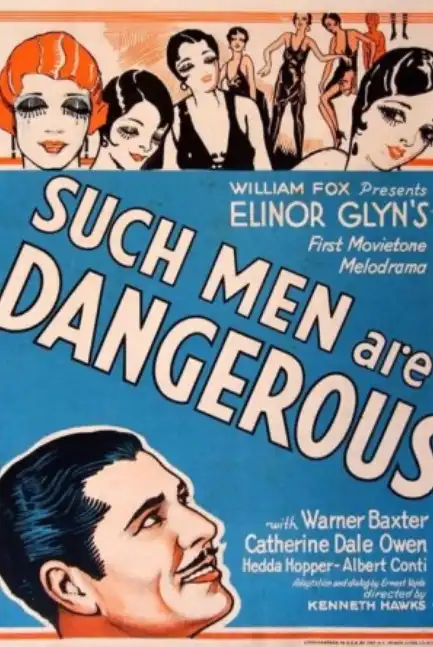
A definitive 5.8/10 rating for a film that redefined the boundaries of cult cinema. Such Men Are Dangerous remains a cornerstone of transgressive art.
Look, if you're not already into those early talkies, the kind where everyone feels a little stiff and the sound's a bit crackly, then Such Men Are Dangerous probably isn't for you. But for folks who dig a melodrama with a capital 'M' and don't mind a revenge plot that takes its sweet time setting up, there's some fun to be had here. Just don't go in expecting anything fast-paced or subtle. 🕰️
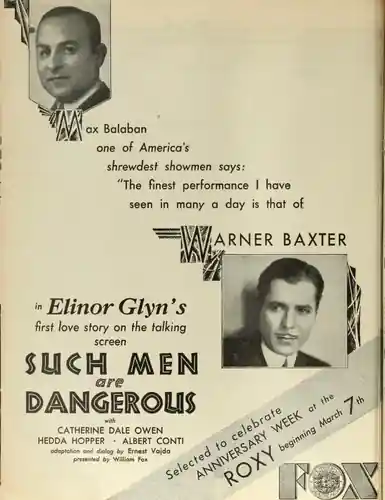
Warner Baxter plays Gordon Travis, an industrialist who gets left at the altar, essentially. His new wife, played by Catherine Dale Owen, takes off with another guy right on their wedding night. Talk about a rough start!
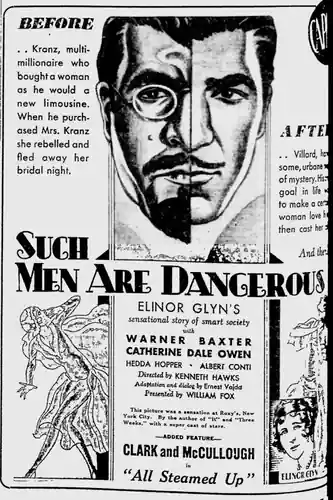
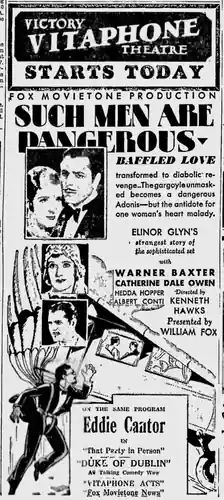
Travis, understandably, is crushed. But then he decides to fake his own death and come back as a completely different person, Dr. Edward Remington, to get even. It’s quite the commitment, if you think about it.
The change in Travis is pretty dramatic. He spends a year isolated, getting surgeries to look different, which, you know, for 1930, they really tried to sell it. Baxter plays the 'before' Travis as a bit stiff, almost shy. Then, as Remington, he's all slick and confident, a real smooth operator. It’s almost two different actors playing the same guy.
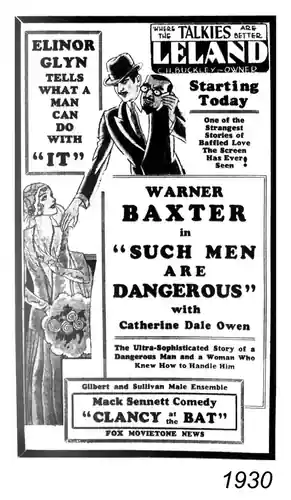
Catherine Dale Owen as the wife, Elinor, she's interesting. You get the feeling she's not just evil, but maybe just a bit flighty, easily swayed. Her initial rejection of Travis feels less like maliciousness and more like… a sudden change of heart. Or maybe just bad timing with another guy.
There’s this scene where Travis, as Remington, first encounters Elinor again. The way he watches her, almost with this cold curiosity, it's chilling. You can feel the weight of his plan in that moment. It's not just anger anymore; it's something more calculated, a bit scary, actually. His eyes really do a lot of work there.
And then there's Bela Lugosi! You blink, and you might miss him. He plays a doctor, a 'mad scientist' type, almost, who helps Travis with his transformation. He doesn't get a lot of screen time, but his presence, even in such a small role, adds this creepy little touch to the whole setup. You almost wish they'd let him go a bit wilder with it, but hey, it's not his movie.
The movie takes its sweet time building up the revenge scheme. There are long stretches where you're just watching Travis transform or Remington subtly work his way back into Elinor's life. It's not a thrill-a-minute kind of picture. More like a slow burn, but sometimes the 'burn' feels a little too slow, like the fire's running out of fuel. 🔥
One thing that really stuck with me: the way they used close-ups. There are moments where the camera just lingers on someone's face for what feels like ages. Sometimes it works, like when Baxter's trying to hide his true feelings. Other times, it just makes you wonder if the actor forgot their line or something. It feels very much of its era, you know?
It’s also interesting to see the societal norms of the time woven in. The idea of a man’s reputation being destroyed by being left at the altar, it feels so heavy. You can tell this was a big deal, not just a personal slight, but a public humiliation that justified such an extreme revenge.
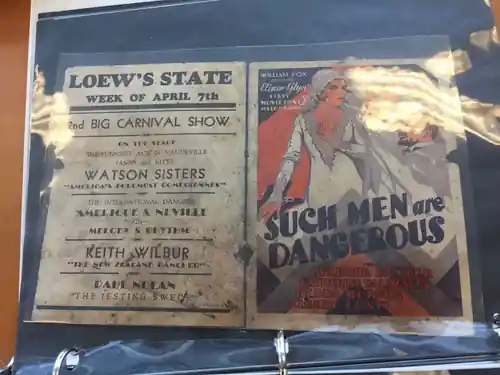
The supporting cast, they’re mostly there to react to Baxter’s character. Rolfe Sedan and Claud Allister pop up in various scenes, providing some light relief or just being confused bystanders. They do their parts well enough, but the movie is really all about Travis/Remington.
Does the revenge feel satisfying? Well, that's complicated. Without giving too much away, the ending tries to wrap things up neatly, but you're left with this feeling that maybe everyone lost something important along the way. It’s not a clean victory for anyone, really.
It's a curious little film. Not a masterpiece, not even a forgotten gem, maybe. But it shows how much they were already playing with psychological drama and character transformation back in the early sound days. It’s a good peek into that era of filmmaking. The whole thing feels a bit like a stage play sometimes, with people moving around very deliberately. But then there are these flashes of real cinema, where the expressions or a well-placed shadow just hits you. It's an old one, but it tries its best. And sometimes, that's enough. 🎬
IMDb 5.2
1935
Community
Log in to comment.