DbcultAccessing Vault...
Cult Review
Senior Film Conservator

Ah, the silent era! A time when the visual gag reigned supreme, when exaggerated expressions conveyed a universe of emotion, and when the sheer ingenuity of physical comedy could bring down a house without a single spoken word. In this rich tapestry of early cinema, a peculiar little gem known as Sweet Papa, released in 1924, carves out its own idiosyncratic niche. It's a film that, at first glance, appears to be a straightforward domestic farce, yet it quickly spirals into an anarchic ballet of escalating absurdity, a testament to the era's boundless creativity and its willingness to embrace the utterly outlandish.
The premise is deceptively simple, a familiar trope in the annals of comedic storytelling: the sanctity of the marital home invaded by unwelcome relatives. But Sweet Papa takes this well-worn path and injects it with a potent dose of kinetic energy and surrealism. Our protagonist, the beleaguered Mr. Newlywed, finds his domestic tranquility not merely disturbed, but utterly obliterated by the arrival of his wife's extended family. This isn't just a casual visit; it's a full-blown occupation, initially promised as a 'short visit of five or six months'—a comedic exaggeration that instantly sets the tone for the delightful agony to come. The film masterfully establishes Mr. Newlywed's plight, painting him as the quintessential everyman, trapped in a maelstrom of familial obligation and escalating chaos.
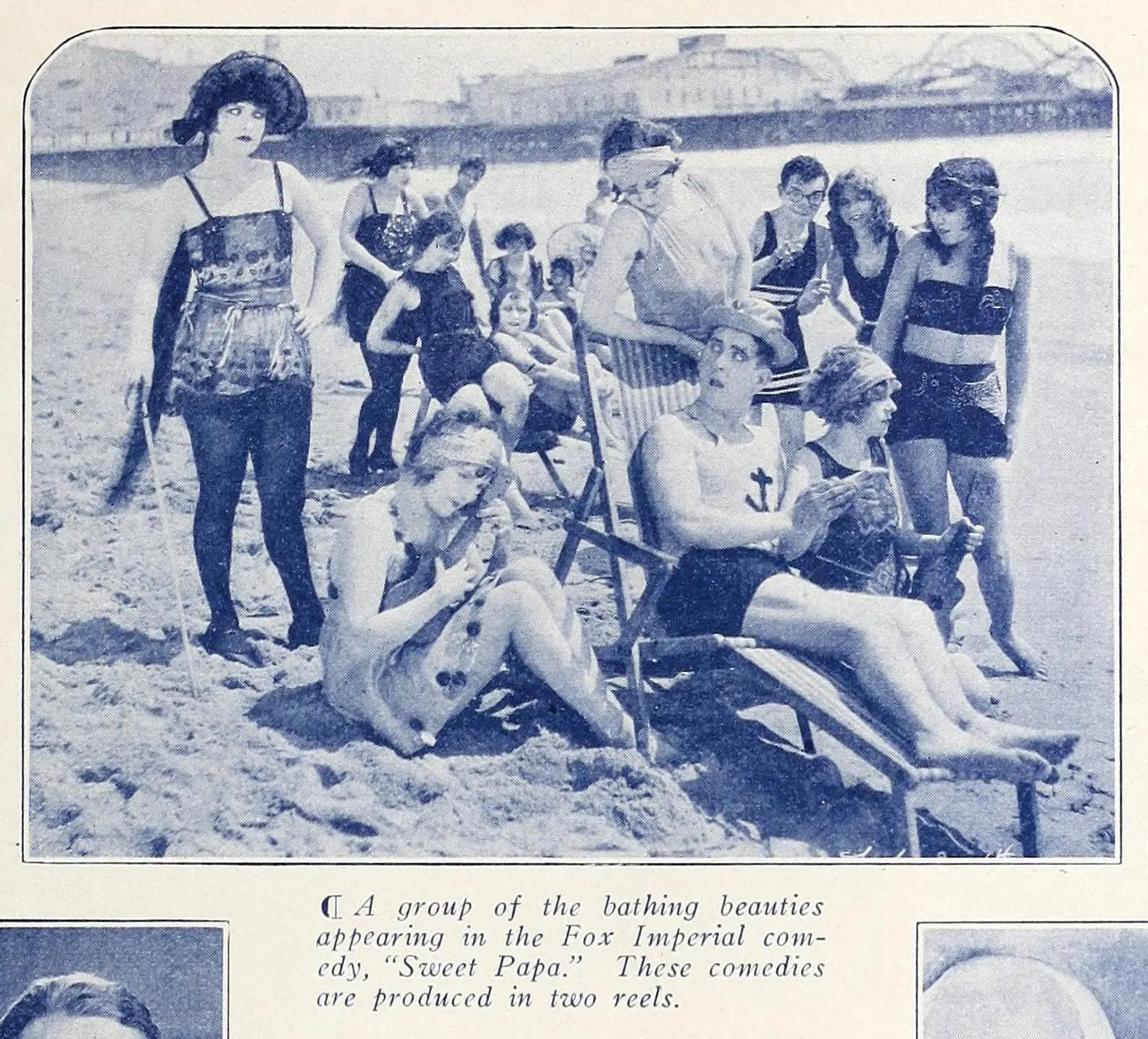
The family itself is a rogues' gallery of comedic archetypes. There's the pugnacious father-in-law, a figure of perpetual menace whose very presence seems to threaten physical altercation at every turn. His stern countenance and imposing physique are used to brilliant effect, creating a palpable sense of intimidation that Mr. Newlywed struggles, often comically, to navigate. Then there are the nephews, not merely mischievous, but actively destructive, their innocent-looking faces belying a talent for domestic demolition. Their antics provide a constant undercurrent of low-level pandemonium, chipping away at Mr. Newlywed's sanity piece by piece. This setup, a gradual erosion of personal space and peace, is a classic comedic device, but Sweet Papa pushes it to its limits, piling on indignity after indignity.
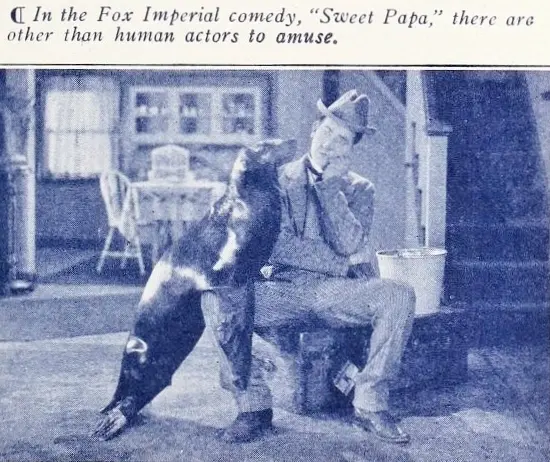
However, the true stroke of genius, the element that elevates Sweet Papa beyond mere domestic farce, is the introduction of the uninvited cousin. A vaudeville performer by trade, this character embodies the free-spirited, often eccentric nature of the entertainment world of the 1920s. And with him, he brings the film's undeniable star: Freddie the Seal. The visual of a performing seal, carried in a portmanteau, suddenly unleashed into a suburban home, is pure, unadulterated silent comedy gold. It's an image that defies logic, embraces the absurd, and instantly signals to the audience that they are in for a ride where the ordinary rules of reality have been gleefully suspended. Freddie's presence isn't just a novelty; it's a catalyst, adding an unpredictable, animalistic element to the already simmering pot of familial discord.
The film’s comedic engine truly ignites with the ingenious deployment of a disappearing bed. This isn't just any piece of furniture; it's a mechanical marvel, designed to be pushed out of sight into a rubbish shed. This prop becomes the ultimate tool for concealment, escape, and, inevitably, misunderstanding. Its utility as a hiding place, a means to temporarily alleviate the overcrowding, ironically becomes the very mechanism for accelerating the chaos. The disappearing bed functions as a physical manifestation of Mr. Newlywed's desperate desire for respite, only to betray him at every turn. It's a brilliant example of how a simple, well-conceived prop can drive an entire narrative, becoming almost a character in itself, dictating the movements and predicaments of the human players.
The performances in Sweet Papa, particularly those of Sidney Smith and James Parrott, are a masterclass in silent film acting. Smith, likely as Mr. Newlywed, embodies the growing exasperation with a nuanced blend of physical comedy and expressive facial work. His journey from mild annoyance to complete despair is genuinely engaging, and his reactions to the escalating madness are priceless. Parrott, whose comedic timing was often impeccable in his various roles, contributes to the ensemble's frenetic energy, whether as the cousin or another member of the chaotic household. Their ability to convey complex emotional states and execute precise physical gags without dialogue is a testament to their craft. And, of course, Freddie the Seal, while perhaps not delivering deep emotional resonance, is an absolute scene-stealer, his natural movements and trained tricks integrated seamlessly into the unfolding pandemonium. The sheer novelty of a performing animal interacting with human actors in such close quarters provides a unique layer of charm and unpredictability that few other films of the period could boast.
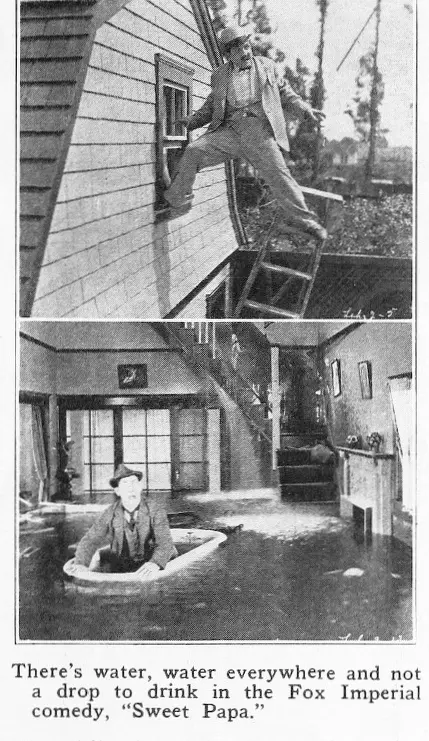
In terms of comedic construction, Sweet Papa adheres to the classic principles of slapstick, yet executes them with remarkable finesse. The gags build upon one another, each incident compounding the previous one, creating a relentless snowball effect of comedic misfortune. The pacing is brisk, a necessity for silent comedies to maintain audience engagement, and the film never lingers too long on any single predicament before introducing a new layer of complication. This relentless forward momentum is crucial for a film that relies so heavily on physical action and reaction. The film doesn't waste time on exposition; it throws the audience directly into the fray, allowing the visual storytelling to carry the narrative load.
Comparing Sweet Papa to other silent comedies of the era offers some illuminating insights. While it shares the domestic chaos theme with films like Squabs and Squabbles, Sweet Papa distinguishes itself with the sheer audacity of its central conceit – the performing seal. This element pushes it beyond conventional domestic strife into the realm of the truly bizarre, giving it a unique flavour. One might also draw parallels to the physical inventiveness seen in films like The Pinch Hitter, where characters find themselves in increasingly untenable situations, relying on quick wit and even quicker physical maneuvers to navigate their predicaments. The use of a dynamic prop like the disappearing bed also echoes the clever set pieces found in many Keaton or Chaplin shorts, where inanimate objects become integral to the comedic ballet. However, Sweet Papa truly shines in its commitment to the escalating absurdity, culminating in a finale that leaves no stone—or family member—unturned in its pursuit of comedic pandemonium.
The climax of Sweet Papa is precisely what one would hope for in a film of this ilk: a wild comic mix-up. All the disparate threads of conflict and character converge in a glorious, chaotic tangle. The disappearing bed, the overbearing relatives, the destructive nephews, the vaudeville cousin, and, of course, Freddie the Seal – all collide in a crescendo of mistaken identities, frantic chases, and physical slapstick. It’s a beautifully choreographed mess, a testament to the director's ability to manage multiple moving parts and ensure that each contributes to the overall hilarity. This kind of unbridled, all-encompassing chaos is a hallmark of the finest silent comedies, where the sheer energy and inventiveness of the gags compensate for the lack of dialogue. The film doesn't just end; it explodes, leaving the audience with a lingering sense of joyous mayhem.
The lasting appeal of Sweet Papa lies in its timeless humor and its unique blend of the familiar with the utterly unexpected. While the specific social anxieties of 1924 might have receded, the universal exasperation of dealing with intrusive family members remains as potent as ever. The addition of a performing seal, however, transcends any temporal boundaries, injecting a dose of pure, unadulterated whimsy that is eternally amusing. It’s a film that reminds us of the power of visual storytelling, of the sheer artistry involved in creating laughter through movement and expression alone. In an era where novelty acts were a staple of entertainment, Sweet Papa stands as a charming relic, a vibrant snapshot of a time when anything was possible on the silver screen, especially if it involved a seal in a suitcase.
In conclusion, Sweet Papa is more than just a historical curiosity; it’s a robust piece of silent comedy that holds its own against many of its more celebrated contemporaries. Its commitment to escalating the ridiculous, its memorable characters, and its truly unique animal star ensure its place as a delightful, if perhaps lesser-known, classic. For anyone with an appreciation for the foundational elements of cinematic comedy, for the intricate ballet of slapstick, or simply for a good, hearty laugh, Sweet Papa offers a wonderfully entertaining escape into a world where domestic bliss is a fragile illusion, and a performing seal is just another member of the family. It's a testament to the enduring power of silent film to evoke genuine amusement and a reminder that sometimes, the most unexpected elements yield the greatest comedic dividends. This film doesn't just entertain; it reminds us of the sheer, unbridled joy that early cinema could deliver with nothing but a camera, talented performers, and a healthy dose of imagination. It's a sweet, sweet slice of cinematic history that deserves to be rediscovered and cherished.
IMDb —
1926
Community
Log in to comment.