DbcultAccessing Vault...
5/10
Senior Film Conservator
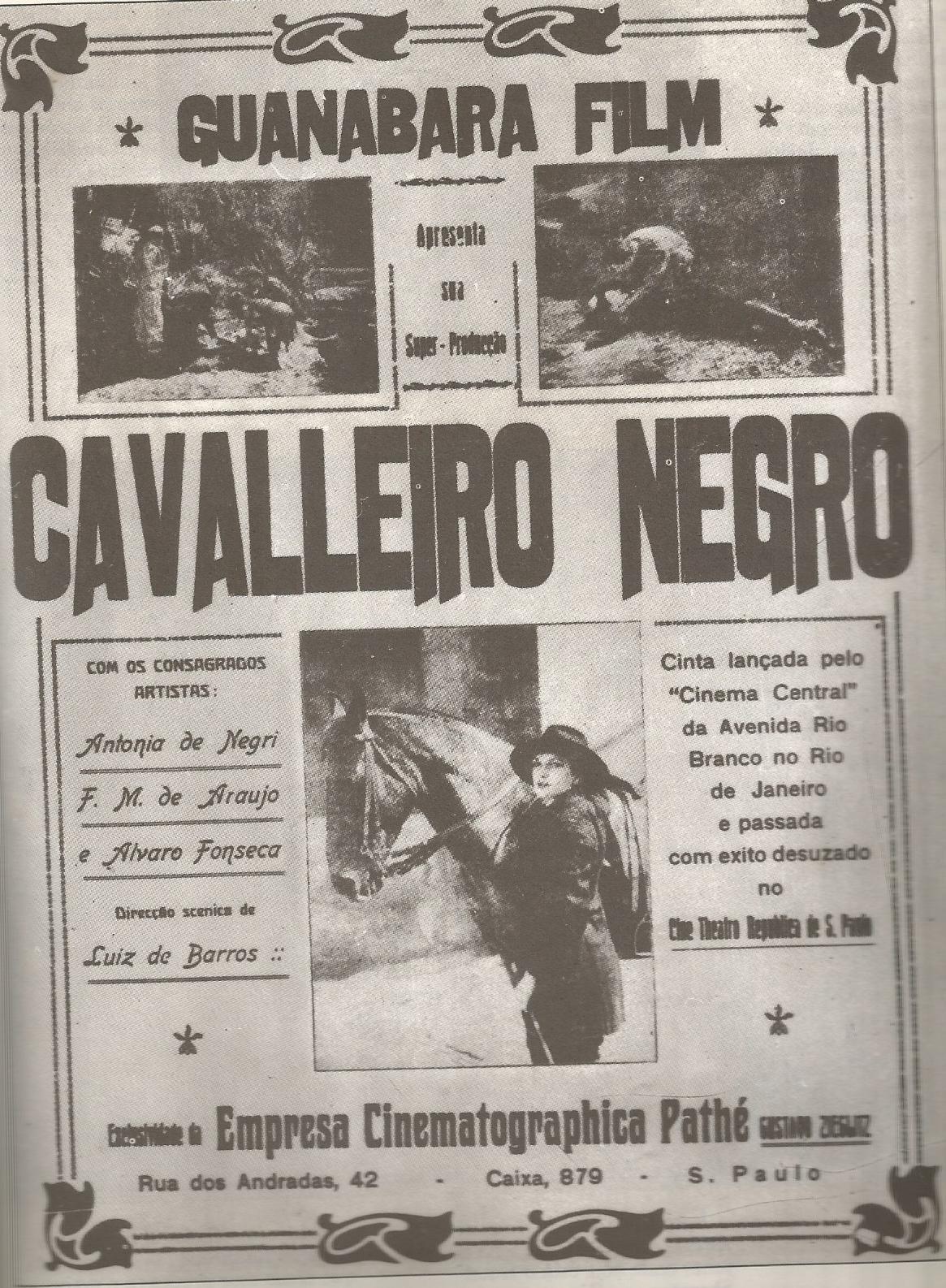
A definitive 5/10 rating for a film that redefined the boundaries of cult cinema. Cavaleiro Negro remains a cornerstone of transgressive art.
In the annals of early cinema, certain films, often through the cruel caprice of time and preservation, fade into the periphery, becoming whispers rather than roars. Luiz de Barros’s Cavaleiro Negro, a cinematic artifact from a bygone era, stands as one such compelling, albeit often overlooked, testament to the nascent artistry of Brazilian filmmaking. To merely label it a 'silent film' would be to diminish its profound narrative ambition and the sheer visual poetry it weaves. It is, rather, a vibrant tapestry of human drama, rendered with an intensity that belies its lack of audible dialogue, compelling audiences through the sheer force of its visual storytelling and the expressive power of its cast.
De Barros, a prolific pioneer in Brazilian cinema, demonstrates a remarkable command of the medium, crafting a tale that resonates with universal themes of justice, betrayal, and the enduring spirit of honor. The film's central conceit, that of a noble knight, Sir Rodrigo (portrayed with brooding intensity by Alvaro Fonseca), unjustly stripped of his title and forced to assume the mantle of a masked avenger, the titular Cavaleiro Negro, is archetypal yet rendered with a nuanced complexity. Fonseca’s performance, particularly in conveying the internal conflict of a man torn between his oath and his need for vengeance, is nothing short of masterful. His silent agony, his determined resolve, and the subtle shifts in his demeanor beneath the 'black knight' persona are communicated with an eloquence that transcends the need for words, relying instead on the language of the body and the soul.
The plot, while seemingly straightforward in its premise, unfolds with a serpentine elegance. Baron Valerius, brought to life with chilling malevolence by Augusto Aníbal, is no mere mustache-twirling villain; he embodies a deeper, more insidious form of corruption, one that preys upon the very foundations of feudal society. His machinations against Rodrigo, driven by a rapacious hunger for power and a perverse desire for Lady Isabella (Antônia Denegri), are meticulously orchestrated, creating a pervasive atmosphere of dread and injustice. Aníbal’s portrayal is a study in calculated villainy, his every gesture and expression dripping with deceit, making him a truly formidable antagonist.
Lady Isabella, in Denegri’s capable hands, is far from a passive damsel in distress. Her resilience, her unwavering fidelity to Rodrigo, and her spirited defiance of Valerius’s advances paint a portrait of a woman of immense inner strength. Her emotional journey, marked by despair, hope, and a quiet determination, provides a crucial counterpoint to Rodrigo's more overt acts of heroism. The silent film format, paradoxically, often amplified the expressive capabilities of actors, forcing them to convey profound emotion through subtle facial cues and grand, operatic gestures, a challenge Denegri rises to with captivating grace. One might draw a parallel to the emotional intensity seen in films like Where Love Leads, where protagonists similarly navigate treacherous emotional landscapes.
What truly elevates Cavaleiro Negro beyond a mere period drama is Luiz de Barros's visionary direction. His understanding of visual rhythm and composition is evident throughout. The use of stark contrasts – the opulence of Valerius’s court against the squalor of the oppressed peasantry, the shadowy anonymity of the Cavaleiro Negro against the blinding light of truth – creates a powerful visual lexicon. The cinematography, though limited by the technology of the era, is remarkably evocative, employing dynamic camera movements and thoughtful shot selections to heighten suspense and emotional impact. The duels and confrontations, while perhaps lacking the kineticism of modern action sequences, are choreographed with a theatrical flair that is both thrilling and dramatically resonant. The film's meticulous set design and costuming, overseen by talents like Alfredo Marzullo and Francisco Pezzi, transport the viewer convincingly to its medieval setting, creating an immersive world that feels both fantastical and grounded.
The pacing, a crucial element in silent cinema, is expertly managed. De Barros understood the delicate balance between allowing moments of quiet contemplation to resonate and propelling the narrative forward with urgency. There are sequences of breath-holding tension, such as the Cavaleiro Negro's clandestine raids, juxtaposed with moments of tender romance and poignant reflection. This ebb and flow keeps the audience captivated, a testament to the director's skill in manipulating emotional registers without the aid of spoken dialogue. One can observe a similar narrative dexterity in films like Dangerous Hours, which also masterfully built suspense through visual cues and character reactions.
Beyond the central trio, the supporting cast members, including Manuel F. Araujo in a pivotal role, contribute significantly to the film’s rich texture. Each performance, no matter how brief, feels purposeful, adding layers of authenticity to the world de Barros has constructed. The film delves into complex themes, exploring the nature of justice – whether it can truly be achieved through conventional means or if it sometimes necessitates the emergence of a vigilante figure. It questions the very fabric of societal power structures, highlighting how easily corruption can fester when unchecked. The Cavaleiro Negro, therefore, becomes more than just a character; he is a symbol of resistance, an embodiment of the people’s unspoken yearning for fairness and retribution.
The film also subtly examines the concept of identity. Rodrigo, stripped of his name and station, must forge a new identity, one that allows him to act outside the constraints of law to uphold a higher moral code. This transformation, from noble knight to shadowy avenger, is a powerful exploration of how circumstances can redefine an individual, forcing them to confront their core beliefs. This thematic resonance can be seen in other character-driven dramas of the era, such as Irrende Seelen or Gefangene Seele, which similarly grappled with individuals navigating profound personal crises and altered identities.
The rediscovery and restoration of Cavaleiro Negro, even in fragmented form, would be a monumental achievement for cinematic preservation. It offers invaluable insights into the early development of Brazilian cinema, showcasing a sophisticated approach to storytelling and character development that predates many of the more widely recognized international works of the period. Luiz de Barros's contribution to the art form, often overshadowed by European and American productions, deserves a closer, more appreciative examination. His ability to craft such a compelling and visually rich narrative without the crutch of synchronized sound is a testament to his innate understanding of the visual medium.
Comparing it to contemporaries, one can see elements of swashbuckling adventure akin to Douglas Fairbanks's early work, yet infused with a distinctly European dramatic sensibility. While not possessing the slapstick genius of One Week, it shares a meticulous attention to detail and a commitment to its chosen genre. The film’s dramatic arc, culminating in a grand revelation and the triumph of good over evil, echoes the satisfying conclusions found in works like The Tempting of Justice, but with a unique cultural flavor that sets it apart.
The film's impact, had it been more widely distributed and preserved, could have significantly shaped perceptions of early non-Western cinema. It demonstrates that compelling storytelling and sophisticated cinematic techniques were not exclusive to Hollywood or the burgeoning European studios. Instead, artists like de Barros were independently pushing the boundaries of the medium, creating works of enduring artistic merit. The film’s exploration of honor and justice, its romantic undertones, and its thrilling action sequences combine to create a deeply satisfying cinematic experience, even when viewed through the lens of modern sensibilities.
In an era where digital restoration breathes new life into forgotten classics, Cavaleiro Negro stands as a prime candidate for a comprehensive re-evaluation. Its intricate plot, compelling character arcs, and the visionary direction of Luiz de Barros deserve to be celebrated by a wider audience. The performances, particularly Fonseca’s stoic heroism and Aníbal’s chilling villainy, are powerful reminders of the raw talent that defined the silent era. It is a film that speaks volumes without uttering a single word, relying on the universal language of human emotion and visual spectacle. Much like the dramatic tension in The Night Hawk or the intricate character studies found in The Man and the Moment, Cavaleiro Negro offers a rich tapestry of human experience, making it a truly significant work in the panorama of world cinema.
The enduring appeal of stories about masked heroes, from Zorro to Batman, finds a compelling early cinematic expression in the figure of the Cavaleiro Negro. This film is more than just an adventure; it is a meditation on heroism, sacrifice, and the relentless pursuit of truth in a world shrouded in deceit. It challenges viewers to consider the moral ambiguities inherent in seeking justice outside the established order, a theme that remains profoundly relevant today. The film’s ability to evoke such complex ideas through purely visual means is a testament to its artistic prowess and the enduring genius of Luiz de Barros. Its narrative echoes the classical struggles of good versus evil, much like The Marble Heart, but with a unique, vibrant energy that is distinctly its own. It is a film that, once seen, imprints itself upon the viewer's imagination, a silent epic that continues to resonate long after the final frame.
Ultimately, Cavaleiro Negro serves as a potent reminder of the wealth of cinematic history awaiting rediscovery. It is a film that demands to be seen, studied, and celebrated, not just as an artifact of Brazilian cinema, but as a significant contribution to the global lexicon of early film. Its narrative ambition, its visual flair, and the profound emotional depth conveyed by its cast make it a work of art that transcends its historical context, offering a timeless tale of courage, love, and the unyielding fight for justice against overwhelming odds. The film's intricate plotting, reminiscent of the twists and turns in False Evidence, keeps the audience engaged, making every moment count. It’s a compelling argument for the enduring power of silent cinema to captivate and provoke thought, proving that a lack of sound does not equate to a lack of voice. Indeed, Cavaleiro Negro speaks volumes.
IMDb 5.5
1935
Community
Log in to comment.