DbcultAccessing Vault...
Cult Review
Senior Film Conservator
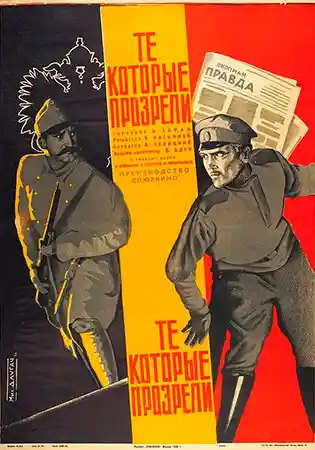
You should probably only sit down for this if you have a high tolerance for grainy black-and-white footage and people staring intensely at things off-camera. If you are looking for a plot that moves fast, stay far away from this one. It is a movie for people who like to look at the texture of old film and wonder what the actors were actually thinking between takes.
Is it worth watching today? Only if you are a bit of a film nerd or someone who finds 1920s history fascinating. Most people will probably hate it because it feels like a very long, very quiet history lesson with no music unless you provide your own. But for a specific kind of person, there is something hypnotic about it.
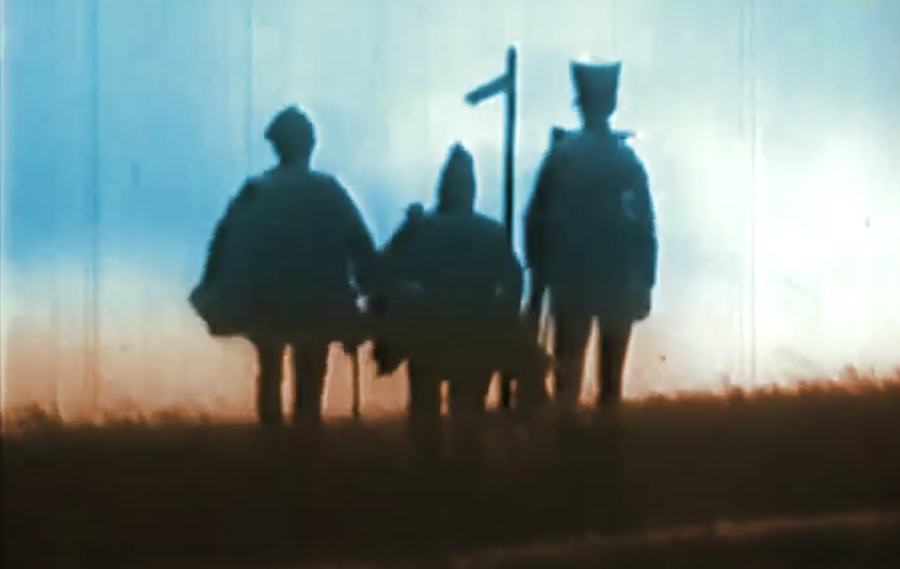
The story is basically about people 'seeing the light' regarding the revolution. It is agitprop, pure and simple. But it does not feel like a loud shouty speech; it feels more like a slow crawl through the mud and the mountains. You get these characters like the ones played by Antonin Pankryshev who just look tired. Everyone in this movie looks like they haven't slept in three years.
There is a lot of dust. I noticed that in almost every outdoor shot, there is either smoke or dust or just a general haze that makes everything feel heavy. It reminds me a bit of the atmosphere in Yeyo put, where the environment feels like it is trying to swallow the characters whole. The cinematography isn't 'beautiful' in a clean way, but it has this gritty, tactile feeling that modern movies can't really replicate.
One scene that stuck with me involves a man just sitting by a wall. He doesn't move for what feels like a full minute. He is just thinking, I guess? Or maybe the director forgot to yell cut. But the way the light hits his forehead makes him look like a statue. It’s weirdly effective even if it’s technically boring.
The writing team included Nathan Zarkhi, who was a pretty big deal back then. You can tell there is a bit more 'brain' behind the scenes than your average cheap silent flick. It isn't just 'good guys vs bad guys.' There is a sense of internal struggle, even if it is mostly expressed through heavy sighing and dramatic hand gestures.
Ivan Klyukvin has a face that was made for silent cinema. His eyes are huge and they catch the light in a way that tells you exactly what he is feeling without needing a single word. There is a moment where he looks at a piece of paper—I think it was a pamphlet or a letter—and the way his expression shifts from confusion to a sort of grim realization is the highlight of the whole film. It’s better than any of the action scenes.
Speaking of action, there isn't much. When things do happen, it feels sudden and a bit clumsy. People fall over in that classic silent movie way where it looks like they are over-acting their own deaths. It’s a little funny, even though I’m sure it wasn't meant to be at the time. It’s like the movie gets confused about whether it wants to be a serious drama or a physical spectacle.
I found myself thinking about The Common Cause while watching this. Both movies have that same earnest energy where they really, really want you to care about the collective struggle. But Te, kotorye prozreli feels more personal, somehow. It focuses on the individual faces more than the big crowds. It makes the politics feel a bit more human, even if the propaganda is still laid on pretty thick.
There is this one shot of a woman looking out over a valley that goes on for way too long. I think the editor might have been asleep. But in that extra ten seconds of silence, you start to notice the way the wind is moving her hair and the small tremor in her chin. It’s these small, accidental moments that make the movie worth sitting through. It’s not a masterpiece, but it’s a solid piece of history.
The movie doesn't really have a 'ending' so much as it just... stops. Like the filmmakers ran out of money or film stock. You’re left sitting there wondering if there was supposed to be another reel. But maybe that’s the point? Life goes on, the revolution continues, blah blah blah. It’s unsatisfying but also kind of honest in a weird way.
If you've seen other stuff from this era, like Frisco Sally Levy, you'll realize just how different the Soviet style was. There is no attempt to be 'cute' here. No slapstick. No romance that feels real. It’s all duty and awakening. It’s heavy stuff, but if you’re in the right mood, it hits the spot.
Don't expect a polished experience. The print is rough. The pacing is uneven. But the humanity in those old close-ups is still there, staring back at you from 1927. It’s a strange feeling, being looked at by people who have been dead for decades. That’s probably the best reason to watch it.
IMDb —
1918
Community
Log in to comment.