DbcultAccessing Vault...
6.6/10
Senior Film Conservator
A definitive 6.6/10 rating for a film that redefined the boundaries of cult cinema. Tischlein deck dich, Eselein streck dich, Knüppel aus dem Sack remains a cornerstone of transgressive art.
Tischlein deck dich, Eselein streck dich, Knüppel aus dem Sack (1922) is a relic of Weimar-era cinema that marries the grotesque charm of folk tales with the stark visual language of early silent film. Directed with a deft hand by Wilhelm Prager and Johannes Meyer, this German production distills the essence of fable into a narrative that is equal parts absurdist comedy and existential parable. The film’s title—a play on traditional German proverbs—hints at its central motif: the struggle to find sustenance, space, and agency in a world governed by capricious forces.
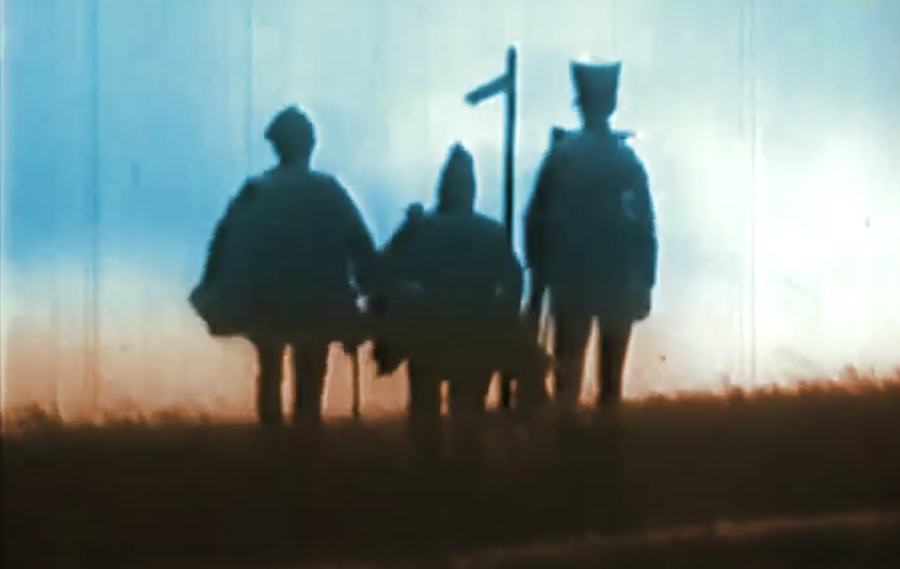
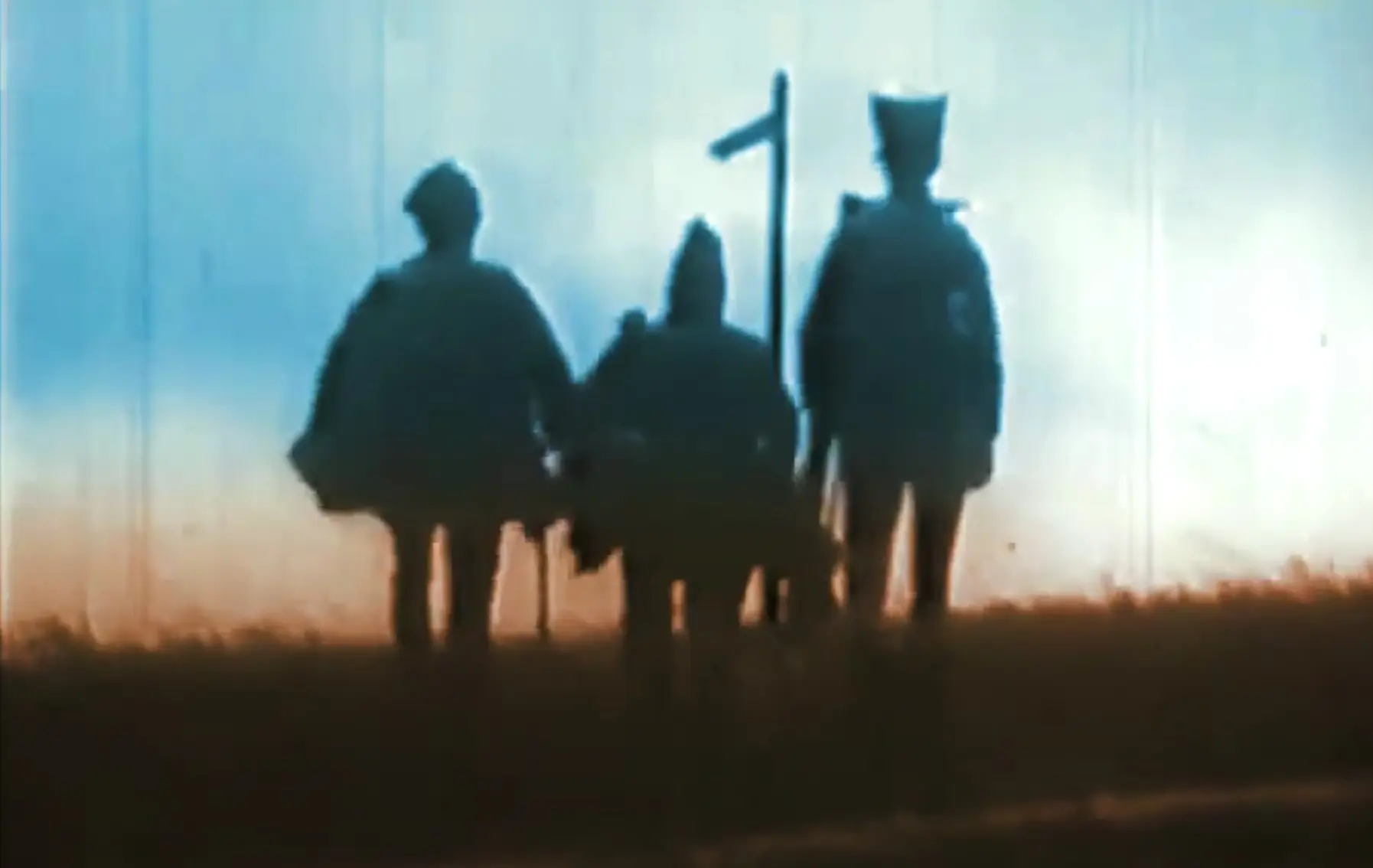
The story centers on three brothers, each embodying a cliché of human frailty: the gluttonous corpulent son, the towering but witless giant, and the 'idiot' youngest whose childlike simplicity masks a latent cunning. Their decision to 'try their luck'—a refrain as old as storytelling itself—sets in motion a series of trials that deconstruct the myth of meritocracy. The brothers’ journey is less a quest for fortune than a collision with the absurd, where logic is inverted, and success hinges on the ability to laugh in the face of futility.
The film’s visual palette is a masterclass in minimalism. Shadows loom large, and the brothers’ exaggerated features are rendered with a stylized grotesquerie reminiscent of Expressionist theater. The sets, often starkly geometric, create a dreamlike dissonance, amplifying the sense that this is a world apart from reality. The use of light and shadow is particularly striking in scenes where the brothers confront their adversaries—a witch with a penchant for riddles, a bandit king who demands wit as tribute, and a final test that pits them against their own reflections.
Carl Geppert, who portrays the 'idiot' third son, delivers a performance that transcends caricature. His physical comedy is both endearing and unsettling, a reminder that the 'fool' is often the truest seer in folk tales. Sophie Pagay and Tilly Feiner, as the witch and the bandit queen, exude a sinister allure, their characters embodying the archetypal temptresses who test the heroes’ resolve. The ensemble’s chemistry is electric, their interactions a blend of pantomime and subtle nuance that elevates the film beyond mere slapstick.
Thematically, the film grapples with questions of identity and the social construction of value. The corpulent son’s gluttony is reframed as a critique of materialism, the tall brother’s physicality as a metaphor for intellectual emptiness, and the 'idiot’s' simplicity as a radical form of wisdom. This subversion of archetypes is not new to folklore, but the film’s treatment is refreshingly unflinching. It asks, what if the fools are the ones who see the world for what it is? What if luck is merely the universe’s way of laughing at our pretensions?
Comparisons to other films of the era are inevitable. Like Das Haus zum Mond, this film uses fairy tale logic to interrogate societal norms, but whereas the latter leans into whimsy, Tischlein deck dich embraces a darker, more absurdist tone. Its structure bears traces of The Port of Missing Men in its episodic trials, though its emotional core is more aligned with The Millionaire’s Double, where identity is both a mask and a weapon. Yet, it stands apart through its unapologetic embrace of the grotesque and its refusal to offer tidy resolutions.
The film’s pacing is brisk, a necessity in silent cinema where dialogue is replaced by visual storytelling. Each trial is a microcosm of a larger theme, designed to be both entertaining and intellectually provocative. The use of intertitles is sparse but precise, allowing the actors’ expressions and the settings to carry the weight of the narrative. This reliance on imagery is a double-edged sword: while it allows for a richly symbolic experience, it also demands active engagement from the viewer, a challenge that may alienate modern audiences accustomed to fast-paced exposition.
What elevates Tischlein deck dich beyond its peers is its nuanced exploration of failure. Unlike the triumphant arcs of Lorelei of the Sea or The Prince Chap, this film does not reward its protagonists with conventional success. Instead, their journey is a process of self-discovery, wherein the true victory is the recognition that luck is an illusion. The final act—where the brothers return home, having shed their archetypal roles—is a quiet but profound deconstruction of the hero’s journey.
Technically, the film is a marvel of early cinema. The editing is crisp, and the use of montage in the brothers’ trials creates a rhythmic intensity that is rare for the period. The score, though not specified in the credits, is imagined as a haunting blend of folk melodies and dissonant strings, underscoring the tension between the film’s whimsical surface and its darker undertones. The cinematography, particularly in the sequence where the brothers navigate a forest of giant trees and shadows, is nothing short of poetic.
In the context of Weimar cinema, Tischlein deck dich is a product of its time. The era’s economic instability and cultural upheaval find indirect expression in the film’s themes of survival and reinvention. It is a fable for a society in flux, where traditional hierarchies are crumbling, and new identities are being forged. The film’s subversive humor and refusal to conform to narrative expectations mirror the broader cultural rebellion of the period.
The legacy of Tischlein deck dich is complex. While it lacks the global recognition of Macbeth or Robbery Under Arms, its influence can be traced in later works that blend fairy tale with social critique. The film’s treatment of the fool as a sage echoes in Vengeance of the Wilds and Revelation (1918), both of which use archetypes to comment on human folly. Its aesthetic choices, particularly the use of stark lighting and exaggerated characters, prefigure the visual language of Mistinguett détective and Under galgen.
For modern audiences, the film offers a refreshing counterpoint to the overproduced, effects-driven spectacles of contemporary cinema. Its reliance on storytelling fundamentals—character, conflict, and resolution—serves as a reminder of the medium’s roots. While the absence of synchronized sound and the occasional reliance on melodrama may feel dated, the emotional resonance of the brothers’ journey is undiminished. Theirs is a tale of universal relevance, a testament to the enduring power of fable to reflect and refract the human condition.
In conclusion, Tischlein deck dich, Eselein streck dich, Knüppel aus dem Sack is a film that rewards patience and curiosity. Its blend of humor, pathos, and philosophical inquiry makes it a standout in the silent film canon. For those willing to engage with its visual storytelling, it offers a rich tapestry of meaning, woven from the threads of myth and modernity. It is not merely a relic of the past but a mirror held to the present, reflecting our ongoing search for meaning in a world of uncertainty.
Community
Log in to comment.