DbcultAccessing Vault...
6.8/10
Senior Film Conservator
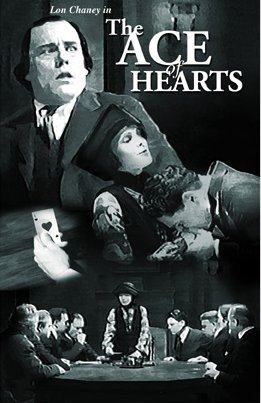
A definitive 6.8/10 rating for a film that redefined the boundaries of cult cinema. The Ace of Hearts remains a cornerstone of transgressive art.
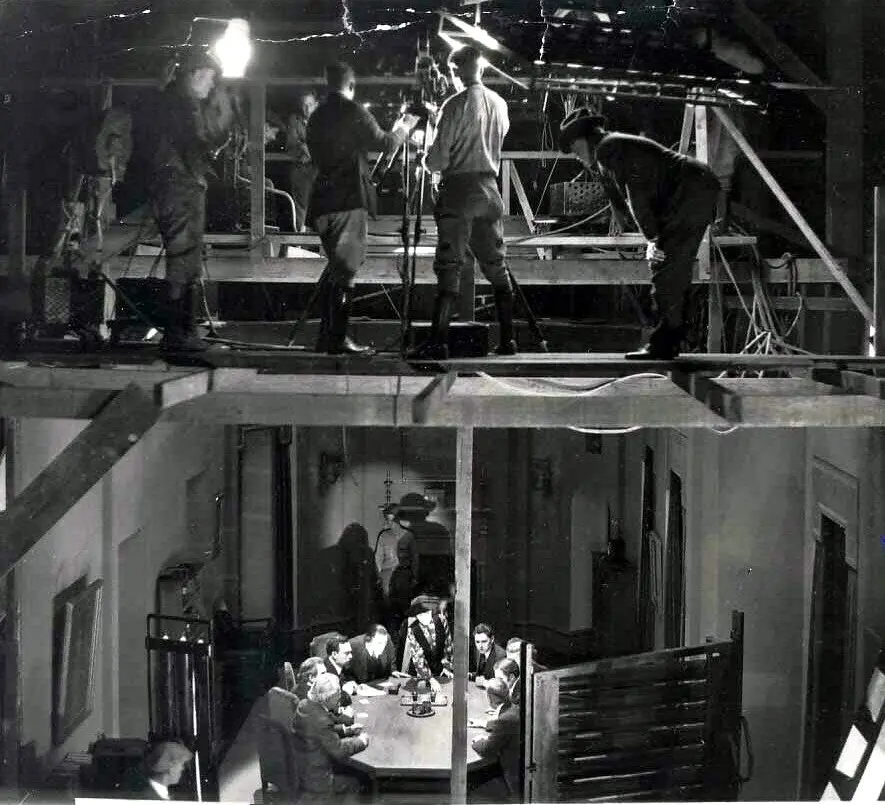
Wallace Worsley’s The Ace of Hearts arrives like a nitrate postcard smuggled out of a fever dream: edges singed, emulsion blistered, yet the image—anarchists circling a candlelit table—still hisses with subversive static. A century on, the film’s fuse splutters rather than detonates, but the sulfuric whiff of sedition clings to every intertitle.
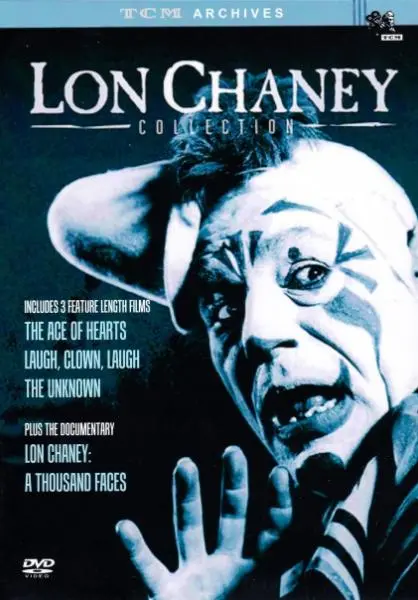
In a shadow-lacquered boardinghouse, six conspirators cut a deck from which the ace of hearts is forever excised; its absence becomes a pact, a void, a promise to murder the city’s “financial tyrant.” Their leader, the enigmatic Mr. Morgridge (Hardee Kirkland), speaks in velvet whispers, yet each syllable drops like a guillotine. Into this sanctum of righteous nihilism walks Farallone (Lon Chaney), a hulking silhouette whose eyes glow with the dull ember of resigned devotion. He volunteers to carry the bomb, not from zeal but from a desire to be consumed—perhaps literally—by the cause.
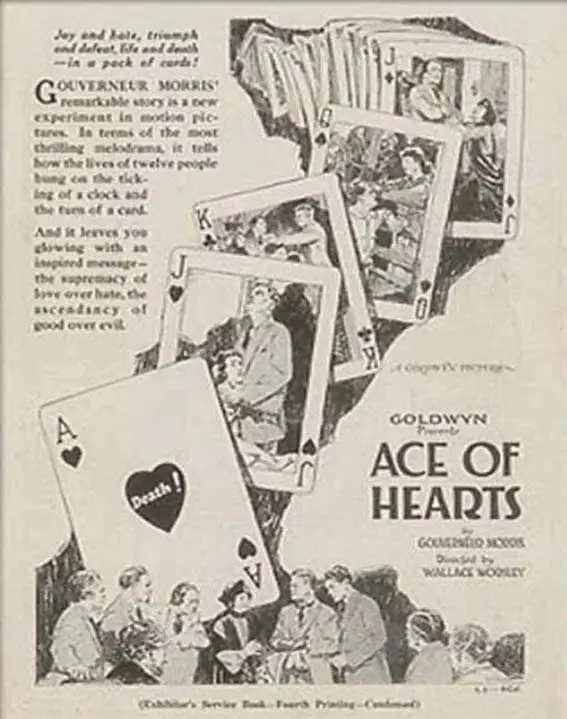
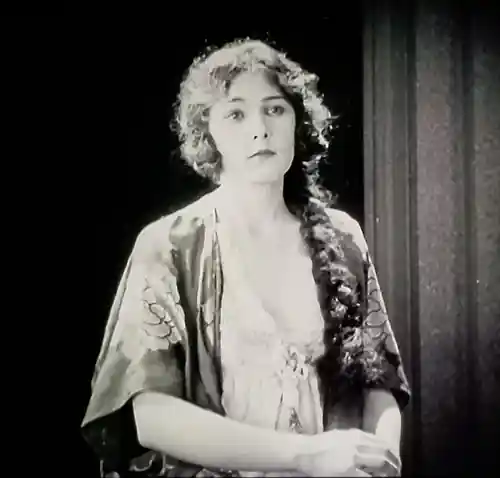
The group’s lottery elects Forrest (John Bowers) as the human detonator, but destiny, that incorrigible ironist, slips a woman between him and the fuse. Lilith (Leatrice Joy) drifts into the conspirators’ favorite café like a paper lantern, all flicker and fragility, yet her gaze possesses the tensile strength of steel cable. Within a single reel, Forrest’s revolutionary ardor cedes ground to a more unruly insurgency: desire. Cinematographer Don Short lights their courtship as if the universe itself were blushing—faces burnished by tungsten halos, fingers fumbling in chiaroscuro half-shadow. The anarchists’ creed demands the annihilation of sentiment; Cupid, however, brandishes a far older warrant.
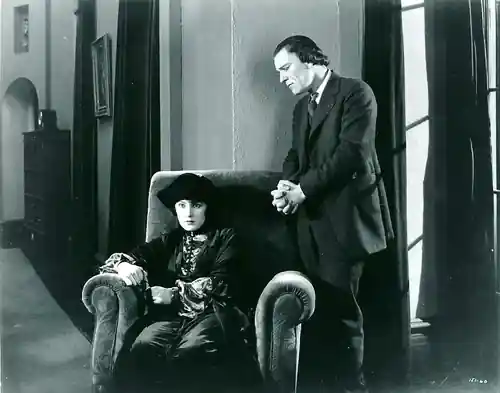
While Bowers embodies the moral schism, Chaney sculpts tragedy from cartilage and greasepaint. His Farallone is a gargoyle with a hemorrhaging heart, a monkish brute whose unrequited love for Lilith curdles into self-immolation. Note the scene where he silently counts the coins needed for a vial of poison: every clink lands like a distant church bell tolling for his own funeral. Chaney’s gift was to make grotesquerie synonymous with tenderness; here, the quiver of a lip or the tremor of a calloused hand broadcasts more agony than pages of exposition.
The film’s San Francisco—never named, but betrayed by vertiginous hills and fog-choked docks—feels like a tinderbox wearing a top hat. Production designer Grotine conjures parlors wallpapered in damask decay, alleyways dripping with maritime mildew, and a rooftop finale silhouetted against a skyline that seems to sweat kerosene. The mise-en-scène anticipates German expressionism: staircases tilt at queasy angles, doorframes gape like broken jaws, and the conspirators’ table becomes a secular Last Supper daubed in candle-grease chiaroscuro.
Cutter Irene Morra snips sequences with the staccato urgency of a fuse burning toward zero. Cross-cuts between Forrest fondling Lilith’s glove and the bomb’s meticulous assembly create a visual call-and-response between Eros and Thanatos. When the hour of assassination finally arrives, the montage toggles between three spatial planes: the banker’s motorcade snaking through boulevards, Forrest’s trembling thumb on a detonator plunger, and Lilith’s plea delivered via telegram that arrives—crucially—one splice too late. The tension is so exquisitely wrought that even a contemporary viewer scrolling on a phone might feel their pulse sync to the 18-frames-per-second flutter.
Leatrice Joy’s Lilith refuses the binary of militant virgin or duplicitous temptress. She wields innocence as both shield and shrapnel, coaxing Forrest away from militancy while simultaneously inspiring Farallone’s suicidal devotion. In one stunning close-up, her pupils glisten with reflected candle-flame—two tiny infernos promising either salvation or conflagration. For 1921, this is no mere ingénue; she is the revolution’s unintended counter-revolution, a one-woman treaty negotiation between the personal and the political.
“A single playing card, once removed, destabilizes the entire deck; likewise, Lilith’s presence collapses the ideological house.”
Modern viewers, jaded by decades of antihero tropes, may scoff at Forrest’s eleventh-hour vacillation. Yet contextualized against the Red Scare hangover of 1921, his crisis feels scaldingly immediate. The film neither sanctifies nor satirizes anarchism; instead, it interrogates the collateral damage of absolutist conviction. One cannot watch today’s algorithmic echo chambers and not see a reflection in these conspirators’ candle-lit oath—dogma calcifying into fatalism.
If you hunger for further silent-era subversion, consult:
Each shares Ace of Hearts’ preoccupation with power asymmetry, though none fuse romance and political nitroglycerin with quite the same incendiary élan.
Surviving prints often circulate with generic library scores, yet the ideal accompaniment would be a string quartet tuning their instruments down a whole step—let the cello throb like a migraine, the viola whisper like escaping gas. In a 2018 Brooklyn revival, accompanist Ben Model improvised a slow-burn tango that crested precisely when Farallone swallows the poison; the audience gasped as if the room itself had inhaled chloroform.
A 4K scan from a 35 mm Dutch print resides in the eye of distribution limbo: rights fragmented, intertitles half-Dutch, half-English. Yet even in standard-definition murk, the film’s thematic vertebrae remain intact. Bargain-bin editions peddle it as a “Lon Chaney curiosity,” underselling its philosophical heft. Lobby your local cinematheque; this is a title that deserves to be screened with live accompaniment and a post-film anarchist book fair—not relegated to a YouTube sidebar.
Notice the wardrobe palette: conspirators cloaked in charcoal, the banker’s wife swaddled in ivory, Lilith oscillating between virginal white and arterial red. When Forrest finally rips the ace of hearts in half, the tear bisects the frame into a diptych of flame and ash—an omen that love, like revolution, consumes its own acolytes.
By the time the end card materializes—“The greatest explosion is the human heart”—the film has already detonated its thesis inside your ribcage. Some silents age into museum pieces; The Ace of Hearts ages into shrapnel, embedding splinters of moral inquiry beneath the skin. It asks whether every ideology, no matter how egalitarian, curdles once it tastes the salt of personal longing. And it refuses to answer, preferring instead to let the echo of that unanswered question tick like a delayed charge in the darkened theater of your mind.
Verdict: Seek it, screen it, survive it.
IMDb 6
1935
Community
Log in to comment.