DbcultAccessing Vault...
6.8/10
Senior Film Conservator
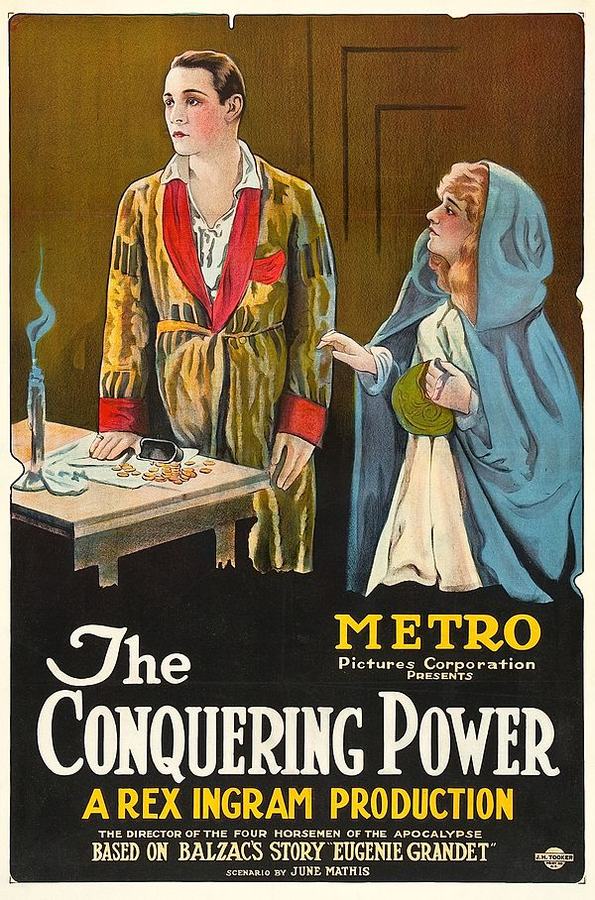
A definitive 6.8/10 rating for a film that redefined the boundaries of cult cinema. The Conquering Power remains a cornerstone of transgressive art.
The first time the camera caresses Rudolph Valentino’s face in The Conquering Power, the screen seems to exhale a perfumed sigh—an intoxicating promise that silent cinema can still bruise the soul. Released in the annus mirabilis of 1921, when jazz rhythms collided with post-war disillusionment, Rex Ingram’s adaptation of Balzac’s Eugénie Grandet arrives like a velvet gauntlet hurled at the feet of purists who claim the silents can’t articulate the rust and rot of money. Spoiler: they’re wrong.
Balzac’s novel is a sepulchral parable about provincial avarice; June Mathis’s screenplay transmutes it into a fever dream of gilt-edged sadism. The film opens with a funeral cortege shot through a veil of drizzle—each drop a liquid franc sliding off the coffin lid. Charles Grandet (Valentino) arrives at the crumbling Grandet manor where the cobblestones appear varnished with centuries of mercantile drool. Uncle Grandet, played by Ralph Lewis beneath a crust of prosthetic wattles, is less a human than a walking ledger, his pupils twin decimal points forever tallying zeros.
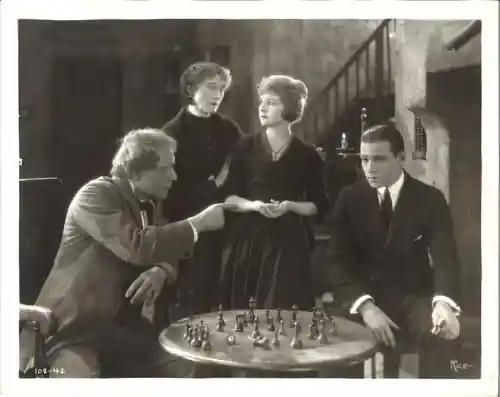
Ingram’s visual grammar is already feral: low-angle shots twist the mansion into a predatory maw, while iris-ins puncture the narrative like peepholes into a debtor’s cell. Notice how the coppery tint of the 35 mm nitrate (preserved by the Library of Congress) oxidizes every frame into a coin fresh from the mint of Hades. When Charles’s inheritance is unveiled—nothing but IOUs soaked in his father’s blood-red ink—the camera dollies backward as if recoiling from a moral contagion.
Forget the sheik, forget the Latin lover caricature. Here Valentino performs a chiaroscuro of arrogance and fragility. Watch the micro-muscular tremor along his jawline when Charles discovers the betrayal; it is the moment a peacock molts into a panther. His body language oscillates between boulevardier languor and coiled vengeance—an exquisite dialectic of entitlement and wounded pride. The intertitles, penned by Mathis with haiku-like sting, give him lines such as “I will weigh your love against the gold you squandered, and woe to the scale that lies.” Delivered in close-up, the line lands like a curse etched on a doubloon.
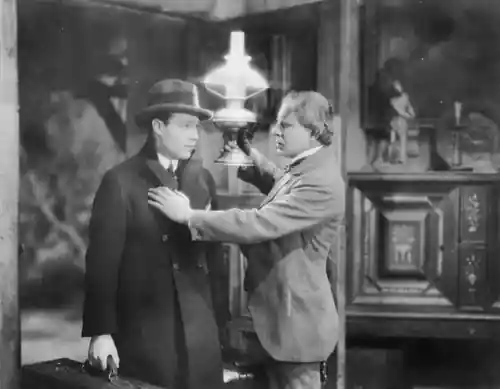
Critics who dismiss Valentino as mere eye-candy need only study the sequence where Charles, reduced to penury, auctions his diamond cufflinks. Valentino lets his pupils dilate a millimeter—an atomic detonation of shame—before the mask of cynicism clicks back into place. Garbo learned the art of stillness from moments like these.
As cousin Eugénie, Alice Terry is the film’s moral tuning fork. Ingram, her husband, photographs her as if she were a stained-glass saint trapped inside a bank vault. The first time she appears, she backlights herself against a window, the sea-blue (#0E7490) day-for-night filter haloing her profile—a subliminal promise that she, too, can transmute base metal into spiritual bullion. Notice how her hands perpetually clutch a threadbare handkerchief embroidered with faded fleurs-de-lis, a synecdoche for a nobility impoverished by the same greed that devours Charles.
Their love story unfurls not through kisses but through fiduciary choreography. When Eugénie secretly stuffs her dowry into Charles’s travel trunk, the camera cranes up to the rafters where ancestral portraits glower like auditors. The transaction is erotic precisely because it is economic: she is buying back his birthright, one louis d’or at a time.
Call it the first noir ever shot: chiaroscuro lighting, a fatalistic voice (albeit intertitled), and a femme fatale who wields thrift like a stiletto. Compare the uncle’s office—lamps that ooze citrine gloom over ledgers—to the visual DNA of Vengeance Is Mine (1917). Both films understand that money is never neutral; it is a chemical reagent that turns love into arsenic.
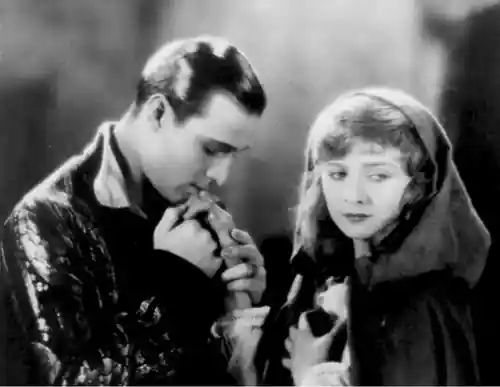
The climactic audit scene should be screened in every business school: candles gutter, inkpots freeze, and the uncle’s quivering quill scratches a deficit into Charles’s future. Ingram cuts to a macro shot of the nib tearing the parchment—an ejaculation of ink that looks suspiciously like blood. When the truth detonates, Charles does not scream; he simply closes his eyes, and the iris swallows the frame in a black hole of debt. Try finding that in a talking picture.
If you stream the restored Kino edition, brace yourself for Carl Davis’s orchestral score—strings that slither like francs changing pockets, brass that belches the uncle’s hubris. Davis interpolates a muted trumpet motif for Charles’s exile, its blue notes curdling into a revenge aria worthy of Bizet. The synergy is so visceral you can practically smell the must of parchment.
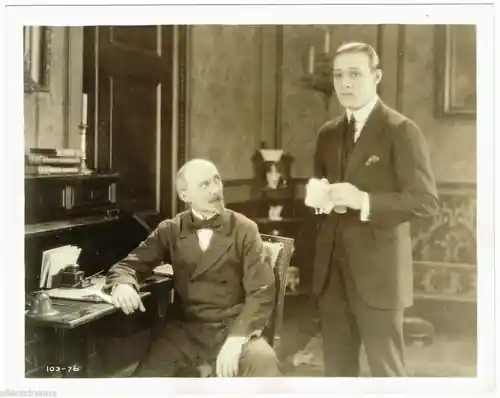
John F. Seitz, later the high-priest of noir lenses, was camera operator here. Observe the tracking shot through the wine cellar where bottles glint like ingots; the dolly glides past cobwebs thick as bond certificates. The deep-focus compositions prefigure Welles by two decades: in one frame, foreground coins sparkle while background dust motes swirl like bankrupt ghosts. Film schools teach Toland; they should teach Seitz.
While A Suspicious Wife domesticates paranoia into drawing-room farce, Power weaponizes it into a fiscal cage fight. Likewise, Rupert of Hentzau flirts with swashbuckling redemption, but Ingram refuses any velvet glove; his finale is a ledger balanced in human marrow.
Eugénie’s final act—signing over her dowry—reads today as radical praxis: she weaponizes the very coinage that patriarchy uses to chain her. The film is stealthily feminist, portraying her thrift not as virtue but as insurgency. When she snaps the purse strings, the uncle’s apoplexy is a misogynist’s worst nightmare: a woman who can liquidate his phallic capital.
Premiering at New York’s Capitol Theatre, the picture grossed 1.2 million dollars—astronomical for 1921. It minted Valentino as a bankable antihero, eclipsing even The Four Horsemen of the Apocalypse released months earlier. Sadly, only a 93-minute version survives; rumors of a 120-minute cut screened in Buenos Aires persist among archivists like a cinephile Holy Grail.
A century on, The Conquering Power still scalds because it understands that money is not a medium of exchange but a mutagen of identity. Ingram orchestrates a ballet of balance sheets where every pas de deux is a foreclosure notice. Valentino, Terry, and Lewis do not act; they audit each other’s souls. When the end credits iris-in, you will check your own pockets, half expecting to find them empty—and realize the film has pickpocketed not your wallet, but your certainty that love can ever be solvent.
Stream it, archive it, teach it. Just don’t watch it on a phone; the granularity of greed needs a screen the size of a banker’s ego.
IMDb —
1923
Community
Log in to comment.