DbcultAccessing Vault...
6.3/10
Senior Film Conservator
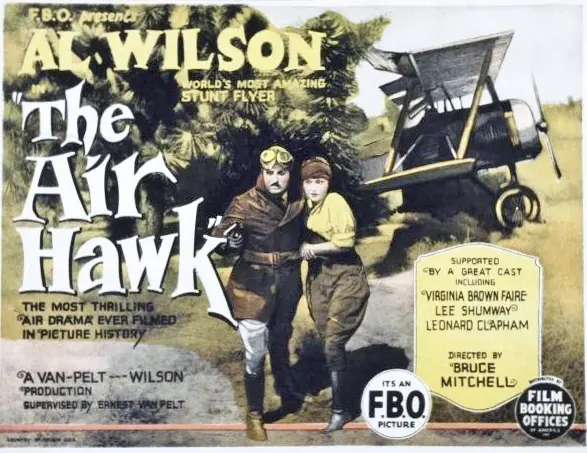
A definitive 6.3/10 rating for a film that redefined the boundaries of cult cinema. The Air Hawk remains a cornerstone of transgressive art.
In an era when cinema was still finding its voice, literally, filmmakers often turned to spectacle and visceral action to captivate audiences. The Air Hawk, a 1925 silent picture, stands as a vibrant testament to this early cinematic philosophy, delivering a potent cocktail of high-flying adventure, borderland intrigue, and good old-fashioned heroism. It's a film that eschews complex psychological narratives for the raw thrill of movement, the daring of stunt work, and the palpable tension of a race against time. For modern viewers, it offers a fascinating glimpse into the foundational grammar of action cinema, proving that even without synchronized sound, the language of visual storytelling could be profoundly articulate and exhilarating. This isn't merely a historical artifact; it's a pulsating experience that reminds us why early audiences flocked to picture palaces, hungry for escapism and wonder.
At the heart of The Air Hawk's enduring appeal is Al Wilson, not just an actor but a genuine aviator whose real-life daring infused his on-screen persona, Al Parker, with an authenticity that few contemporaries could match. Wilson wasn't merely performing stunts; he was living them, piloting his own aircraft through treacherous maneuvers that would make even today's CGI-jaded audiences gasp. His moniker, "The Air Hawk," feels less like a cinematic affectation and more like a well-earned title. The film’s centerpiece — the climactic mid-air transfer between two planes — is nothing short of breathtaking. It’s a sequence that defies belief, a ballet of human courage and mechanical precision captured with an immediacy that digital effects can only aspire to replicate. The sheer physical risk involved elevates this scene beyond mere entertainment; it becomes a visceral confrontation with mortality, a testament to the pioneering spirit of early Hollywood. The camera work, for its time, is remarkably dynamic, placing the viewer right in the cockpit, feeling every dip and turn, every gust of wind.
Wilson's performance transcends the often-stylized acting of the silent era. He embodies a stoic yet determined hero, a man of action whose resolve is etched onto his face rather than articulated through dialogue. This reliance on visual storytelling, on the actor's physical presence and expressions, is where silent film truly shines. We understand Al Parker's commitment to justice, his burgeoning affection for Edith, and his unyielding pursuit of the villains through his gaze, his posture, and, most importantly, his incredible aerial feats. It’s a masterclass in conveying character through pure, unadulterated spectacle, a quality that separates it from more pedestrian adventure fare of the period. The aerial sequences are not just thrilling; they are integral to Parker's characterization, defining him as a man uniquely suited to combat evil in the vast, open expanse of the sky.
While the aerial acrobatics grab headlines, the narrative underpinning The Air Hawk is surprisingly robust for a serial-style adventure. The plot, penned by George W. Pyper and Della M. King, weaves a compelling tale of industrial espionage and frontier justice. The platinum mine on the Mexican-American border serves as a fertile ground for conflict, a symbol of valuable resources coveted by nefarious forces. The murder of John Ames, the mine superintendent, isn't just a plot device; it's a catalyst that propels the story forward, imbuing it with a sense of personal stakes and urgency. This tragic event sets the stage for his daughter, Edith, played with spirited grace by Virginia Brown Faire, to step into a leadership role, defying gender expectations of the time and showcasing a resilient female protagonist. Her journey from grieving daughter to active participant in the struggle against McLeod's gang adds depth to what could have been a simplistic damsel-in-distress trope.
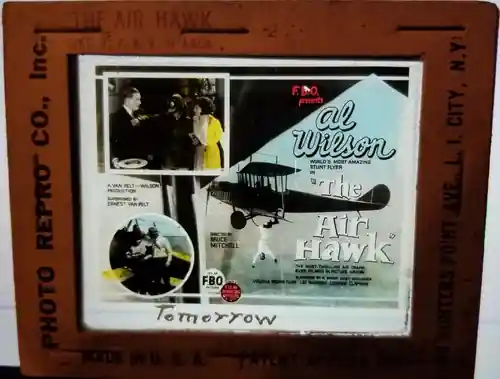
The budding romance between Al Parker and Edith is handled with a delicate touch, evolving organically amidst the chaos. It’s not a forced subplot but rather a natural consequence of shared peril and mutual respect. Their connection feels earned, forged in the crucible of danger and a common cause. Edith is no mere passive observer; her kidnapping is a pivotal moment that galvanizes Al’s pursuit, but her strength of character shines through even in captivity. Virginia Brown Faire brings a quiet dignity to Edith, making her a compelling figure who is both vulnerable and fiercely independent. This blend of thrilling action and understated romance ensures that the audience is invested not just in the spectacle, but in the fates of its central characters. The writers understood that even in a silent film, emotional resonance was paramount to truly engaging the viewer.
Lee Shumway, as the villainous McLeod, delivers a performance that perfectly encapsulates the silent film antagonist: menacing, cunning, and visually distinct. His escape in a waiting airplane is a stroke of narrative genius, immediately raising the stakes and setting up the iconic aerial confrontation. McLeod isn't just a ground-based bandit; he's a criminal who understands and exploits the nascent technology of aviation, making him a formidable opponent for "The Air Hawk." The supporting cast, including Emmett King as the ill-fated John Ames, provides a solid foundation for the central conflict. While some characterizations might appear broad by today's standards, they serve the narrative effectively, creating clear moral lines that allow the audience to fully immerse themselves in the unfolding drama. The archetypes are strong, yet the performances inject enough nuance to prevent them from becoming caricatures. This clarity of purpose is a hallmark of effective silent storytelling.
The collaborative efforts of writers George W. Pyper and Della M. King are evident in the film's tightly constructed plot. They understood the necessity of constant escalation, of delivering thrilling set-pieces interspersed with moments of emotional connection. The pacing of The Air Hawk is relentless, a quality often found in serials of the period, designed to keep audiences on the edge of their seats and eagerly anticipating the next chapter. The transition from ground-level banditry to aerial combat is handled seamlessly, demonstrating a creative ambition that pushed the boundaries of what was possible in cinema. The writers didn't just craft a story; they crafted an experience, one that leveraged the unique capabilities of the medium and the extraordinary talents of its star. Their work shows a keen understanding of popular entertainment, blending adventure with just enough human drama to make it resonate.
When considering The Air Hawk within the broader landscape of silent cinema, its dedication to high-octane spectacle becomes even more apparent. While films like The Foolish Age might have explored comedic or romantic themes, and dramas such as Dangerous Lies delved into more complex human relationships, The Air Hawk firmly plants its flag in the realm of pure, unadulterated adventure. It shares a spiritual kinship with other action-oriented films of the era, where physical prowess and daring stunts were paramount. Think of the rugged individualism found in Westerns like Sunlight's Last Raid, where heroes often faced overwhelming odds in vast, untamed landscapes. The sky, in The Air Hawk, becomes its own kind of frontier, a new wild west for aerial daring-do.
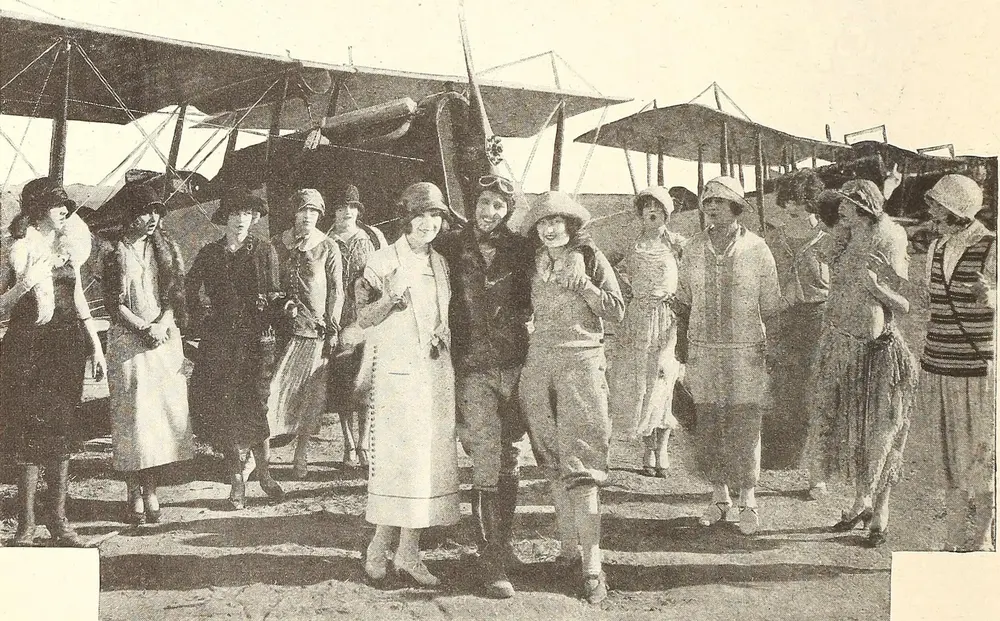
The film also stands in stark contrast to more introspective or socially conscious works. While a film like The Cavell Case might have grappled with historical events and moral dilemmas, The Air Hawk prioritizes escapism and the thrill of the chase. Its narrative simplicity allows the audience to fully immerse themselves in the escalating action, unburdened by heavy thematic weight. This isn't to say it lacks substance, but its substance is found in the triumph of good over evil, the bravery of its hero, and the sheer audacity of its visual feats. It exemplifies a particular strain of popular entertainment that focused on delivering maximum excitement, a tradition that continues to this day in blockbuster cinema. The film's directness and commitment to its genre make it a compelling watch, even for those accustomed to more nuanced storytelling.
Comparing it to other silent films, the sheer production value dedicated to its aerial sequences is remarkable. While many films, even those with grand ambitions, were often constrained by budget and technology, The Air Hawk clearly invested heavily in making its signature moments genuinely spectacular. This commitment to visual grandeur sets it apart from many contemporary pictures, ensuring its place as a significant entry in the annals of silent action cinema. It reminds us that innovation wasn't solely the domain of dramatic epics or avant-garde experiments; it was also found in the thrill-a-minute serials that kept audiences returning week after week.
Watching The Air Hawk today is more than just a nostalgic trip; it's an education in foundational filmmaking. It demonstrates how early directors and performers, armed with nascent technology and boundless courage, forged the very language of cinematic action. The film’s raw energy, its practical effects, and the palpable danger of its stunts offer a refreshing antidote to the often sanitized and weightless feel of modern CGI-heavy blockbusters. There's a tangible sense of consequence in every frame, a visceral connection to the human element that makes the hero's triumphs all the more satisfying and the villain's defeat all the more cathartic. It’s a reminder that true spectacle often lies in the daring of the real, not just the illusion of the digital.
The legacy of The Air Hawk isn't just in its thrilling acrobatics but in its embodiment of a cinematic spirit that dared to dream beyond the confines of the earth. It's a testament to the ingenuity and daring of early filmmakers and performers, a thrilling slice of history that continues to captivate those willing to look past the lack of sound and embrace the universal language of action and adventure. For anyone seeking to understand the foundational thrill rides of cinema, this film remains an essential, exhilarating flight. It's a vibrant piece of cinematic heritage, a soaring triumph that still holds its power to entertain and inspire, proving that the silent screen was anything but quiet when it came to delivering heart-stopping thrills. Its influence, subtle yet pervasive, can be traced through generations of action films, a silent shout that echoes through the decades.
IMDb —
1927
Community
Log in to comment.