DbcultAccessing Vault...
5.2/10
Senior Film Conservator
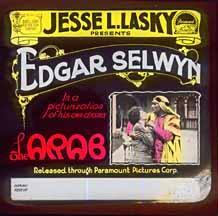
A definitive 5.2/10 rating for a film that redefined the boundaries of cult cinema. The Arab remains a cornerstone of transgressive art.
A bronzed medallion spins in the khamsin wind—one side filial duty, the other erotic emancipation—and Cecil B. DeMille’s The Arab pins that coin to the sun-scorched screen until it glows white-hot. Shot in 1915, when Hollywood still wore spurs and the Mojave stood in for every fabled desert between Marrakesh and Baghdad, the picture distills honor, theft, penance and yearning into a lean fifty-five minutes of nitrate poetry. Its DNA coils with paradox: a western about the East, a parable of Christian mercy told through Muslim tribal law, a star-crossed romance that ends not in death but in something harsher—life-long renunciation.
From the first iris-in, cinematographer Alvin Wyckoff treats light like a Bedouin storyteller: he sculpts dunes with it, lets it pool like molten brass inside a sheikh’s tent, then snaps it shut like a purse when bandits erupt from a wadi. The prologue alone—hundreds of extras swarming a caravan, robes flapping like ravens—announces that DeMille has traded the drawing-room satire of The Tangle for something primal. Yet the spectacle never eclipses the parable: every hoof-beat is a moral referendum.
The narrative engine is deceptively simple: robbery → confiscation → circulation → reclamation → sacrifice. But within that cycle DeMille threads a dialectic of ownership. The horse—nameless, feared, adored—functions like the ring in a Wagnerian cycle, except its power is purely symbolic: whoever rides it carries the right to reshape the desert’s moral ledger. When Jamil (Edgar Selwyn, co-writer and tormented lead) swipes the beast back from Mary Hilbert (Marjorie Daw, equal parts Gibson-girl innocence and steely resolve), he thinks he’s stealing property; in truth he’s stealing narrative agency from the occupying Turks and the missionaries alike.
Selwyn’s performance is calibrated in micro-gestures: the way his kaffiyeh twitches when shame prickles, or how his pupils dilate the instant Mary’s gloved hand brushes his while handing him water. Compare that to the florid villainy of the Turkish general (Horace B. Carpenter, waxed moustache twirled to Ottoman perfection) and you see DeMille already experimenting with the restrained close-up that will later electrify Du Barry.
Romance blooms inside a qasr ruin at twilight, the air syrupy with bakhoor smoke. DeMille intercuts Mary’s Bible verses with Jamil’s silent recitation of surah fragments—intertitles in graceful cursive—so that spiritual longing becomes erotic shorthand. The chaste distance between their bodies (a hand-breadth at most) feels more lascivious than any clinch in contemporaneous potboilers like The Exploits of Elaine. Cinematically, the scene invents a grammar of heat: the frame slightly over-exposed, giving skin a mercury sheen, while the desert beyond cools into Prussian blue. You half expect the film itself to perspire.
Theodore Roberts’ sheikh towers like a granite cliff, voiceless yet immense. His justice is algorithmic: restitution equals humiliation. By gifting Jamil’s horse to the merchant he severs not merely ownership but masculinity—an ancient trope later echoed in The Kangaroo, where land ownership emasculates the urban intruder. DeMille refuses to paint the sheikh as cruel; instead the old man embodies a social contract older than Quranic verse. When death finally unhooks the patriarchal latch, Jamil’s coronation is filmed like a Stations of the Cross: each tribal elder’s oath a thorny crown, each vow a nail of responsibility.
The film’s most subversive stroke is its treatment of missionaries. Mary and her father (Sydney Deane) arrive brandishing hymnals and smallpox vaccines, yet their civilizing mission is quietly derided. When bandits torch the mission’s prefab clinic, DeMille lingers on melting syringes—an image that anticipates the anti-imperial skepticism of Germinal; or, The Toll of Labor. The Arab does not demonize Christianity; it merely weighs it against a desert ethos that predates it, finding both wanting and both wondrous.
DeMille and film cutter Jeanie MacPherson fracture chronology with avant-garde audacity. A raid on the caravan is spliced into four perspectives—merchant, thief, horse, missionary—each separated by a single frame of black leader that stings like a blink. The device predates Soviet montage by half a decade and feels closer to the cubist cuts of Impressioni del Reno than to the linear pulp of A Texas Steer.
Marjorie Daw’s Mary never simpers; her eyes carry the same proto-feminist steel that Lillian Gish would soon wield in The Heart of Midlothian. In the pivotal rescue scene she clambers onto a runaway camel sidesaddle—no stunt double—hair uncoiling like Penelope’s tapestry. Opposite her, Selwyn’s Jamil is a study in muscular ambivalence: the moment he hoists Mary onto his own stallion, his biceps tremble not from exertion but from the moral recoil of touching forbidden flesh.
Most surviving prints circulate without orchestration, and the void becomes a character. The absence of strings sharpens the clank of bit-bridles, the hiss of hot wind against canvas, the faint crackle of nitrate itself. In this null-score, every intertitle hits like a gong. When Jamil whispers goodbye to Mary via intertitle—"The desert claims its own; the world claims you"—the silence that follows is louder than any Loyalty trumpet fanfare.
In the tinted restoration held at UCLA, flames are hand-painted crimson, Mary’s Bible cover a muted sea-blue (#0E7490), and Jamil’s keffiyeh dyed the same burnt orange (#C2410C) that dominates the horizon at magic hour. The flicker between monochrome and chromatic surge feels like conscience itself—now dormant, now aflame—much like the chiaroscuro battles in Drankersken.
The Arab opened to solid b.o. but vanished into the desert of lost reels, eclipsed by DeMille’s later biblical pageants. Yet DNA traces surface everywhere: the equine fetishism of The Eagle’s Mate, the sacrificial hero of In Defense of a Nation, even the ethno-romantic tension in I tre moschettieri. Critics who pigeonhole DeMille as a vulgar showman need to squint at this relic: here is a director willing to let the horizon swallow his lovers rather than gift them a facile clinch.
Yes, the Orientalism is retrograde, the casting melanin-deficient, the gender politics camel-dated. But The Arab also contains the seed of every later film that dares to equate landscape with longing, responsibility with renunciation. In an era when silent cinema is reduced to GIFs of Playing Dead slapstick, this mirage of honor and heartbreak deserves resurrection—preferably on 35 mm with a ney flute simmering in the sonic void. Seek it, if only to watch a century-old tear still glisten like dew on a date frond.
Grade: A- for visual poetry, B for cultural blind spots. View it as you would a fading fresco: with reverence for pigment that survived the centuries, and eyes wide open to the cracks.
IMDb 6.2
1933
Community
Log in to comment.