DbcultAccessing Vault...
Cult Review
Senior Film Conservator
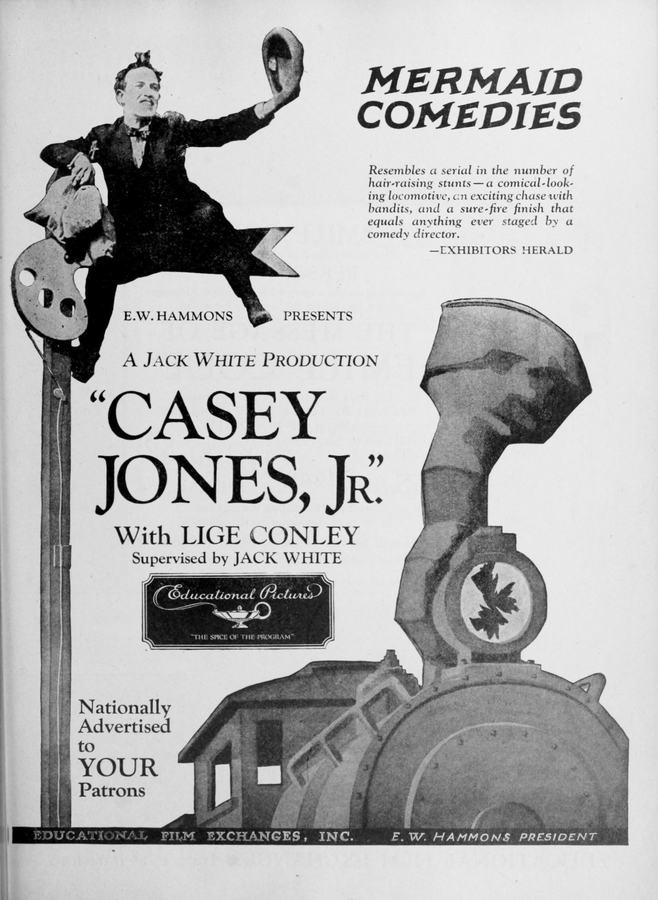
When the dust settles on the opening credits of Casey Jones, Jr., the audience is thrust into a world where the clatter of steel wheels and the hiss of steam serve as the sole narrators. Lige Conley’s Casey is not the mythic hero of folklore; he is a bureaucrat‑turned‑adventurer, a man whose very identity is tethered to the punctuality of a locomotive. The film’s opening montage, rendered in stark chiaroscuro, establishes a visual rhythm that mirrors the relentless ticking of a railway clock. This rhythm is more than a stylistic choice—it is a narrative engine that propels the plot forward with inexorable momentum.
Celeryville’s month‑late arrival of the Speed‑Ball Express is not merely a logistical hiccup; it is a metaphor for the fragile promises of early twentieth‑century industrialization. The train, a gleaming serpent of brass and iron, carries not only cargo but also the aspirations of a town that has placed its economic heartbeat upon its rails. Casey’s mandate—to accelerate the train—places him at the intersection of corporate ambition and human fallibility. The screenplay, penned by Jack White, employs succinct intertitles that punctuate the visual storytelling, each phrase a brief but potent reminder of the stakes involved.
Just as Casey appears to have harnessed the chaotic energy of the railway, Mexican Pete (Claude Gillingwater) and his motley band of banditos burst onto the scene. Their intrusion is choreographed with a kinetic flair that recalls the daring train robberies depicted in The Last Outlaw. Pete’s motivations are layered—while the safe’s contents represent a tangible prize, the act of seizing it also symbolizes a rebellion against the monolithic power structures that the railroad embodies.
Conley’s performance oscillates between slapstick agility and earnest gravitas. His eyes, often narrowed against the wind, convey a silent resolve that transcends the absence of dialogue. Violet Oliver, as the enigmatic stationmaster’s daughter, offers a subtle counterpoint; her glances are laced with curiosity, suggesting a possible alliance or romantic tension that the film hints at but never fully resolves. Spencer Bell’s portrayal of the train’s cook provides comic relief, yet his timing is impeccable, delivering physical humor that never undermines the overarching tension.
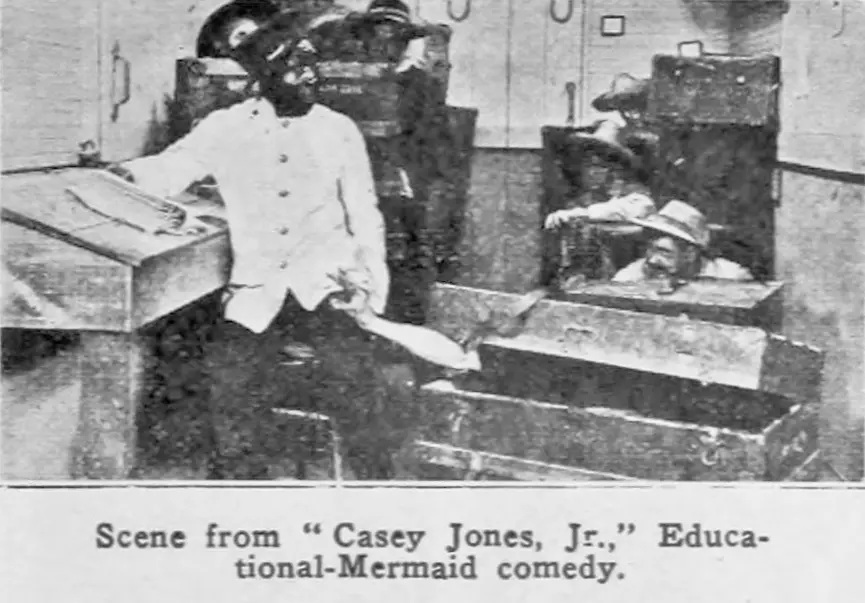
Director Jack White employs a series of innovative camera techniques that were avant‑garde for the silent era. Low‑angle shots of the locomotive’s pistons create a sense of looming menace, while rapid cross‑cutting during the robbery sequence heightens the audience’s pulse. The use of chiaroscuro lighting, particularly in the safe‑room scenes, casts long shadows that echo the moral ambiguities of the characters. These visual choices align the film with the atmospheric intensity found in Burnt Wings, where light and darkness are wielded as narrative tools.
At its core, Casey Jones, Jr. interrogates the tension between progress and exploitation. The railroad, a symbol of modernity, is both a conduit for economic growth and a mechanism of control. Casey’s internal conflict—balancing his duty to the president with an emerging empathy for Pete’s disenfranchised crew—mirrors broader societal debates of the 1920s, where labor movements clashed with industrial magnates. The film’s resolution, which sees the safe recovered and the train arriving in Celeryville, offers a tentative reconciliation, yet the lingering glances between Casey and Pete suggest that the underlying discord remains unresolved.
When juxtaposed with contemporaneous works such as By Injunction and The Candy Girl, Casey Jones, Jr. distinguishes itself through its kinetic pacing and its focus on the railway as a character in its own right. While By Injunction explores legal entanglements within a courtroom setting, Casey’s battlefield is the moving train, a confined yet ever‑changing arena that forces characters into rapid decision‑making. The film’s blend of action, comedy, and social commentary anticipates later genre hybrids, making it a precursor to the modern action‑drama.
Although a silent film, the original theatrical scores—often performed live—featured a recurring leitmotif that mimicked the rhythmic chug of a locomotive. Modern restorations have paired the film with a brass‑heavy orchestration that accentuates the tension during the robbery and the triumphant swell upon the train’s arrival in Celeryville. This auditory layer enriches the viewing experience, underscoring the film’s emotional beats without ever breaking its visual integrity.
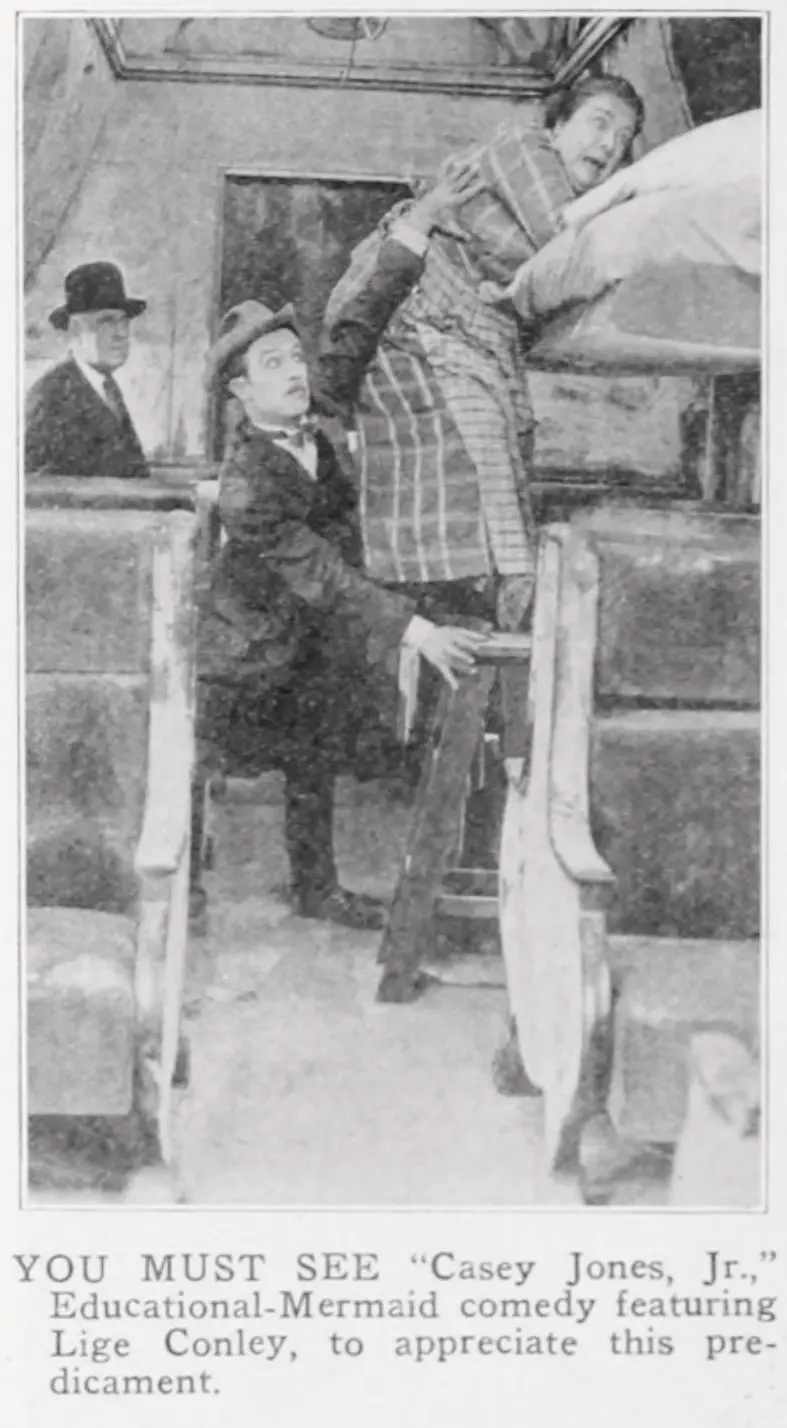
While Casey Jones, Jr. never achieved the commercial ubiquity of later railway epics like The Jockey, its influence can be traced through the evolution of train‑centric narratives. The film’s emphasis on a protagonist caught between corporate duty and personal conscience foreshadows the archetype later embodied by characters in Human Collateral and even modern blockbusters. Moreover, its daring stunt work—particularly the high‑speed chase through a canyon—set a practical benchmark for future productions.
Contemporary reviews lauded the film’s brisk pacing and Conley’s charismatic performance, though some critics dismissed the plot as “predictably melodramatic.” Modern scholars, however, appreciate the nuanced subtext regarding labor relations and the portrayal of multicultural antagonists, noting that Pete’s characterization, while rooted in period stereotypes, also offers a glimpse of agency rarely granted to minority figures of the era.
Every frame of Casey Jones, Jr. is a study in economy—visual, narrative, and performative. The film’s restraint in dialogue forces the audience to read the language of motion, of glances, of the relentless forward thrust of steel tracks. The meticulous set design, from the gleaming locomotive’s brass fittings to the cramped safe‑room, demonstrates a commitment to authenticity that rivals the production values of later sound pictures.
In sum, Casey Jones, Jr. stands as a testament to the silent era’s capacity for storytelling that is both exhilarating and intellectually resonant. Its blend of high‑octane action, character-driven drama, and sociopolitical commentary ensures its relevance for contemporary viewers and cements its place within the pantheon of early American cinema.
IMDb 6.6
1914
Community
Log in to comment.