DbcultAccessing Vault...
Cult Review
Senior Film Conservator
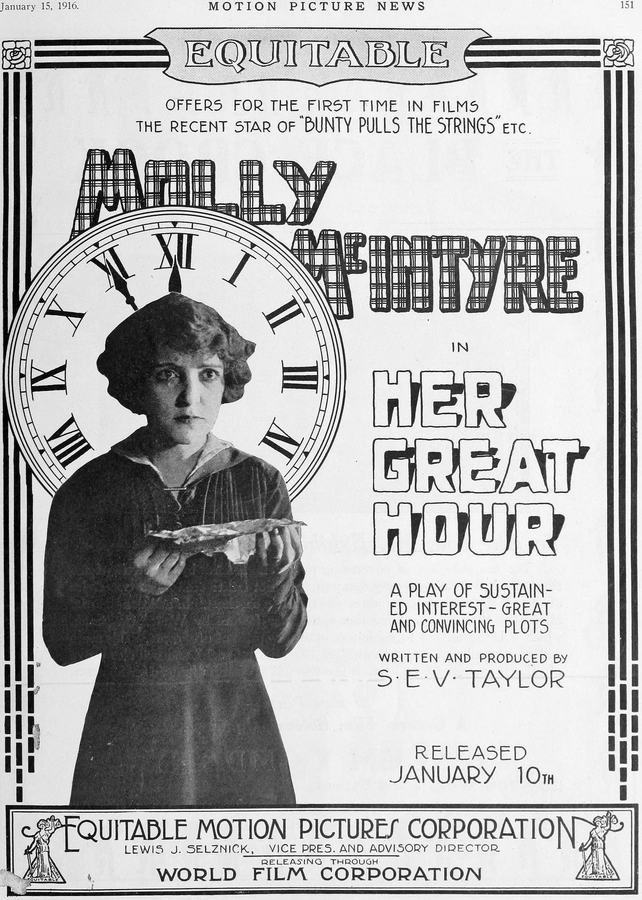
Stepping back into the nascent days of cinematic storytelling, Her Great Hour (1919) emerges not merely as a relic of a bygone era, but as a surprisingly intricate tapestry of human frailty, moral ambiguity, and unexpected heroism. This silent drama, penned by the prolific Stanner E.V. Taylor, eschews simplistic narratives for a convoluted, almost Dickensian plot that demands the viewer's complete immersion. From its deceptively mundane origins in a bustling department store to its climactic, morally compromised resolution, the film navigates a treacherous landscape of deceit, passion, and ultimately, a profound, if belated, recognition of an innocent's worth. It’s a testament to the power of early cinema to weave complex emotional threads, challenging its audience with a multi-layered narrative that, even a century later, retains a surprising grip on the imagination.
At its core, Her Great Hour is the harrowing odyssey of Nan Perrine, portrayed with a compelling blend of vulnerability and nascent strength by Molly McIntyre. Nan, a seemingly unremarkable shop girl at the S. and X. Department Store, finds her life irrevocably derailed by a petty act of malice. Another employee, Jenny, in a move born of unseen motives, plants a stolen ring in Nan's coat pocket, setting in motion a chain of events that will expose the moral rot beneath the surface of polite society. This initial injustice, though seemingly minor, serves as the narrative’s inciting incident, a spark that ignites a conflagration of betrayal and murder. It’s a classic trope, certainly, but one that Taylor imbues with a sense of escalating dread, positioning Nan as a pawn in a game far larger and more dangerous than she could possibly comprehend. The film deftly uses this framing device to illustrate the precariousness of reputation and the ease with which an innocent life can be shattered by a calculated lie, a theme explored with similar gravitas in contemporary dramas like The Invisible Power, where unseen forces manipulate fate.
The immediate antagonist to Nan's innocence is Irwin, the store manager, whose insistence on her guilt feels less about justice and more about a deeper, more sinister agenda. Richard Lynn, in the role of Irwin, projects an aura of smarmy self-interest, his pronouncements of Nan's culpability tinged with an almost perverse satisfaction. The narrative soon reveals the true extent of Irwin's entanglement: his affair with Violet, the wife of the town's prosecuting attorney, Kirby. This illicit liaison casts a long shadow over the legal proceedings, subtly influencing Irwin's actions and turning what should be a straightforward investigation into a murky pool of personal vendettas and hidden desires. The film brilliantly uses this interconnectedness to heighten the dramatic tension, demonstrating how private transgressions can have public, devastating consequences. It's a narrative device that resonates with the intricate character studies often found in films like A Woman's Triumph, where personal choices dictate broader outcomes.
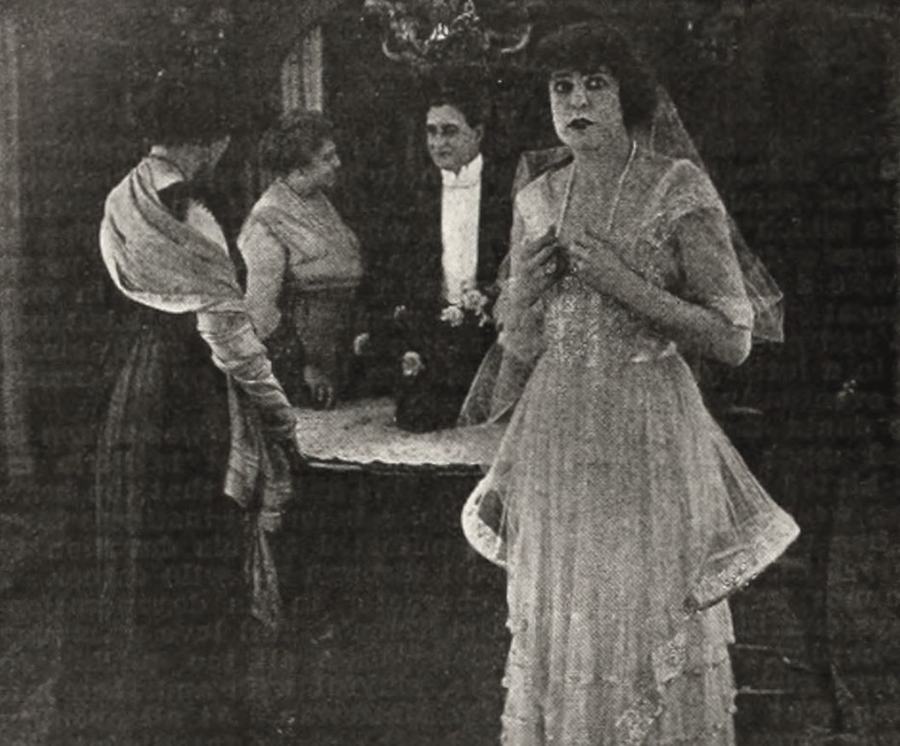
Enter Kirby, the prosecuting attorney, played by Martin Alsop with a nuanced portrayal of a man torn between duty and conscience. Kirby's friendship with Nan's deceased father instills in him an initial belief in her innocence, a flicker of doubt against the tide of circumstantial evidence. Yet, his professional obligations and, more acutely, the burgeoning scandal surrounding his wife's infidelity, complicate his pursuit of truth. His decision to delay Nan's indictment and take her into his home as a maid is a masterstroke of dramatic irony, placing the innocent victim squarely in the viper's nest of his own domestic discord. This narrative choice allows Nan to become a silent observer of Violet's increasingly brazen flirtations with Barrett, painting a vivid picture of the moral decay festering within Kirby's supposedly respectable household. The film excels in portraying this internal conflict, making Kirby a sympathetic, if flawed, figure, a man whose personal life is rapidly unraveling even as he strives to uphold the law. This complex portrayal of a legal professional grappling with moral compromises echoes the challenging themes present in The Mediator, where ethical dilemmas are front and center.
The domestic sphere becomes a battleground for passion and betrayal. Violet, embodied by Gerda Holmes with a captivating blend of allure and recklessness, continues her affair with Barrett (Pierre LeMay), oblivious to the tightening net of suspicion. A warning letter received by Kirby, detailing his wife's indiscretions, precipitates a dramatic confrontation. Nan, a silent witness to Violet and Barrett's rendezvous on the piazza, inadvertently stumbles upon a dropped note from Kirby, a stark warning: "A scandal would ruin him." This fragment of paper, infused with dramatic irony, foreshadows the tragic climax that soon engulfs the household. The film masterfully builds tension, using close-ups and dramatic staging to convey the emotional turmoil without a single spoken word. The subsequent, fatal struggle between Violet and Irwin over a telephone call to Barrett is a moment of raw, visceral impact. Violet, in a desperate attempt to conceal her infidelity, strikes Irwin, killing him. The fleeting glimpse of a burglar, an unseen observer to this heinous act, adds another layer of grim complexity, hinting at the randomness and interconnectedness of crime. The film's ability to interweave multiple storylines – the initial theft, the affair, the murder – with such fluidity is commendable, particularly for its era.
In the immediate aftermath of Irwin's death, Her Great Hour plunges Nan into a terrifying fight for survival. Coerced by Violet to help dispose of the body, their macabre task is interrupted by Kirby's unexpected return. Violet, in a breathtaking act of self-preservation and callous betrayal, implicates Nan in the murder. Nan, already unjustly accused of theft, now finds herself branded a murderer. Her desperate escape through a window, fueled by terror and a primal instinct for freedom, marks a pivotal shift in the narrative. The film then cleverly bifurcates its focus, following Nan's harrowing flight while simultaneously depicting Kirby and Violet's tense reconciliation, a fleeting moment of intimacy built upon a foundation of lies. The burglar, who witnessed Irwin's death, now becomes Nan's silent, ominous shadow, tracking her every move. Nan's subsequent staging of a suicide on the rocks, leaving a fabricated note, is a desperate, ingenious act, a testament to her growing resilience in the face of insurmountable odds. This sequence is particularly effective in building suspense, reminiscent of the cat-and-mouse thrillers that would become more prevalent in later decades, but executed here with a raw, silent intensity that is truly captivating. It brings to mind the intricate plotting of films like An Affair of Three Nations, where characters are constantly on the run from unseen dangers.
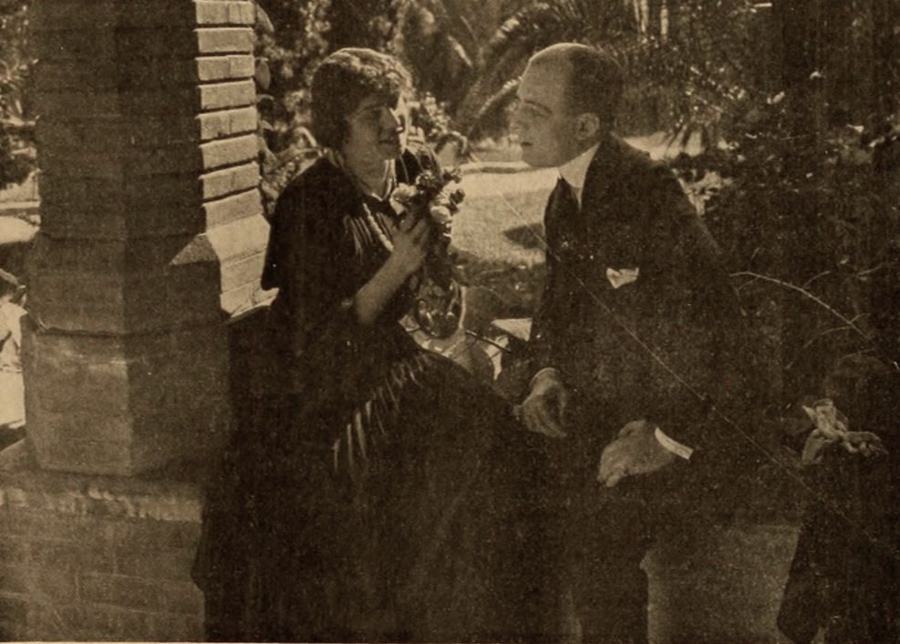
The narrative then pivots to the painstaking unraveling of truth. Detectives, investigating Irwin's death, discover a note from him to Violet, hinting at the true nature of their relationship. Meanwhile, the opportunistic burglar, having read Nan's suicide note, attempts to recruit her into his criminal gang, adding another layer of peril to her already desperate situation. Back at the Kirby residence, Violet, in a desperate attempt to bluff her way out of trouble, tries to deny any connection between Irwin's note and the murder. Kirby, armed with growing suspicion and the weight of Nan's unjust accusation, relentlessly presses her. Under duress, Violet finally confesses to killing Irwin, a moment of stark, raw admission that shatters the fragile peace between husband and wife. Kirby's subsequent reproach, fueled by a profound sense of injustice for Nan, is a powerful indictment of Violet's moral depravity. The arrival of detectives with Nan's coat and suicide note forces Kirby's hand; he orders the search for Nan stopped, finally acknowledging her innocence. Yet, the film takes a morally complex turn here: the detectives, in a cynical act of institutional compromise, decide to let Nan's faked suicide stand, protecting Kirby's reputation and his wife from public scandal. This grim twist highlights the film's nuanced exploration of justice, suggesting that truth often bends to the whims of power and public perception. It’s a bold narrative choice for the era, demonstrating a willingness to explore the darker undercurrents of societal institutions, much like the more cynical portrayals of justice in later noir films.
With the immediate threat of arrest seemingly averted, Violet, still under the delusion that her secrets are safe, prepares to flee with Barrett, packing her jewels for a new life. Her moral compass, already shattered, points only towards self-preservation. Nan, meanwhile, is thrust into the chaotic, dangerous world of a tough dance, a stark contrast to her former life. Here, fate intervenes once more as she encounters Barrett, appealing to him for salvation. A violent brawl erupts, a chaotic ballet of desperation and survival, from which Barrett and Nan escape, aided by an enigmatic dancing girl, finding momentary refuge in Barrett's looms. This sequence is a vibrant burst of energy amidst the film's more somber tones, showcasing the silent film's capacity for kinetic action and dramatic spectacle. The juxtaposition of Nan's desperate struggle in the underworld with Violet's selfish flight underscores the vast moral chasm between the two women. It is a moment reminiscent of the raw, untamed energy seen in boxing films of the era like World's Heavyweight Championship Between Tommy Burns and Jack Johnson, albeit within a narrative framework.
The final act of Her Great Hour brings all the tangled threads of its narrative to a poignant, if bittersweet, conclusion. Violet, arriving at Barrett's room, is confronted with the shocking sight of him with Nan, a betrayal that proves too much for her fragile heart. She faints, succumbing to a fatal heart failure, a swift and ironic end to her tumultuous life. Kirby, discovering his wife's absence, is left to grapple with the consequences of his compromised silence. Nan, with Barrett's assistance, brings Violet's body home in a cab, a somber procession that is tragically intercepted by Kirby. He observes the driver carrying his wife's lifeless form, with Nan beside him, and in a moment of profound realization, slips back into the house, opening the door when Nan rings. Her subsequent recounting of the story, delivered with a quiet dignity, is the final piece of the puzzle for Kirby. Doctors confirm Violet's death by heart failure, providing a convenient, if untrue, official narrative. It is in this intimate, shared moment that Kirby finally understands the depth of Nan's sacrifices. He acknowledges that this is the second time she has selflessly protected him, first by bearing the false accusation of murder, and now by bringing his deceased wife home without exposing the sordid truth of her final moments. He recognizes, with absolute certainty, her innocence in the initial theft, a crime for which she was first framed. Nan Perrine, the humble shop girl, has truly had her 'great hour' – an hour not of fame or glory, but of profound, unwavering courage and sacrifice in the face of relentless adversity. The film ends not with a grand triumph, but with a quiet, hard-won understanding, a testament to the enduring power of truth and human resilience. It’s a resolution that, while perhaps neat, feels earned through the sheer emotional gauntlet Nan has endured, marking her as a truly compelling heroine of the silent screen. This dramatic arc of an innocent woman enduring hardship to ultimately find vindication is a timeless narrative, echoed in countless tales of female protagonists like those found in Lena Rivers.
Her Great Hour, while not as widely remembered as some of its more celebrated contemporaries, stands as a potent example of the silent film era's capacity for complex, character-driven drama. Its intricate plot, though occasionally reliant on convenient coincidences, is held together by strong performances and a narrative momentum that rarely falters. Molly McIntyre's portrayal of Nan Perrine is particularly noteworthy, conveying a wide range of emotions through subtle gestures and expressive eyes, embodying the 'everywoman' thrust into extraordinary circumstances. The film's exploration of themes like class disparity, the corrupting influence of illicit passion, and the often-compromised nature of justice resonates even today. Stanner E.V. Taylor's screenplay, with its numerous twists and turns, keeps the audience engaged, demonstrating a sophisticated understanding of dramatic structure for its time. The use of intertitles is effective, enhancing the narrative without overburdening it, allowing the visual storytelling to take precedence. While the technical aspects might appear rudimentary by modern standards, the film's emotional impact and narrative ambition are undeniable. It's a reminder that compelling storytelling transcends technological limitations, proving that a well-crafted plot and engaging characters are the true hallmarks of enduring cinema. For those interested in the evolution of dramatic storytelling in film, Her Great Hour offers a fascinating glimpse into the genre's formative years, a testament to the silent era's often-underestimated depth and sophistication. It reminds us that even in the absence of spoken dialogue, the human experience, in all its messy, glorious complexity, can be rendered with profound artistry. Its intricate plotting and moral ambiguities can be seen as a precursor to more complex narratives, much like the challenging themes explored in films such as The Love Tyrant or Man and His Angel, which also delve into the darker aspects of human relationships and societal pressures.
IMDb 6.1
1928
Community
Log in to comment.