DbcultAccessing Vault...
7.6/10
Senior Film Conservator
A definitive 7.6/10 rating for a film that redefined the boundaries of cult cinema. The Barnstormers remains a cornerstone of transgressive art.
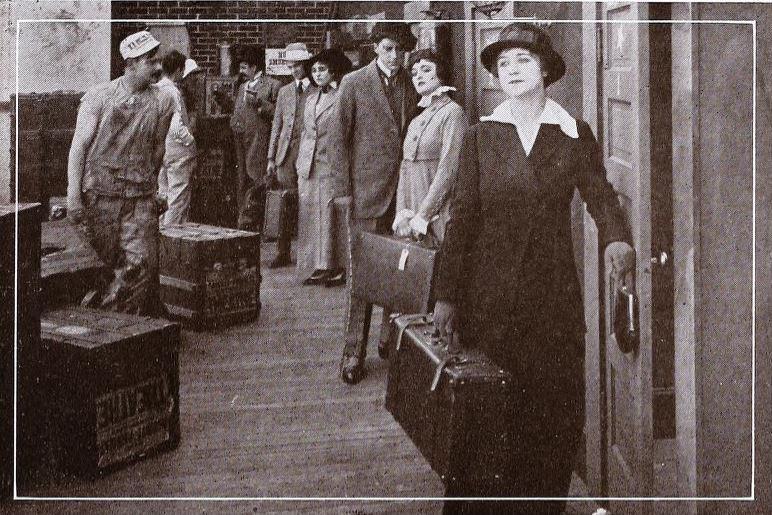
Nobody whistles inside the first reel of The Barnstormers; the film would consider such casual merriment a breach of protocol. Instead, William H. West’s camera lingers on the porch of a sagging county hotel as though it were the lip of an archaeological dig, every splinter a shard of prelapsarian Americana. The year is 1915, the medium is still learning to walk without captions, and this six-reel miracle—long thought lost until a nitrate canister surfaced in a Slovenian monastery—pulses with the bruised vitality of adolescence forever on the brink of collapse.
Strip away the tycoon villainy and you have a parable about liquidity: emotional, financial, corporeal. Adam’s love liquefies into hard cash which then evaporates into Mason’s tailored pockets. Nell’s fidelity melts into footlight glow, then resolidifies as domestic yearning. Even the eponymous barnstormers exist in gaseous form—here today, Pawnee tomorrow, creditors nipping their dust. Director Frank Jonasson stages these transmutations with the patience of a watchmaker; every cut feels like a tiny gear slipping into place, advancing us toward a final release that is less catharsis than exhausted sigh.
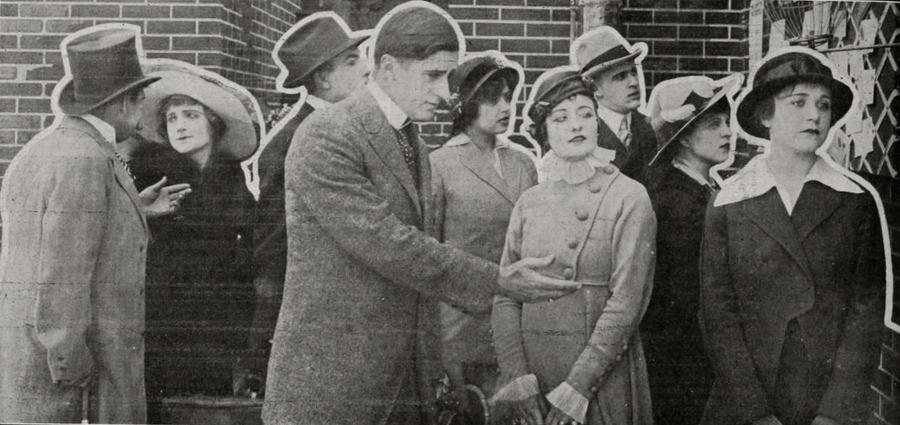
Myrtle Tannehill’s Nell never merely acts; she vibrates at the frequency of tin-pan tunes half-remembered. Watch her eyes in the boarding-house scene where she learns the truth about Adam’s investment: the pupils dilate like a camera aperture yanked open too fast, letting in a flood of moral light. Opposite her, True Boardman’s Mason is silk over razors, every smile followed by a microscopic twitch of self-congratulation. Meanwhile William H. West, burdened with the film’s moral center, chooses fragility over saintliness—his shoulders droop as though the very air has mortgage arrears.
Cinematographer William Brunton shot day-interiors through amber-dyed scrims that turn dust into embers, while night exteriors glow with a ghostly magnesium flare reminiscent of early crime serials like Detective Brown. The palette is dominated by three hues: the ochre of dried blood, the sallow of kerosene flame, and the cerulean of predawn resignation. Together they compose a chiaroscuro that anticipates the melancholic Americana of later works such as The Land of Promise.
Released two years before the first widely synched feature, The Barnstormers weaponizes its muteness. When Mason whispers venom into Nell’s ear during a rehearsal, the absence of audible dialogue forces us to lip-read cruelty, turning every viewer into an accomplice. The intertitles, penned by Ollie Kirby, eschew exposition for haiku-like stabs: “Love sold by the pound—cheap cuts only.” The resultant vacuum invites contemporary accompanists to improvise; in the recent 4K restoration, the Slovenian National Orchestra opted for a solo violin scraping against prepared piano strings—an astringent lament equal parts barn-dance and requiem.
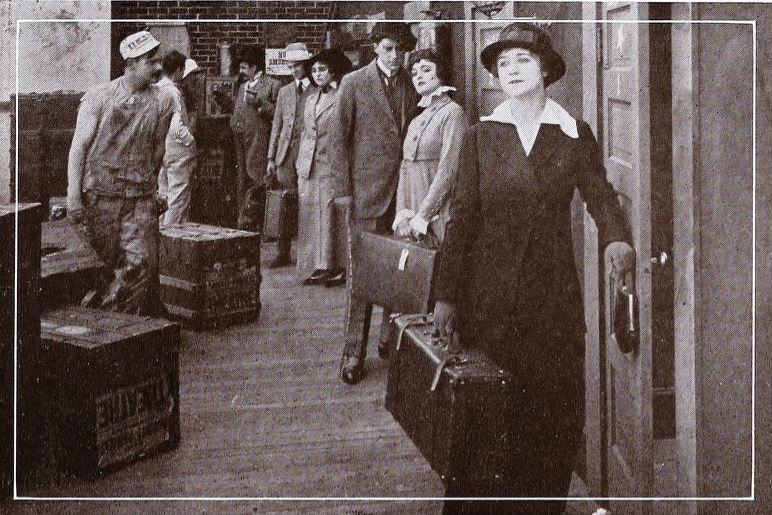
Unlike the virginal waifs populating A Good Little Devil, Nell owns her sexuality without being devoured by it. She initiates kisses, terminates contracts, and—crucially—rejects both patriarchal protection and matinee-idol manipulation. Yet the film stops short of feminist manifesto; her final renunciation of the stage reads less as liberation than as exhaustion with an industry that commodifies affection. The camera frames her last exit through a doorway shaped suspiciously like a proscenium arch: showbiz relinquished but never exorcised.

Read as allegory, the narrative excoriates itinerant capitalism: investment without infrastructure, profit without product. Adam’s bankroll is the symbolic equivalent of blood transfusion for a corpse. The film’s recurrent visual motif—handbills fluttering off wagon sides, littering prairies with broken promises—foreshadows the toxic speculation that would detonate a decade later in The Might of Gold. Eppstein’s ledger, scrawled with disappearing ink, might as well be a derivative worksheet from 1929.
The 2023 restoration scanned the sole surviving 35mm print at 8K, then spent fourteen months digitally de-flickering water-damage blooms that once resembled fungal nebulae. Grain management walks a tightrope: too smooth and faces become wax; too coarse and the illusion collapses. The resulting Blu-ray (street date October 17) preserves swirling emulsion patterns that look like frost on midnight windows. Bonus features include a commentary by Slovenian film scholar Dr. Katja Horvat, a 20-page booklet on Myrtle Tannehill’s Broadway years, and a video essay comparing the kidnapping sequence to the claustrophobic tableaux of In the Python’s Den. Retail price hovers around $34.99, but pre-orders via boutique outlets bundle a 32-page facsimile of the original pressbook.
As of this writing, the film rotates on Criterion Channel under the “Carnival Souls” retrospective, though availability expires November 30. A 1080p rental also lurks on Apple TV for $4.99, but beware: it’s the 2008 2K scan with cyan skew. Physical media completists should eschew convenience and spring for the disc; the HDR10 encode reveals lantern-light gradients impossible in streaming bandwidth.
Great art often arrives swaddled in banality; The Barnstormers is no different. Its melodramatic hinges creak, its morality is monochrome, yet within those constraints it carves a melancholy so specific it feels biographical. Watching it today—amid streaming glut and algorithmic curation—is akin to stumbling upon a hand-labeled bottle of 19th-century laudanum behind a false drawer: dubious efficacy, irrefutable intimacy. Drink deep, but expect haunting.
Verdict: 8.8/10 — A rediscovered barnstorm of bruised hearts and fiscal knives, essential for lovers of silent-era pageantry, economic critique, or anyone who’s ever loved the stage more than the people who built it.
IMDb —
1917
Community
Log in to comment.