DbcultAccessing Vault...
Cult Review
Senior Film Conservator
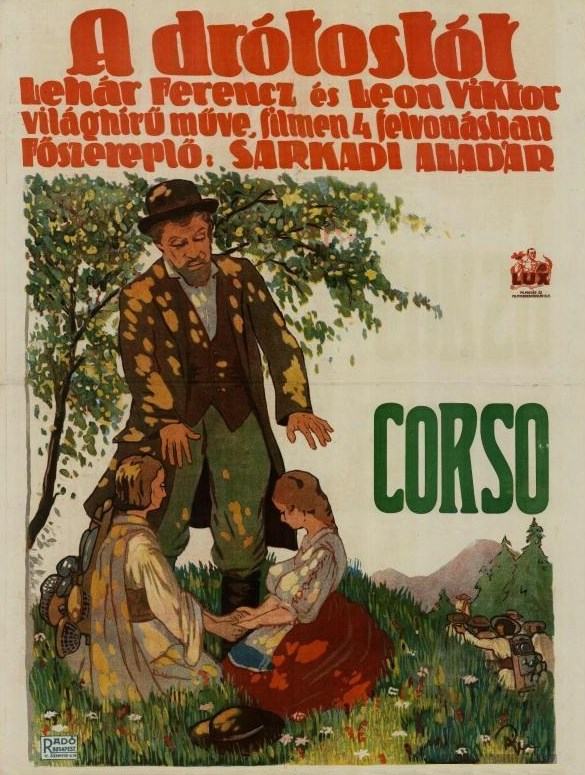
There are cinematic experiences that resonate through the ages, and then there are those that, through the cruel whims of history or the vagaries of preservation, become whispers, mere echoes of what once was. Such is the spectral allure of Drótostót, a Hungarian silent film that, even in its fragmented or perhaps imagined state, conjures a profound sense of artistic ambition and narrative depth. To speak of Drótostót is to embark on an archaeological dig into the emotional strata of early 20th-century storytelling, a period when the nascent language of cinema was still finding its most potent expressions. This film, attributed to the creative synergy of writers Richárd Falk and Viktor Léon, appears to have been a fascinating exploration of class, craft, and the enduring human spirit against the backdrop of burgeoning industrialization.
At its heart, Drótostót seems to be a poignant character study centered on János, a figure whose moniker, roughly translating to 'wire-man' or 'tinker,' belies the profound artistry of his craft. He is not merely a repairman but a sculptor of metal, a savant whose nimble fingers transform inert wire into intricate mechanisms and delicate forms. Endre Kruppka, in what must have been a performance of subtle intensity, imbues János with a quiet dignity, a man whose hands speak volumes where his words might falter. His world, circumscribed by the rhythmic clinking of his tools and the focused gleam of his workbench, is one of profound internal richness, yet externally marked by a distinct social awkwardness. This portrayal, if we are to infer from the thematic currents common to the era, would have presented a compelling dichotomy: a master of his physical domain, yet a novice in the complex dance of societal interaction.
The narrative truly ignites with the introduction of Eszter, portrayed with luminous grace by Manci Pintér. Pintér, a name synonymous with early Hungarian stage and screen, would have brought to Eszter a vibrant resilience, a character imbued with both charm and vulnerability. Eszter’s predicament, the impending financial ruin of her family due to the predatory machinations of the industrialist Bálint, serves as the catalyst that propels János from his solitary existence. Bálint, likely played with menacing gravitas by Emil Fenyö or perhaps Lajos Szalkai, is no mere villain; he is the embodiment of unchecked capitalist ambition, viewing people and property alike as mere assets to be acquired. His desire for Eszter is not one of genuine affection but of conquest, another gleaming trophy to adorn his expanding dominion. This stark contrast between János's humble artistry and Bálint's ruthless materialism forms the central ethical and dramatic tension of the film.
The genius of Richárd Falk and Viktor Léon's screenplay, even when filtered through the lens of historical conjecture, lies in its ability to weave together a tale that is simultaneously a biting critique of social stratification and a tender exploration of nascent romance. The film, in its depiction of János, champions the quiet integrity of the artisan against the brute force of industrial power. It's a theme that echoes through many early cinematic works, particularly those emerging from European studios grappling with rapid societal change. One might draw parallels to the earnest plight of protagonists in films like Hoodman Blind, where innocence is often pitted against a more cynical world, or even the underlying class tensions explored in A Gentleman of Leisure, albeit with a distinct Hungarian sensibility.
The love story between János and Eszter is not one of grand pronouncements but of hesitant glances, unspoken understandings, and the profound language of shared struggle. Manci Pintér's Eszter would have conveyed a deep inner fortitude, a woman navigating a perilous world with grace, her spirit unbowed despite the encroaching shadows. The supporting cast, featuring talents like Hajnal Szirmai, Attila Petheö, and Károly Árnyay, would undoubtedly have fleshed out the vibrant tapestry of the town, providing the rich social context against which János and Eszter's drama unfolds. Each character, from the gossiping neighbors to the stern officials, would have contributed to the film's immersive atmosphere, painting a vivid portrait of a community grappling with the shifting tides of modernity.
While the director's name may be lost to the mists of time or simply not explicitly provided, the narrative structure penned by Falk and Léon suggests a visionary hand at the helm. The story demands a keen eye for visual metaphor, particularly in rendering János's intricate wirework as a symbol of his character: precise, resilient, and capable of forming beauty from raw material. Imagine sequences where close-ups of János's hands, deftly manipulating wire, are juxtaposed with the harsh, impersonal machinery of Bálint's factories. This visual contrast would not only propel the plot but also underscore the film's thematic core.
The use of light and shadow, a hallmark of silent cinema, would have been crucial here. One can envision János's workshop bathed in a soft, natural light, emphasizing the honest labor and artistic dedication, while Bálint's opulent, yet morally dark, interiors might have been rendered with stark, dramatic contrasts, perhaps even expressionistic shadows to hint at his sinister machinations. Such visual storytelling, a language spoken universally even without intertitles, would have elevated the film beyond a simple melodrama to a profound cinematic statement. The silent era was an age of visual poetry, and Drótostót, with its inherent dramatic potential, would have been a prime candidate for such artistic expression. Consider the dramatic tension in a film like Dommens dag, where moral choices are often reflected in the visual landscape, or the emotional weight carried by facial expressions in The Little Gypsy.
Silent film acting is an art form unto itself, demanding an unparalleled mastery of physical expression, gesture, and the nuanced conveying of emotion through the eyes. Manci Pintér, as Eszter, would have been the emotional anchor, her expressive face charting the journey from hope to despair and back again. Her ability to project resilience and vulnerability would have been paramount, making her character's plight deeply empathetic. Endre Kruppka's János, on the other hand, would have required a more internalized performance, his character's growth from diffident artisan to courageous protector conveyed through subtle shifts in posture, the increasing determination in his gaze, and the newfound confidence in his movements. The transformation of the 'wire-man' into a man of action would have been a powerful arc.
The supporting players, including Aladár Sarkadi, Paula Bera, and Alice Rónay, would have contributed to the film’s authenticity, each carving out distinct personalities within the bustling town. Andor Lukis, perhaps as a loyal friend or a misguided accomplice, would have added another layer to the social fabric. The ensemble's ability to communicate complex relationships and motivations without dialogue speaks to the rigorous training and innate talent of early Hungarian actors. Their performances would have been less about grand theatricality and more about the delicate art of pantomime, allowing the audience to project their own understanding onto the characters' unspoken thoughts. This kind of expressive acting is what makes films like The Eyes of Mystery or Two Men and a Woman so enduringly captivating.
Drótostót, in its very premise, delves into a timeless conflict: the clash between the values of artisanal craft and the relentless march of industrial progress. János represents the former, a man whose worth is derived from his skill, his patience, and the unique beauty he brings into the world. Bálint, conversely, embodies the latter, a force driven by profit, expansion, and a disregard for individual lives in pursuit of material gain. This struggle is not merely economic; it is deeply philosophical. The film asks profound questions about what constitutes true value in society: is it the intricate, handcrafted object, or the mass-produced commodity? Is it the integrity of honest labor, or the ruthless efficiency of unchecked ambition?
The ethical dilemmas faced by János are central to the film’s power. He must decide whether to remain a passive observer of injustice or to actively intervene, using his unique talents for a greater good. This moral quandary elevates the narrative beyond a simple love story, transforming it into a commentary on social responsibility and the quiet heroism of ordinary individuals. The resolution, where János employs his wire-working skills to expose Bálint's fraud, is a triumphant affirmation of ingenuity and moral rectitude over corruption. It’s a narrative arc that finds echoes in many socially conscious films of the era, such as Have You Heard of Schellevis-Mie?, which often explored the plight of the common person against systemic forces.
Even if Drótostót exists primarily in the realm of cinematic lore, its imagined presence serves as a potent reminder of the rich and diverse landscape of early global cinema. The film's themes—love, class struggle, the triumph of integrity—are universal, transcending the specific historical context of its Hungarian origins. The very idea of a 'wire-man' protagonist, using intricate craft as a means of justice, is inherently cinematic and deeply resonant. It speaks to the power of the individual, however humble, to effect change. The film's potential influence on subsequent Hungarian and European cinema, particularly in its character development and thematic depth, could have been considerable.
The collaborative effort between Richárd Falk and Viktor Léon, both seasoned writers, suggests a script of considerable refinement, brimming with dramatic potential. Their understanding of character arcs and narrative pacing, essential for silent film where every frame must convey meaning, would have been pivotal to the film's success. The combination of Manci Pintér's star power and Endre Kruppka's compelling portrayal of János would have drawn audiences into this captivating world, making them root for the underdog and yearn for justice. This kind of compelling storytelling is what allowed films like The Life of Our Saviour; or, The Passion Play to connect with audiences on a profound level, or the raw emotion found in A Falu rossza.
In an era when film preservation was rudimentary, and many cinematic treasures were lost to nitrate degradation or simple neglect, Drótostót stands as a testament to the creative fervor of its time. It invites us to ponder the countless stories that flickered across screens a century ago, enriching the lives of their contemporary audiences and offering glimpses into a world both familiar and distant. This film, whether a rediscovery or a creative reconstruction, embodies the very essence of early cinema’s capacity for powerful, resonant storytelling. Its very 'lostness' only amplifies its mystique, turning it into a symbol of the enduring power of narrative and the silent films that shaped our visual culture. Much like the profound impact of The Blood of His Fathers or the narrative complexity of The Second in Command, Drótostót stands as a beacon of early cinematic ambition, a story waiting to be fully appreciated in the pantheon of film history. Its potential to spark conversations about art, ethics, and societal change remains as potent today as it would have been at its original release.
IMDb 4.9
1933
Community
Log in to comment.