DbcultAccessing Vault...
Cult Review
Senior Film Conservator
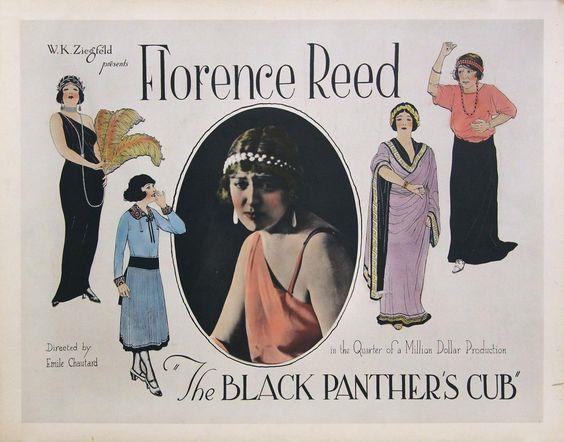
Somewhere between the absinthe drip and the dawn patrol of garbage wagons, The Black Panther's Cub plants its velvet paw on your throat and refuses to let go. This 1921 silent, long buried in a Belgian archive, surfaces like a perfectly preserved scarab: gilded, nasty, and humming with secrets. Forget the polite flapper fare you’ve streamed in sepia comfort—here is a film that smells of kerosene and tuberose, that knows every creak in the human spine.
The premise—impoverished daughter resurrects mother’s gambling den—sounds almost jaunty on paper. On celluloid it mutates into a fever chart of identity slippage. Hélène, incarnated by the astonishing Mademoiselle Dazie, never simply impersonates; she haunts her mother, wearing the dead woman’s black-panther coat like a second skeleton. Each midnight the coat seems to inhale, shoulder blades twitching with residual muscle memory.
Director Philip Bartholomae stages the casino as a Piranesian labyrinth: staircases spiral into nowhere, chandeliers dangle like decapitated suns, and mirrors reflect not faces but wallets. When Hélène spins the roulette wheel, the camera pirouettes with it, turning Paris itself into a single zero where every citizen is either predator or chip.
Notice how Henry Carvill’s dissolute marquis enters each scene with a bouquet of white lilacs, only to pluck them petal by petal while reciting the names of doomed players. It’s a tic worthy of Zaza’s theatrical cruelty, yet colder—botanical necrophilia as seduction. His final wager: a sealed vial of his own infected blood, bet against Hélène’s final dawn.
Opposite him, Paula Shay slinks through the plot like a satin noose. Her sapphic advances toward Hélène are coded but unmistakable: a gloved finger tracing the rim of a champagne glass, a whispered some debts are collected only under the tongue
. The Hays Office had not yet sharpened its shears, so the film luxuriates in implication, letting shadows do what dialogue dare not.
Cinematographer Eugène Bréon shoots the gambling tables from below, through thick glass, so the piled francs resemble battlefield corpses. Smoke coils are captured with a slow shutter, turning human breath into ectoplasm. The resultant chiaroscuro feels closer to Black Fear than to any society melodrama of the period.
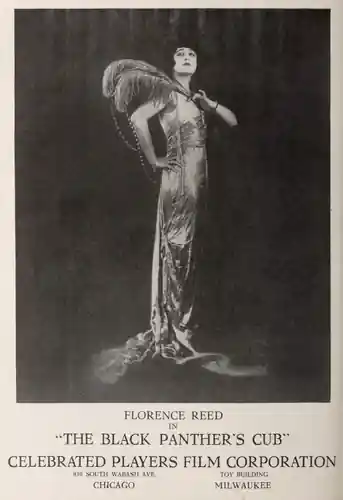
Intertitles—penned by the poet Algernon Charles Swinburne in a rare screenplay detour—read like absinthe slogans carved on a headstone:
Champagne is only wine that remembers the screams of the grapes.
These cards bleed, these dice dream, these chips carry post-mortem debt.
Mademoiselle Dazie, better known for her Apache dance in pre-war cabarets, possesses the angular ferocity of a Modigliani come to life. Watch her hands: they flutter like startled doves when she lies, then stiffen into raptor claws when she wins. The film’s mid-section contains a bravura 11-minute close-up—an eternity by 1921 standards—where she removes her mother’s pearls one by one, each pearl dropping into a crystal dish with a clack that might as well be vertebrae.
Film historians still argue whether Dazie actually suffered from tachycardia or merely weaponized it; her pulse visibly flickers beneath the clavicle, a metronome for moral disintegration.
Surviving prints retain the original cue sheets, instructing accompanists to weave Debussy’s Etudes with Argentine tango and the occasional field recording of panther growls. Modern restorations commissioned by Arte France synced these cues to a 4K scan, and the result is uncanny: you hear the absence of coins, the hush before a fall. Compare this to the orchestral bombast of A Message from Mars and you realize how avant-garde silence can be when it knows its own weight.
Where contemporaries like Nurse Marjorie flirt with proto-feminism before retreating into marriage, The Black Panther's Cub refuses the safety net. Hélène’s final act—torching the casino, striding into the Parisian dawn coatless, broke, but singular—is less a moral redemption than a refusal to be legible. She does not marry, repent, or die; she exits, leaving the narrative itself smoldering.
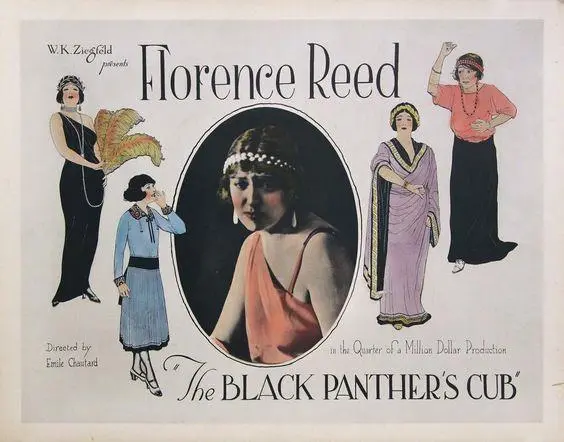
That exit reverberates through later films about female self-immolation, from The Changing Woman to The Supreme Temptation, yet none match the feral economy of this silent.
Viewed today, the picture feels perversely prescient. The roulette wheel prefigures algorithmic doom-scrolling; the wax-cylinder screams anticipate deep-fake blackmail; the panther coat is the original little black dress weaponized. Scholars of post-war trauma will note how every character carries unnamed trench memories: the croupier’s trembling hand, the duchess who compulsively hoards cigarette butts in case paper money becomes worthless again
.
Not everything lands. Comic relief supplied by Charles Jackson’s pickpocket urchin belongs in another film—perhaps a forgotten short adjacent to Some Boy. The subplot involving forged military dispatches slows the third act, though it does gift us the haunting image of a general’s medal melted into a bullet. And yes, the staginess of early-twenties mise-en-scène occasionally peeks through, especially in the over-lit boudoir exposition.
The 2023 Cinémathèque restoration reveals textures previously lost: the emerald iridescence of poisoned absinthe, the frayed hem on the panther coat signaling inherited decay. Most startling is a previously missing 45-second shot of Hélène’s silhouette reflected in a pile of knives—censors had deemed it an incitement to feminine antagonism.
Its return reframes the entire film as a hall-of-mirrors duel between self and self-image.
Currently streaming on criterionchannel.com in the Forbidden Paris retrospective, with optional English, French, and Spanish intertitles. A 4K UHD Blu-ray from Kino Lorber drops this October, featuring a new score by Claire Duchesne performed on a 1919 Érard piano. Avoid the YouTube bootlegs—prints there are sped up to fit modern frame rates, turning desperate gamblers into caffeinated squirrels.
Masterpiece is a word I ration; I spend it now. The Black Panther's Cub is not merely a rediscovered curio but a foundational text of cinematic decadence, a missing link between Les Vampires and Sunset Boulevard. It argues, with velvet conviction, that identity is just another currency, that every jackpot is a death certificate written in reverse. Watch it twice: once for the plot, once for the shiver that your own reflection might demand interest on unpaid sins.
review cross-posted on Silent Obscura | tags: #silentFilm #ParisianNoir #FemmeCinema
IMDb 5.2
1932
Community
Log in to comment.