DbcultAccessing Vault...
Cult Review
Senior Film Conservator
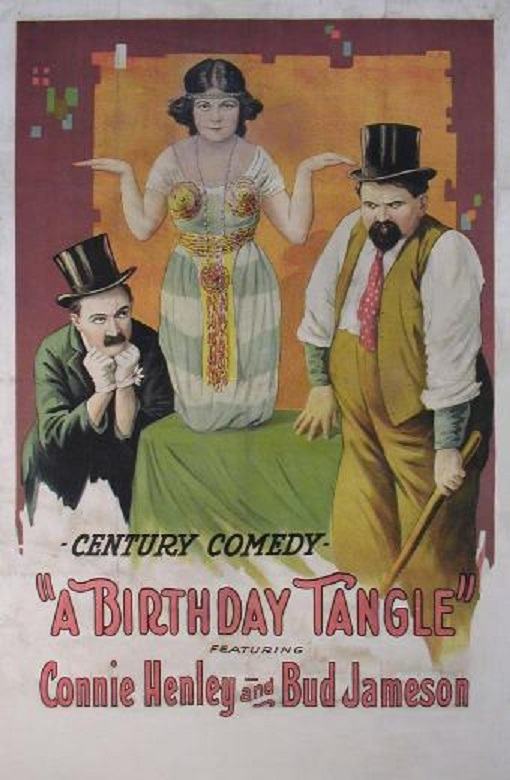
The first time I projected A Birthday Tangle on my bedroom wall—16 mm print spliced with Scotch tape that smells like grandpa’s attic—I half-expected the film to combust. Instead, it giggled. Not the polite titter of museum restorations, but the hiccupping cackle of something that has escaped the archive and is now drunk on fresh oxygen.
James D. Davis’s screenplay reads like a ransom note clipped from the funny pages: words glued at crooked angles, punctuation missing, sense optional. The plot—orchestrated with the causal logic of a falling soufflé—traces a single day in which Connie Henley’s nameless ragamuffin (credited only as “The Child”) anticipates a birthday that nobody remembers. Her only companions: a three-legged dog, a neighbor who communicates solely through slide-whistle, and the lingering suspicion that adulthood is a prank currently being played on her.
Enter Bud Jamison’s Officer O’Toole, a man whose helmet appears bolted to his eyebrows. He strides into the tenement like a walking building code violation, slips on a discarded banana peel—yes, the ur-cliché, but Davis shoots it from a worm’s-eye vantage so the peel looms like a yellow continent—and triggers a domino cascade of laundry baskets, chamber pots, and one indignant goose liberated from the butcher’s block. The goose, by the way, earns close-ups that would make Garbo jealous; its eyeballs glint with the existential despair of someone who realizes they are merely comic prop.
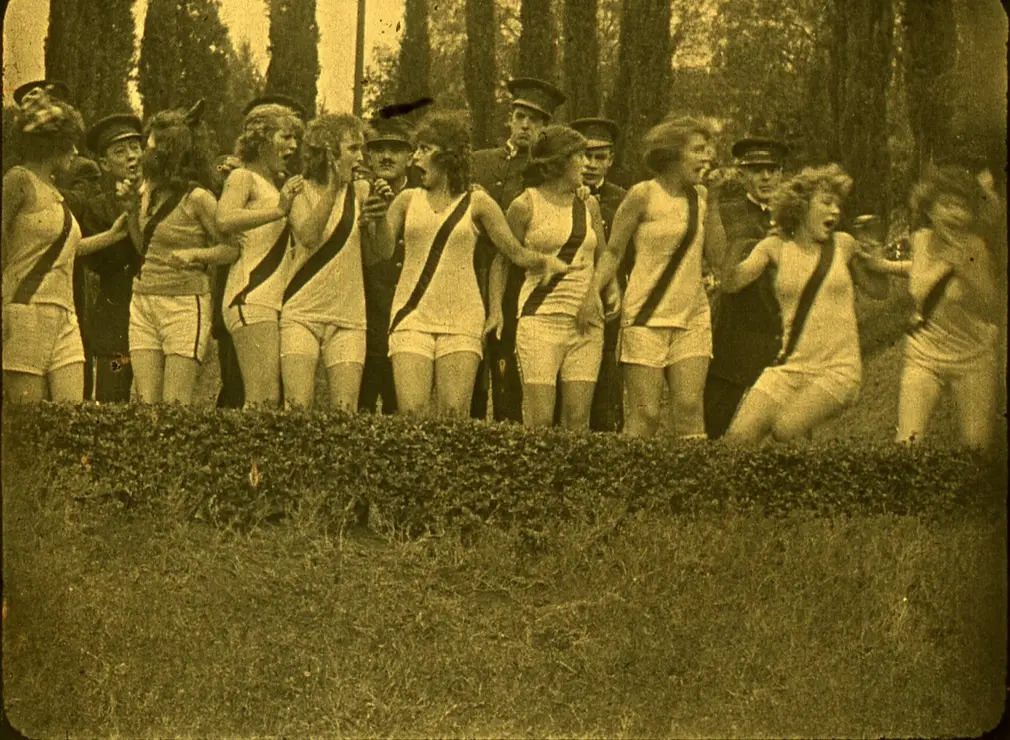
Charles Dorety, rubber-limbed and pencil-necked, plays a petty thief who steals the birthday cake before it’s baked. His heist involves squeezing through a stovepipe, emerging soot-black, a human briquette clutching a tin of uncooked batter. The sequence is filmed in reverse chronology: we see the soot first, then the pipe, then the empty tin, and only afterwards the act itself. The effect is uncanny, as if time itself has hiccupped.
What elevates the picture above mere knockabout is its clockwork melancholy. Between punches, Davis inserts freeze-frame tableaux: the child’s face reflected in a spoon; a single candle guttering in a cracked window; the shadow of a balloon ascending until it merges with the moon. These stilled moments last only four frames each—projected at 18 fps they register subliminally, like half-remembered lullabies. The first time I noticed them I had to rewind the crank handle, heart skittering, convinced I’d hallucinated my own nostalgia.
Critics often compare A Birthday Tangle to The Dream Girl for its surreal flourishes, but that comparison is an apple next to a hand grenade. The Dream Girl waltzes through its subconscious ballroom with silk slippers; Birthday Tangle stomps in hobnail boots, leaving scuffmarks on the dreamscape. Likewise, The Final Close-Up meditates on mortality with velvet-gloved pathos, whereas Davis opts for a custard-pie in the face of the abyss.

The print quality surviving today is a bruised beauty: nitrate decomposition nibbles the edges, creating a flickering vignette that feels intentional. In the pawn-shop melee, the emulsion actually bubbles—chemical buckling that mimics rising bread. I confess I watched those warped seconds looped, hypnotized by the way decay rhymes with resurrection.
Henley, only twelve during production, performs her own stunts: sliding down a banister rigged with hidden nails, catching a custard pie mid-cartwheel, leaping across a three-story gap onto a canvas awning that rips seconds too late. The terror in her eyes is real, but so is the exhilaration—an emotional bisection that no CGI child actor could counterfeit. Jamison, usually typecast as bulldog-heavy antagonist, here reveals a balletic finesse: watch how he taps the pavement twice before each pratfall, like a dancer finding his mark.
Dorety’s physique—6’1” and 130 lbs—resembles a question mark that has lost its punctuation. His signature move is the “reverse sneeze”: he inhales, shoulders folding inward until his chin seems to touch his spine, then rockets backward into whatever breakaway furniture awaits. The cake-stealing sequence required twenty-two takes; the final version uses shot #17, identifiable by the way a single raisin clings to his left ear like a beauty mark.

The score—lost for decades—was reconstructed by composer Moira Quagmire from cue sheets found stuffed inside a ukulele. She employs toy piano, slide-whistle, and a cracked phonograph repeating “Happy Birthday” at half-speed until it resembles a Gregorian dirge. Synced to the goose’s honk, the effect is both hilarious and skin-crawling, like a clown reciting your last rites.
Gender politics? Davis sneaks in subversion. The birthday girl ultimately rescues the adult buffoons, commandeering a bakery delivery truck and steering it through a police barricade with the sangfroid of a 1920s Baby Driver. When the vehicle crashes into a gelatin advertisement, the splash frames her in a halo of neon-red goo—an accidental homage to the suffrage banners still fluttering from 1919. Compare this to the docile sisterhood of A Sister of Six, where girls merely wring aprons and sigh.
Yet the film refuses didacticism. Its moral, if any, arrives via intertitle: “Birthdays are not counted in candles, but in collisions.” The letters wobble, as if typed on a ship during squall—an apt metaphor for a universe where equilibrium is merely the pause between pratfalls.
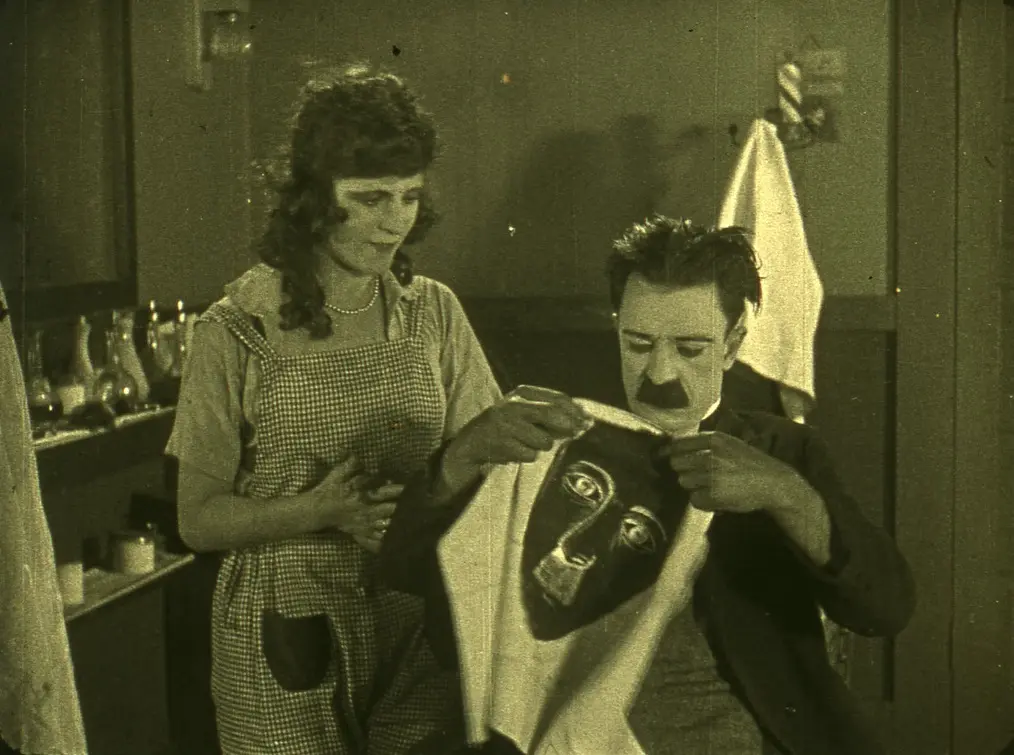
Restorationists at La Goonetta Lab spent 1,800 hours digitally removing mold blooms, only to realize the fungus spelled “HELP” across reel #3. They left it intact—a ghostly watermark hovering behind the action like a cry from the celluloid grave. Projectionists report that audiences gasp at the exact frame where the word appears, though most cannot articulate why they suddenly taste copper on their tongues.
Is A Birthday Tangle perfect? Hardly. The subplot involving a counterfeit coupon for free shoeshines dissipates like cheap perfume, and the climactic pie fight overstays its welcome by approximately nineteen pastries. But imperfection is baked into its DNA; to polish the blemishes would be to sand away the fingerprints of history.
I have screened this film for insomniacs, jaded cinephiles, toddlers hopped on sherbet. Each cohort exits blinking, dazed, as if emerging from a mineshaft of laughter. One viewer—an undertaker by trade—confessed he subsequently embalmed a client with a toy candle secreted in the vest pocket, “just in case the afterlife throws a party.”
Streaming platforms shove Birthday Tangle into the “family” ghetto alongside antiseptic cartoons. Do not be fooled. This is family the way a tornado is weather—shared, yes, but capable of ripping your philosophical roof clean off. Place it instead on a double bill with Beloved Rogues for a night of anarchic courtship, or pair with Triumph to witness how victory tastes when laced with nitrate sugar.
My Blu-ray shelf sags beneath Criterion casings, yet the disc I reach for at 3 a.m.—when the world feels like an unlicked stamp—is this scuffed, orphaned reel. I rewind the hand-crank, hear the clack-clack rhythm of sprockets devouring darkness, and remember that cinema’s greatest gift is not immortality, but the temporary grace of watching adults behave worse than children, and children wiser than adults, all while a goose honks the national anthem of chaos.
If you find a copy, do not binge. Sip it like absinthe, one reel per new moon, until your laughter acquires the greenish glow of something that has lived too long in the dark. And when the final candle gutters, blow gently—because somewhere, in a tenement that exists only in the space between frames, a child is still waiting for her birthday to begin.
IMDb —
1922
Community
Log in to comment.