DbcultAccessing Vault...
Cult Review
Senior Film Conservator

There are certain cinematic narratives that, even decades after their initial flickering debut, retain a potent, almost visceral resonance. The Rise of Jenny Cushing, a film that, for many, exists only in the annals of history and the tantalizing fragments of its original critical reception, is one such compelling entity. Though the reels themselves may be lost to time, the powerful premise — a resourceful young woman’s struggle to transcend the suffocating grip of slum life — speaks to a universal human yearning for dignity, self-determination, and a life less circumscribed by the cruel lottery of birth. It’s a testament to the enduring power of storytelling that even without the visual spectacle, the narrative skeleton of Jenny Cushing’s journey continues to captivate the imagination.
The very title, The Rise of Jenny Cushing, immediately signals an aspirational trajectory. This isn't a story of passive endurance, but active ascent. Jenny isn't merely surviving; she is strategizing, adapting, and relentlessly pushing against the invisible, yet formidable, walls of her environment. This spirit of indomitable will is crucial, particularly when considering the social fabric of the era in which the film was conceived. The early 20th century was a period rife with discussions about class mobility, poverty, and the role of individual agency in overcoming systemic disadvantages. Mary S. Watts, the novelist whose work inspired Charles Maigne’s screenplay, undoubtedly imbued Jenny with a fierce independence that resonated deeply with contemporary audiences.
Elsie Ferguson, a luminous star of the silent screen, brought Jenny to life with what contemporary reviews often described as a compelling blend of vulnerability and steely resolve. Her portrayal of Jenny Cushing was, by all accounts, a masterclass in nuanced characterization. Ferguson had a unique ability to convey complex inner turmoil and unwavering determination without uttering a single word, relying instead on expression, gesture, and the subtle shifts in her posture. One can imagine her Jenny, eyes burning with an almost defiant intelligence, navigating the crowded, often squalid streets, her gaze fixed not on the immediate grime but on a distant, shimmering horizon of possibility. This internal landscape, so vividly projected by Ferguson, would have been the bedrock of the film’s emotional impact.
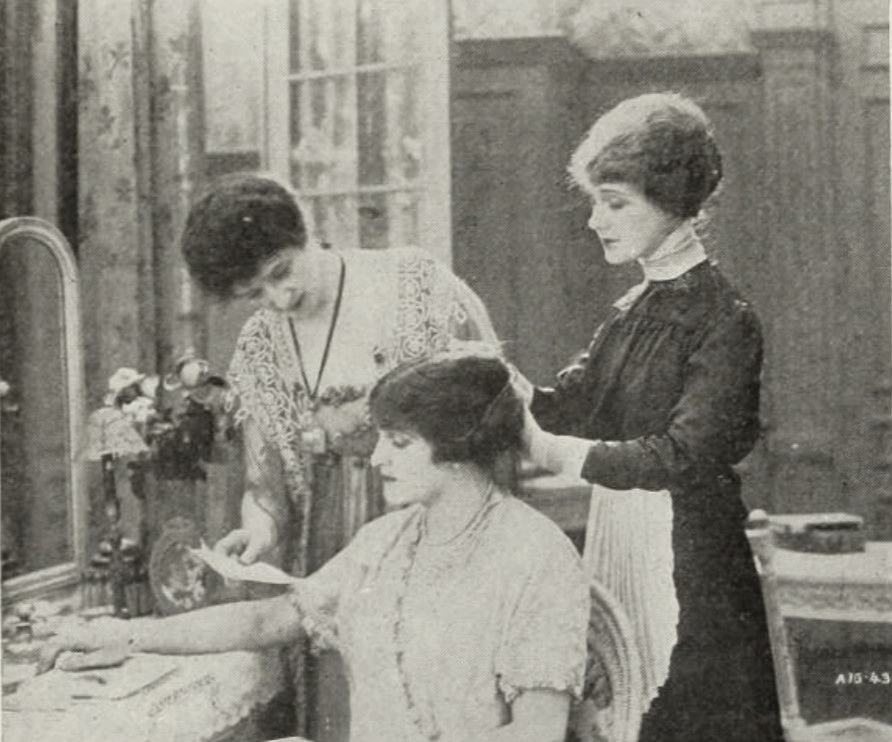
The film’s central conflict, Jenny’s struggle to free herself from the slum, is not a simplistic 'rags to riches' fable. It delves into the profound psychological and social challenges inherent in such a transition. It asks: What does one sacrifice to escape? What prejudices must be overcome, not just from society, but from within oneself? The narrative undoubtedly explored the societal judgment that often accompanies those who attempt to cross class boundaries. It’s easy to envision scenes where Jenny, having achieved some measure of success, still faces the subtle slights and overt condescension of the 'respectable' classes, forever marked by her origins. This theme of enduring societal scrutiny echoes in films like The Soul Market, which often explored the moral compromises and social judgments faced by individuals navigating the harsh realities of urban life and economic desperation.
The 'resourcefulness' attributed to Jenny is a key element. This isn't a miraculous ascent, but one built on shrewd observation, hard work, and perhaps, a degree of calculated risk. The film, in its detailed portrayal, likely showed the small, incremental victories that pave the way for larger triumphs. Perhaps Jenny found a patron, developed a skill, or simply possessed an unshakeable belief in her own worth that allowed her to seize opportunities others might have overlooked. The ensemble cast, including Elliott Dexter, Marie Burke, and Fania Marinoff, would have played crucial roles in populating Jenny’s world, providing both obstacles and support. Dexter, often cast as the leading man, might have represented a romantic interest or a societal figure whose influence Jenny navigates, while others might embody the harsh realities of her past or the judgmental attitudes of her new world.
The aesthetic choices of the film, even in its absence, can be imagined through the lens of early cinema. One can picture the stark contrasts: the shadowy, cramped tenements rendered in deep dark orange hues of grime and decay, juxtaposed with the brighter, more expansive sets representing Jenny’s aspirations – perhaps a sun-drenched artist’s studio or an elegant drawing-room, bathed in the cool sea blue light of a new dawn. The visual storytelling would have been paramount, using lighting, set design, and costume to underscore Jenny’s transformation and the chasm between her past and present. The use of close-ups on Ferguson’s expressive face would have been vital in conveying the emotional weight of Jenny’s journey, allowing audiences to connect intimately with her struggles and triumphs.
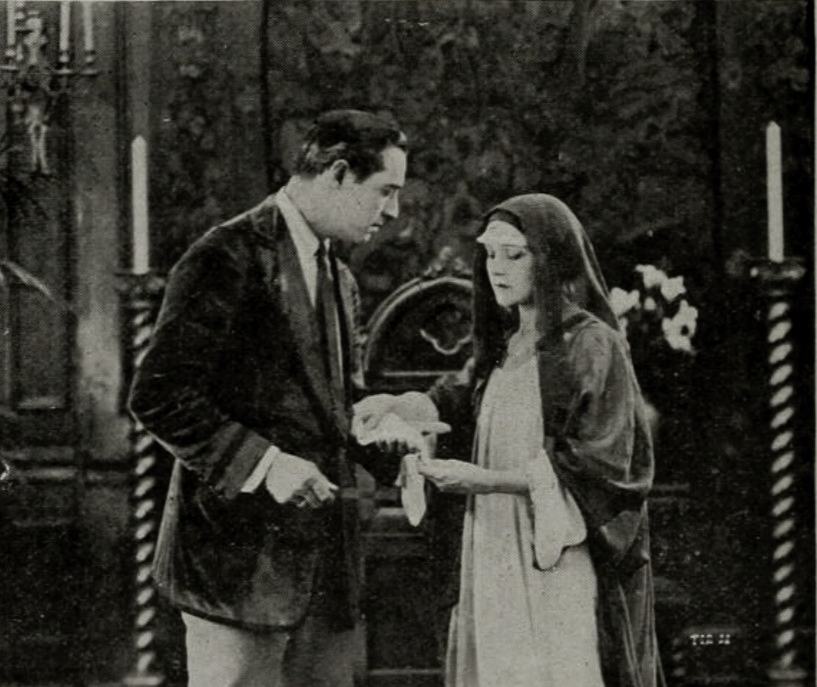
The film's exploration of social stratification and individual agency would have been particularly poignant. Unlike some narratives that depict poverty as an inescapable trap, The Rise of Jenny Cushing champions the idea of self-determination. It suggests that while circumstances can be incredibly limiting, the human spirit, armed with intelligence and tenacity, can carve out its own destiny. This theme resonates with the spirit of other films of the era that focused on individual struggles against larger forces, such as The Slave, which, despite its different narrative context, similarly explores the arduous path to personal liberation.
One can speculate on the specific trials Jenny faced. Was it a struggle against a predatory landlord? The temptation of illicit means to escape? The heartbreak of leaving loved ones behind in the slums? Or perhaps the internal conflict of wanting to shed her past while still retaining her identity? These are the rich veins of drama that such a premise offers, and a skilled writer like Charles Maigne, adapting Watts' novel, would have undoubtedly mined them for maximum emotional impact. The presence of writers like Mary S. Watts, known for her detailed social observations, suggests a narrative grounded in realism, even if heightened for dramatic effect. Her insights into the human condition, particularly within the context of social hierarchy, would have provided a robust foundation for the film.
The performance of the supporting cast, though perhaps overshadowed by Ferguson's star power, would have been integral to building Jenny's world. Marie Burke, Sallie Delatore, and Edith McAlpin, among others, would have played various characters representing the community Jenny leaves behind, the obstacles she encounters, or the allies she gains. Each face, each gesture, would have contributed to the tapestry of her journey. The nuanced interplay between Jenny and these characters would have illuminated the societal forces at play, showcasing the complexities of human relationships across class divides. This is where the film could have truly excelled, moving beyond a simple character study to a broader social commentary.

Consider the symbolic weight of Jenny’s 'rise.' It’s not just about moving to a better neighborhood or acquiring wealth; it's about intellectual and spiritual elevation. It’s about cultivating a sense of self-worth that transcends external validation. This deeper meaning elevates The Rise of Jenny Cushing beyond a mere melodrama into a poignant exploration of identity and aspiration. The film likely posed questions about what true success entails: is it merely material gain, or is it the freedom to define one's own life, irrespective of origin? This kind of thematic depth, often found in early dramas, allowed silent films to resonate profoundly with audiences on an emotional and intellectual level.
The film also likely touched upon the nascent feminist consciousness of the era. Jenny Cushing’s independence and ambition, her refusal to be defined by her circumstances, would have resonated with women grappling with expanding roles and expectations in society. Her journey could be seen as a microcosm of the broader struggle for female empowerment, mirroring the quiet revolutions happening in parlors and polling booths across the nation. In a way, Jenny's story is an early cinematic example of a woman taking charge of her destiny, a theme that would continue to evolve in cinema for decades to come. This makes the film a significant, if lost, piece of cinematic history, offering insights into societal attitudes towards women and class at the time.
The impact of such a narrative is not to be underestimated. For audiences then, and for us now in considering its legacy, Jenny Cushing represents the possibility of transformation. She embodies the hope that one's past does not necessarily dictate one's future. This universal appeal ensures that even without the visual experience, the story of Jenny Cushing remains a compelling narrative. It speaks to the resilience of the human spirit, the power of ambition, and the enduring quest for a life that aligns with one's deepest aspirations, rather than one’s imposed circumstances. It’s a narrative that continues to inspire, even from the shadows of cinematic history, proving that some stories are simply too powerful to be entirely forgotten, their essence lingering long after the celluloid has turned to dust. The themes explored are timeless, and the journey of Jenny Cushing, even in its abstract form, continues to be a compelling reminder of the human capacity for change and triumph over adversity. It's a classic tale of overcoming, rendered with what must have been exquisite sensitivity and dramatic flair by its creators and performers, cementing its place, however ethereal, in the pantheon of early American cinema.
IMDb —
1922
Community
Log in to comment.