DbcultAccessing Vault...
Cult Review
Senior Film Conservator
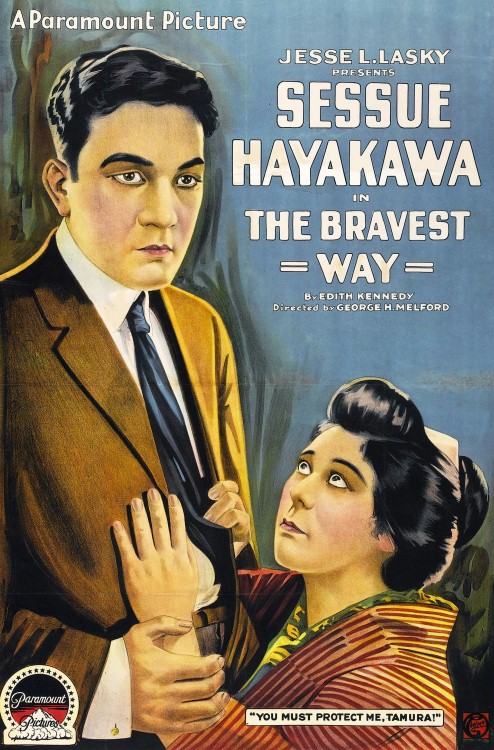
In the grand panorama of cinematic history, certain films, despite their age, possess an uncanny ability to transcend their temporal confines, speaking volumes to contemporary audiences with undiminished resonance. 'The Bravest Way' stands as one such artifact, a poignant and meticulously crafted narrative from an era often overlooked, yet brimming with stories that illuminate the human condition in its rawest forms. This is not merely a film; it is a meticulously woven tapestry of ambition, sacrifice, and the often-brutal realities faced by those who dared to dream beyond their native shores. Directed with a delicate hand and penned by the insightful Edith M. Kennedy, the film presents a nuanced look at the Japanese immigrant experience in America, foregrounding personal struggles against a backdrop of cultural assimilation and economic striving.
The narrative anchors itself around Tamura, portrayed with quiet dignity by Goro Kino, a man whose hands find purpose in the earth as a gardener. His aspirations, however, reach far beyond the soil he tends. Every saved penny, every arduous day of labor, is a deliberate step towards a future intertwined with Nume Rogers, a Japanese-American woman played by the luminous Tsuru Aoki. Their love story, while central, is painted with the brushstrokes of practicality and hope, a yearning for stability and belonging in a new land. Nume represents not just a romantic partner, but an anchor, a bridge between two worlds, embodying the promise of a life rooted in America.
Juxtaposed against Tamura's quiet resolve is the more overtly desperate struggle of his friend, Watana. Watana, whose portrayal by Sessue Hayakawa imbues the character with a potent blend of hope and underlying anxiety, has thrown his lot in with Motoyoshi, a Japanese businessman whose dealings, though perhaps lucrative, carry an air of ambiguous morality. Watana's motivation is singular, potent, and universally understood: to bring his wife, Sat-Su, and their children from Japan to America. This quest for family reunification is a powerful current throughout the film, a testament to the enduring bonds of kinship that often fueled the perilous journeys of immigrants. The anticipation surrounding Sat-Su’s arrival is not just a plot point; it is the beating heart of Watana’s existence, a beacon promising an end to his solitary toil and the beginning of a complete life.
The genius of Edith M. Kennedy's writing lies in its ability to build this emotional tension with a masterful hand. We are drawn into the hopes of these characters, their dreams made tangible through their sacrifices. The mundane acts of daily labor, the careful counting of coins, the letters exchanged across oceans—all contribute to a sense of profound investment in their eventual success. This careful construction makes the inevitable turning point all the more devastating. The day Sat-Su is finally due to arrive, a day meant to culminate in joyous reunion, instead unravels into an unforeseen tragedy, a seismic shift that recalibrates the moral compass of every character involved. This narrative device, where a long-awaited event shatters expectations, is a classic yet effective dramatic engine, reminiscent of the climactic turns in films like The Great Divide, where societal pressures and personal desires collide with explosive force.
The ensemble cast assembled for 'The Bravest Way' is nothing short of exceptional, particularly considering the often-theatrical performance styles prevalent in early cinema. Sessue Hayakawa, a titan of the silent era, delivers a performance of remarkable depth as Watana. Hayakawa possessed an unparalleled ability to convey complex inner turmoil through subtle gestures and piercing gazes, a trait that made him one of the first non-white actors to achieve genuine stardom in Hollywood. His portrayal here is a masterclass in controlled intensity, making Watana's desperation and eventual despair profoundly affecting. His interactions, particularly with Kisaburô Kurihara as Motoyoshi, are charged with an unspoken tension, hinting at the precarious balance of power and obligation.
Tsuru Aoki, Hayakawa's real-life wife and frequent co-star, brings a delicate strength to Nume Rogers. Her character is not merely a love interest but a woman caught between cultural expectations and personal desires, navigating a nascent identity in a new world. Her chemistry with Goro Kino's Tamura is understated but palpable, grounding their relationship in a believable tenderness. The supporting cast, including Florence Vidor, Josephine Crowell, and Jane Wolfe, each contribute to the film's rich texture, embodying the various facets of a society grappling with change and cultural integration. Even brief appearances by Clarence Geldert and Guy Oliver add layers of authenticity to the world presented on screen, demonstrating the meticulous attention to detail in character development that elevates this film beyond a simple melodrama.
While specific directorial credits are often less emphasized in early cinema analyses, the visual storytelling in 'The Bravest Way' speaks volumes about its thoughtful execution. The framing, the use of light and shadow, and the deliberate pacing all coalesce to create an atmosphere that is at once hopeful and foreboding. The film employs a visual language that relies heavily on the actors' expressive faces and body language, a hallmark of the silent era, yet it manages to avoid excessive histrionics. Instead, emotions are conveyed with a measured intensity, allowing the audience to truly connect with the characters' inner lives. This is a film that understands the power of the unspoken, where a lingering glance or a hesitant gesture can communicate more than pages of dialogue ever could.
The thematic richness extends beyond individual struggles to touch upon broader societal issues. The film implicitly critiques the often-unseen hardships faced by immigrant communities, the exploitation they might encounter (as hinted by Motoyoshi's character), and the immense personal cost of pursuing the 'American Dream.' It's a narrative that, despite its specific cultural context, resonates with universal themes of human aspiration, the pursuit of happiness, and the resilience required to navigate life's unexpected turns. In this regard, it shares a spiritual kinship with films like The Girl from Abroad; or, The Great Underworld, which also explored the perilous journeys and moral compromises faced by individuals in unfamiliar, often hostile, environments.
What truly elevates 'The Bravest Way' is its unflinching gaze at the unpredictable nature of fate. The meticulously planned futures of Tamura and Watana are not undone by malicious intent from an external villain, but by an event that feels almost random, a cruel twist of circumstance that underscores the fragile nature of human existence. This narrative choice prevents the film from devolving into a simplistic good-versus-evil struggle, instead elevating it to a more profound meditation on how individuals cope when their carefully constructed worlds are suddenly, violently, upended. The title itself, 'The Bravest Way,' then takes on a multifaceted meaning: it refers not only to the courage required to embark on an immigrant journey but also to the profound bravery demanded when confronted with an unforeseen catastrophe, forcing characters to navigate uncharted emotional and ethical waters.
The film's capacity to evoke empathy for its characters, even those making questionable choices under duress, is a testament to the strength of Edith M. Kennedy's screenplay. Kennedy masterfully weaves together threads of hope, despair, loyalty, and betrayal, ensuring that each character's actions, however misguided, stem from understandable human motivations. This complexity allows the audience to grapple with the moral ambiguities presented, rather than simply accepting clear-cut heroes and villains. It's a narrative sophistication that belies the film's age, making it a compelling study of character under pressure. This deep dive into the psychological landscape of its protagonists sets it apart from more straightforward melodramas of the period, aligning it more with the nuanced character studies found in later, critically acclaimed works.
For contemporary viewers, 'The Bravest Way' offers more than just a glimpse into early Hollywood. It serves as a vital historical document, shedding light on the often-unacknowledged experiences of Asian immigrants in America during a period marked by both opportunity and prejudice. The film's portrayal of community, the subtle dynamics within immigrant groups, and the universal yearning for a better life remain remarkably pertinent. It reminds us that the struggles for belonging, economic security, and family unity are timeless, echoing across generations and cultures.
While not as widely known as some of its contemporaries, the film's artistic merit and thematic depth warrant its rediscovery. It stands as a testament to the power of storytelling to illuminate the human spirit's capacity for resilience and self-sacrifice. The performances, particularly from Hayakawa and Aoki, are captivating, drawing the audience into their emotional orbit with an intensity that transcends the silent film medium. It’s a work that challenges viewers to consider the true meaning of 'bravery'—not just in grand gestures, but in the quiet, persistent acts of love, labor, and hope in the face of an uncertain future. Much like True Nobility, which explored inherent worth beyond societal status, 'The Bravest Way' delves into the nobility of spirit found in everyday people facing extraordinary circumstances.
In conclusion, 'The Bravest Way' is a film that deserves its place in the pantheon of significant early cinema. Its narrative complexity, strong performances, and enduring themes make it a compelling watch for anyone interested in film history, the immigrant experience, or simply a powerful story of human endurance. It is a reminder that even in an era without synchronized sound, cinema possessed an profound ability to stir the soul and reflect the intricate dance between individual will and the immutable forces of destiny. This cinematic journey into the heart of early 20th-century immigrant life is not merely a historical curiosity; it is a vibrant, moving narrative that continues to resonate with the fundamental human quest for happiness and belonging, regardless of the obstacles fate may place in one’s path.
IMDb 6.7
1936
Community
Log in to comment.