DbcultAccessing Vault...
Cult Review
Senior Film Conservator
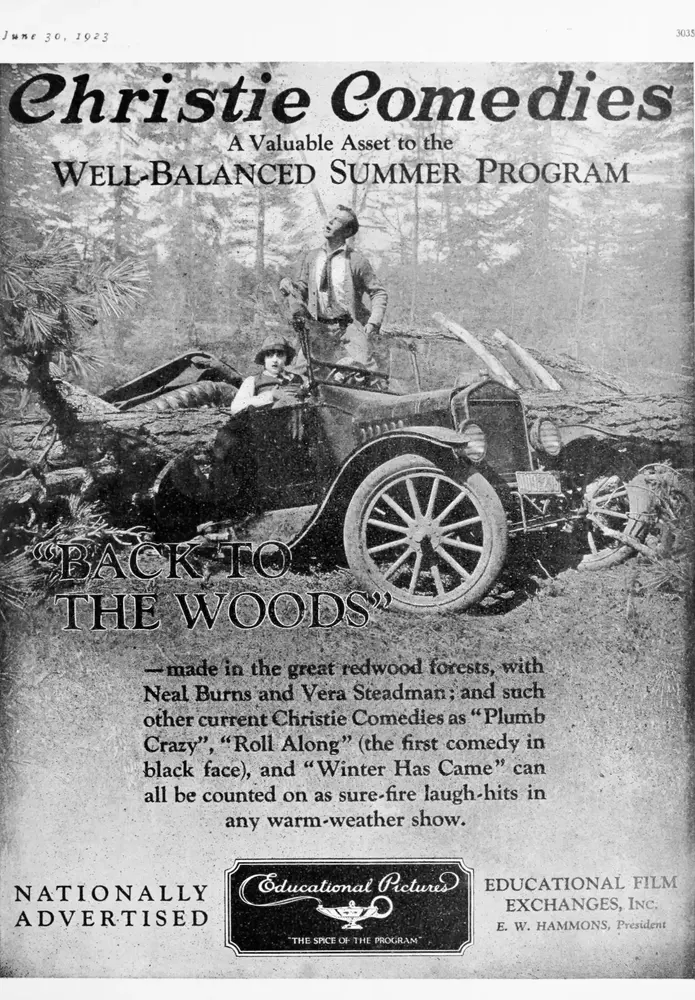
When the reels of Back to the Woods hiss to life, the viewer is thrust into a world where the scent of pine sap mingles with the metallic tang of ambition. Directed by the understated Frank Roland Conklin, this 1923 silent feature is a kinetic mash‑up of frontier romance, high‑stakes corporate intrigue, and dare‑devil stunt work that feels astonishingly modern despite its age.
The film’s narrative hinges on a classic conflict: the righteous heir versus the rapacious interloper. John Walkerton (George B. French), a lumber baron whose name reverberates through the timber‑rich valleys, is poised to cement his dominion over a lucrative tract of forest land. Yet a shadowy syndicate, led by the slick‑tongued James Harrison, plots to usurp this right through legal subterfuge and outright intimidation.
Enter Jack (Neal Burns), the archetypal ‘everyman‑hero’ whose charisma is as palpable as the wind that whistles through the canopy. Jack’s motivation is two‑fold: a genuine sense of loyalty to the Walkerton family and an unspoken yearning for Miss Walkerton (Vera Steadman), whose spirited independence defies the era’s conventional damsel‑in‑distress trope.
Thematically, the film interrogates the relationship between man and nature. The lumber industry, a symbol of progress, is portrayed both as a source of wealth and a catalyst for ecological peril. The relentless chase scenes—motorcars careening over rutted forest roads, logs rolling like massive, untamed serpents—serve as visual metaphors for humanity’s attempt to harness and outrun the forces of the wild.
Neal Burns delivers a performance that is both physically agile and emotionally resonant. In a medium where dialogue is absent, Burns communicates through a deft blend of exaggerated gestures and subtle facial nuance, ensuring that his internal conflict remains legible even amidst the film’s rapid‑fire action sequences.
Vera Steadman’s Miss Walkerton is a revelation. She eschews the passive femininity typical of early 1920s cinema, opting instead for a portrayal that balances grace with grit. Her daring participation in the climactic log‑chase—clinging to a floating plank while the river roars—cements her as an early exemplar of the empowered heroine.
Babe London, cast as the flirtatious yet resourceful sidekick, adds a layer of comedic relief without detracting from the film’s tension. Her presence is particularly evident during the scene where she commandeers a motorcar, only to be thwarted by a falling timber that crashes dramatically into the vehicle’s path.
One cannot discuss Back to the Woods without marveling at its audacious stunt choreography. The iconic sequence where a massive tree trunk plummets onto a car carrying Jack and Miss Walkerton is executed with a blend of practical effects and clever editing that feels remarkably contemporary. The impact is palpable; the camera lingers on the splintered wood, the twisted metal, and the couple’s stunned yet unharmed faces, creating a visceral tension that keeps the audience perched on the edge of their seats.
Equally impressive is the river chase. Filmed on location along an actual logging river, the production team employed real timber logs, allowing the actors to navigate a treacherous, ever‑shifting landscape. The cinematographer’s use of low‑angle shots accentuates the towering height of the logs, while high‑speed intercuts convey a sense of frantic urgency.
These sequences anticipate the kinetic energy of later action classics such as Stopping Bullets and the modern thrill rides of The Crystal Ascension. Conklin’s direction showcases an early understanding of visual storytelling that predates the sound era’s reliance on dialogue for narrative propulsion.
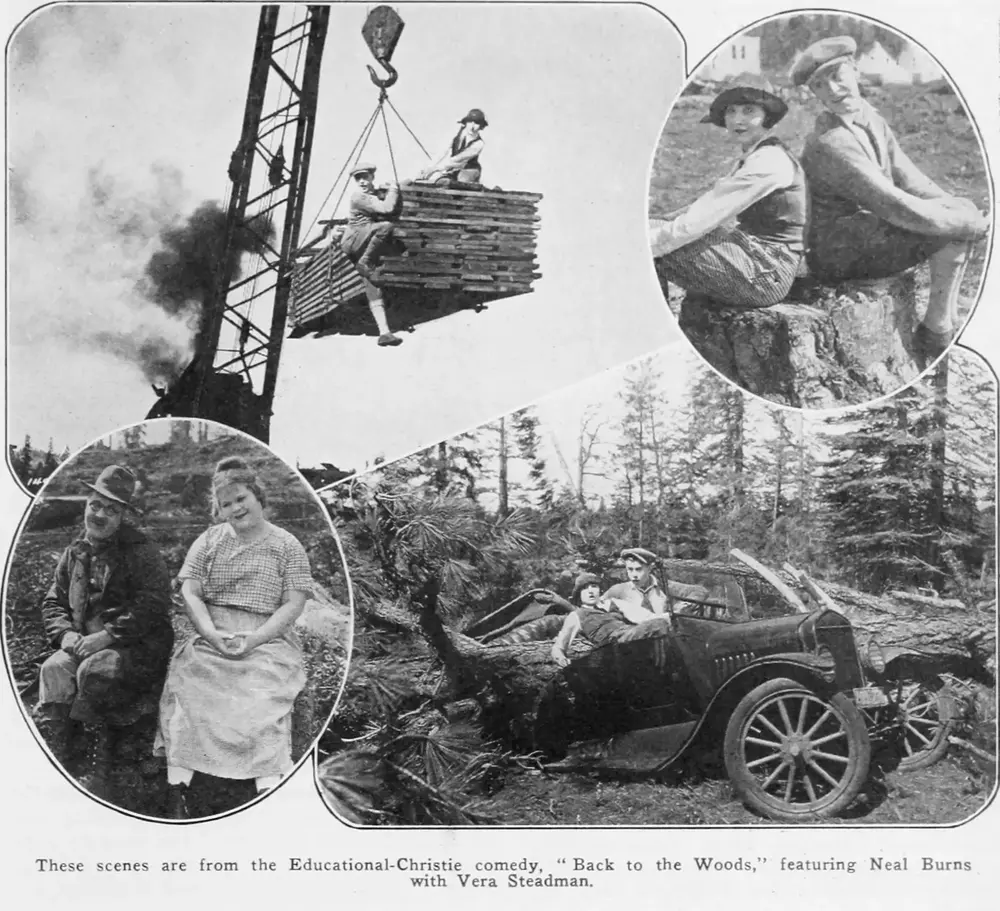
The film’s mise‑en‑scène is a love letter to the American timber frontier. From the towering redwoods that dominate the horizon to the soot‑blackened cabins that dot the landscape, each frame is meticulously composed to reinforce the narrative’s central conflict between civilization and wilderness.
Costume design further underscores class distinctions: the Walkerton family dons refined, tailored attire that contrasts sharply with the rugged, oil‑stained garments of the logging workers. This visual dichotomy amplifies the stakes of the plot, reminding viewers that the battle over timber is as much a struggle for social dominance as it is for economic gain.
While Back to the Woods shares thematic DNA with contemporaneous works like The Law of Men—which also explores corporate machinations—it distinguishes itself through its relentless kinetic energy and its unapologetic celebration of the natural world.
In contrast to the more dialogue‑driven melodrama of After the War, this film leans heavily on visual spectacle, making it a prime study for scholars interested in the evolution of action cinema. Its daring stunts foreshadow the high‑octane chase sequences that would become staples of later genre pieces, including the modern blockbuster Red Powder.
The denouement is both literal and metaphorical. After Jack and Miss Walkerton secure the patriarch’s blessing, they are hoisted atop a massive pallet of planks destined for shipment. The camera pulls back, revealing the duo silhouetted against a dawning sky, as if they are being elevated not only physically but also into a realm of triumph and destiny.
This final tableau serves as an allegory for the human desire to rise above adversity. The planks—symbols of industry, labor, and the very timber that fuels the plot’s conflict—become a platform for redemption. It’s a visual flourish that resonates with the audience, echoing the sentiment that perseverance can transform even the most precarious of circumstances into soaring success.
Strengths:
Weaknesses:
Legacy:
In the pantheon of silent cinema, Back to the Woods occupies a niche that bridges raw frontier adventure with sophisticated visual narration. Its audacious set pieces, coupled with performances that convey depth without spoken word, make it a compelling study for cinephiles and scholars alike. Whether you are drawn to the film for its historical significance, its pioneering stunt work, or its nuanced portrayal of early 20th‑century industrial drama, it rewards repeated viewings. The film stands as a testament to the ingenuity of filmmakers who, constrained by technology, found boundless ways to captivate audiences. For anyone seeking a thrilling, visually rich silent era experience, this timber‑laden odyssey remains a must‑watch.
IMDb —
1915
Community
Log in to comment.