DbcultAccessing Vault...
Cult Review
Senior Film Conservator
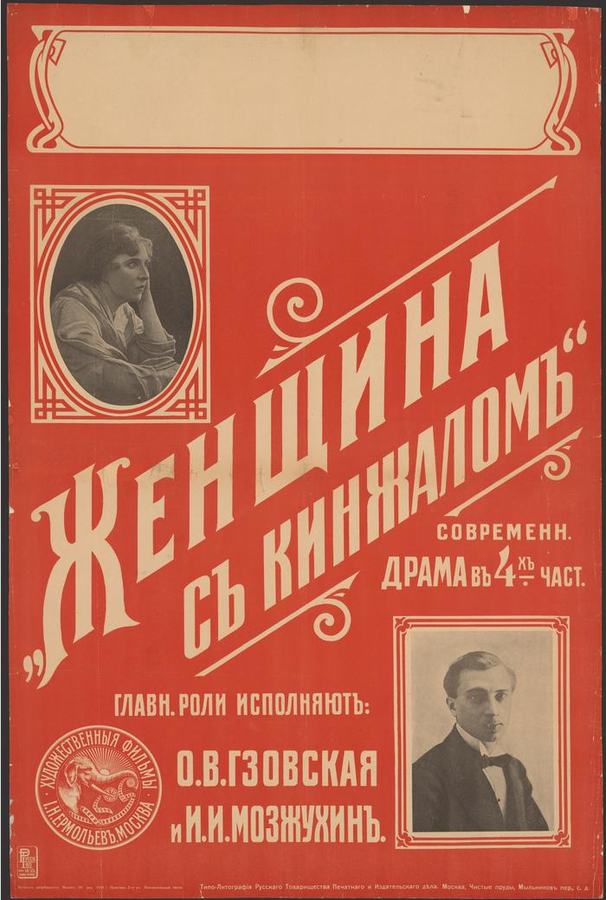
The silent era, often mistakenly dismissed as primitive, was in fact a fertile ground for profound cinematic exploration, delving into the very depths of the human psyche with a visual poetry that few contemporary films can match. Among its many treasures, "The Dagger Woman" emerges as a particularly potent and unsettling drama, a stark morality play wrapped in the opulent aesthetics of early 20th-century society. It's a film that dissects the perilous intersection of artistic ambition and human vulnerability, presenting a narrative that, despite its vintage, resonates with an almost uncomfortable contemporary relevance. From its opening frames, we are drawn into a world where beauty can be a trap, obsession a destructive force, and the pursuit of art a path paved with emotional wreckage.
At its core, "The Dagger Woman" is a chilling examination of power dynamics, a story where the lines between inspiration and exploitation become dangerously blurred. The film introduces us to Ivan Savonsky, a society artist whose talent is matched only by his formidable, almost predatory, charisma. Portrayed with an unsettling blend of charm and detachment, presumably by Ivan Mozzhukhin (though specific role assignments in early cinema sometimes blur across cast lists, his presence alone suggests a performance of considerable intensity), Savonsky is a man for whom art is not merely a profession but an all-consuming religion. His world revolves around the canvas, and human beings, it seems, are merely raw material for his creative altar. He embodies the archetypal 'tortured artist,' but with a crucial, sinister twist: his torment is not self-inflicted but rather extracted from those unfortunate enough to fall under his artistic spell.
Enter Olga Kartoff, a young woman of impeccable social standing, brought to life with an exquisite fragility and burgeoning strength, likely by Olga Gzovskaya. Olga is everything Savonsky is not: emotionally open, initially naive, and brimming with a vitality that makes her a magnetic presence in high society. Her attraction to Savonsky is immediate, an almost gravitational pull towards his enigmatic aura. It's a common trope, yet here it’s handled with a nuanced understanding of how vulnerability can be mistaken for connection, how a flicker of admiration can be stoked into a consuming fire. Savonsky, however, sees not a lover, but a muse; not a soulmate, but a perfect model. His vision for "The Dagger Woman" is clear, and Olga, with her striking features and expressive capacity, is the precise embodiment of his artistic ideal. This initial misreading of intentions sets the tragic machinery of the narrative into inexorable motion.
The film masterfully depicts Savonsky's insidious process of emotional manipulation. He doesn't merely ask Olga to pose; he carefully, almost scientifically, plays upon her emotions, drawing her into a web of manufactured intimacy. His methods are subtle, yet devastatingly effective. He gains her confidence not through genuine affection, but through a calculated performance of interest, a theatrical display designed solely to unlock the emotional depth he requires for his painting. The silent film medium, with its reliance on exaggerated gestures, facial expressions, and intertitles, excels at conveying these internal machinations. We see the subtle shifts in Olga’s demeanor, the growing light in her eyes as she believes herself to be truly seen, truly desired, by this charismatic artist. This period of artistic courtship, a perverse seduction of the soul rather than the body, is where the film truly begins to tighten its grip, laying the groundwork for the inevitable betrayal.
When Olga finally consents to pose, it is a culmination of this carefully orchestrated emotional campaign. She offers herself, not just physically, but emotionally, believing in a reciprocal connection that simply does not exist for Savonsky. For him, she is a means to an end, a living canvas, a conduit for his vision. The creation of "The Dagger Woman" is depicted as an intense, almost vampiric act, where Savonsky drains Olga's emotional wellspring to imbue his artwork with life. The completed painting, we are told, is a masterpiece, a testament to Savonsky's genius. And here lies the cruel irony: the very success of the artwork becomes the instrument of Olga's profound suffering. Her grief and anger upon discovering that Savonsky's interest rests solely in the painting's reception, and not in her, is a visceral punch. The moment of revelation, undoubtedly conveyed through powerful close-ups and dramatic gestures by Gzovskaya, must have been utterly heartbreaking for contemporary audiences. It’s a moment that echoes the emotional devastation seen in films like Her Bitter Cup, where female protagonists grapple with the harsh realities of male indifference and societal betrayal.
The film then pivots to the public sphere, where "The Dagger Woman" is indeed pronounced a masterpiece. Savonsky basks in his triumph, oblivious to the storm brewing in Olga's heart. His return to his studio, flushed with success, is a scene pregnant with dramatic irony. He is at the zenith of his career, while Olga, humiliated by the public 'reports circulated' regarding herself and the artist (a chilling nod to the destructive power of gossip and societal judgment), has secreted herself within the very sanctum of his artistic achievement. This public humiliation, a common theme in silent dramas such as The Sins of the Mothers or Blue Blood and Red, elevates Olga's personal tragedy to a societal one, underscoring the precarious position of women in a patriarchal world where their reputations could be so easily tarnished.
The climax of "The Dagger Woman" is a tour de force of silent film drama. Unable to bear his disinterest any longer, Olga, in a desperate act of reclaiming her shattered dignity and agency, plunges a dagger into Savonsky's heart. It is a moment of profound, albeit tragic, empowerment. The muse, once a passive object of artistic desire, transforms into an active agent of vengeance, fulfilling the grim prophecy embedded within the painting's very title. This act of violence is not merely a crime of passion; it is a desperate, final scream against exploitation, a devastating critique of an artistic process that devoured human lives for aesthetic gain. The ending is stark, uncompromising, and leaves an indelible mark, inviting viewers to ponder the true cost of genius when divorced from empathy.
The performances, particularly from Ivan Mozzhukhin (assuming his role as Savonsky) and Olga Gzovskaya (as Olga Kartoff), are crucial to the film's impact. Mozzhukhin, known for his intense, often theatrical style, would have imbued Savonsky with a magnetic yet chilling presence, his eyes conveying both artistic vision and emotional void. Gzovskaya, on the other hand, would have had the monumental task of portraying a character who undergoes a profound transformation: from starry-eyed admirer to a woman consumed by grief, anger, and ultimately, a desperate resolve. Her ability to convey these complex emotions through gesture and expression, without the aid of dialogue, would have been a testament to her skill and the power of silent acting. The supporting cast, including Nikolai Panov and Zoia Karabanova, would undoubtedly have contributed to the rich tapestry of the film's social milieu, adding layers of context to Olga's public humiliation and Savonsky's celebrated status.
Nicolas Rimsky's writing for "The Dagger Woman" is a testament to the narrative sophistication of the era. The plot is tightly constructed, building tension incrementally, and allowing the psychological drama to unfold with a relentless logic. The themes explored are timeless: the destructive nature of obsession, the ethical responsibilities of the artist, the vulnerability of the human heart, and the tragic consequences of unchecked ambition. It’s a narrative that, in its stark simplicity, achieves a universality that transcends its specific setting. One could draw parallels to other films of the period that explore intense psychological drama and tragic outcomes, such as The Great Leap: Until Death Do Us Part, which also delves into the extremities of human emotion and fatal decisions.
The film's visual language, characteristic of the era, would have been highly expressive. Directors of silent films often employed dramatic lighting, stark contrasts, and symbolic staging to convey mood and meaning. Imagine the contrast between the vibrant, social scenes where Olga shines, and the increasingly shadowed, claustrophobic atmosphere of Savonsky's studio. The use of close-ups would have been paramount, allowing the audience to witness the subtle tremors of emotion on the actors' faces, particularly in the pivotal scenes of Olga's realization and her ultimate act of vengeance. The very title, "The Dagger Woman", is not just descriptive but prophetic, a stark foreshadowing of the tragic events to come, a testament to the power of symbolic titles in early cinema, much like the evocative nature of titles such as The Iron Woman which hints at a character's resilience or severity.
Beyond its immediate narrative, "The Dagger Woman" functions as a powerful social commentary. It critiques a society that lionizes artistic genius without questioning its ethical implications, and one that readily condemns women caught in the crossfire of male ambition. Olga's humiliation is not just at the hands of Savonsky, but at the hands of the society that consumes the sensational 'reports' about her. This aspect of the film aligns it with other silent-era works that subtly, or sometimes overtly, challenged societal norms and exposed hypocrisy. The tragic arc of Olga Kartoff is a poignant reminder of the fragility of reputation and the devastating impact of public opinion, a theme that resonates across cinematic history, from early melodramas to contemporary dramas.
In conclusion, "The Dagger Woman" is far more than a historical curiosity; it is a vital piece of cinematic art that speaks volumes about the human condition. Its exploration of artistic exploitation, the perils of unrequited passion, and the ultimate, tragic reclaiming of agency by a wronged woman ensures its enduring power. It challenges us to look beyond the surface of beauty and creation, to question the ethical boundaries of art, and to confront the often-devastating consequences of emotional manipulation. This film, with its compelling characters, potent themes, and masterful silent storytelling, solidifies its place as a significant and thought-provoking drama from an era that consistently proved its capacity for profound narrative and emotional depth. It remains a stark, beautiful, and ultimately haunting vision of art's dark side, a testament to the enduring power of cinema to reflect our deepest fears and most complex desires.

IMDb 6.8
1931
Community
Log in to comment.