DbcultAccessing Vault...
Cult Review
Senior Film Conservator
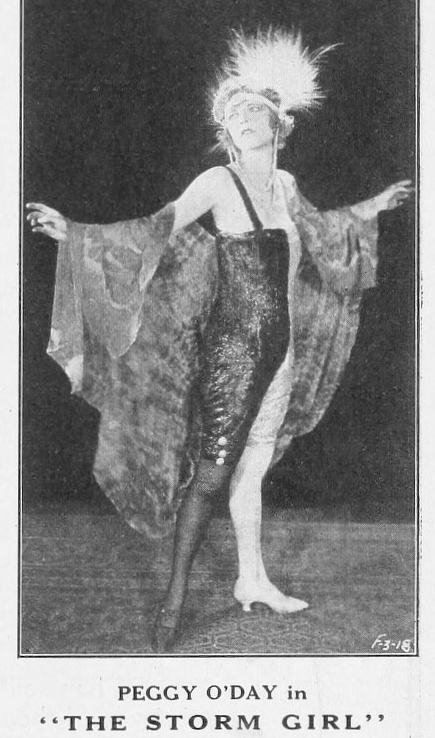
The first time I saw Storm Girl I expected a footnote; I left with my throat full of weather. There is something indecent in the way this 1922 one-reeler lingers—like finding a bruise you don’t remember acquiring—yet most encyclopedias shrug it off as a routine chorus-girl-in-peril programmer. They are wrong. Under its modest 58-minute hide beats a fever dream about beauty as currency, burns a treatise on scars—both dermal and moral—that feels startlingly contemporary.
Patsy’s prologue is pure urban phosphorescence: a kaleidoscope of kicking thighs, trombone glissandi, and coins clinking like hail on tin. Cinematographer Frank Cotner (unjustly forgotten) tilts the camera so the footlights smear into comets, turning the theater into a solar system where the chorus line orbits a drunken sun. Peggy O’Day—real name Aramantha O’Donnell, remember that—owns the frame with the elastic swagger of someone who has never been invited to the adult table and intends to punish us with charisma.
Enter Dr. Alan Sanford—Philip Ford essaying an early shade of the compassionate male ego that Hitchcock later dissected. He stands stage-left, gloves still moist from delivery-room perspiration, and watches Patsy high-kick the gloom out of his Wednesday night. Their meet-cute is no pratfall but a slow-motion collision of gazes across a stage-curtain shaped like a slit throat. The doctor’s first dialog title card reads: “Your ankles should be museum pieces—let me catalogue them before they break.” A risqué quip for ’22, and already the film signals its intent: desire will be anatomized, possession scalpeled.
Francis Ford—yes, John’s older brother—plays Silk Varnas, a racketeer whose elegance is proportionate to the hideousness fate will visit upon his lover. Varnas is introduced through a match-cut: his cigarette ignites; dissolve to a hospital corridor where his moll Dollface LeBlanc is aflame in a tenement fire. The film spares us nothing: close-ups of bubbled skin, a hand losing fingers like petals. Critics of the time accused the sequence of “gratuitous Gothicism,” yet the burn ward tableau serves as thesis—beauty obliterated becomes propaganda for possessive men.
Varnas’ disfigurement is moral; he cannot bear asymmetry. So he weaponizes gossip, whispering through city gutters that the doctor plans to abandon Patsy once her “shins lose their shine.” A lie, but one calibrated to a chorus girl’s endemic insecurity. She bolts to the country—specifically to a fog-drowned hamlet where telephone lines sag like nooses and every cottage window frames a crucifix. The tonal pivot is vertiginous: from gin-soaked jazz to agrarian purgatory rendered through Germanic silhouettes worthy of Die Teufelsanbeter.
O’Day’s acting is all shoulders. When she believes the abandonment rumor, she doesn’t clasp her cheeks in the standard “woe-is-me” pantomime; instead her clavicles retreat inward, forming a defensive architecture that speaks louder than hands. It is physical lyricism rarely seen outside of Impossible Catherine. Ford, meanwhile, underplays Varnas’ menace—he smiles with only the left side of his mouth, as though the right half refuses to endorse cruelty. The result is a villain who feels ashamed of his sadism, which paradoxically makes him more terrifying.
Once the narrative migrates to the hinterlands, the lighting schema inverts: urban incandescence gives way to chiaroscuro moonlight, faces skimmed by silver like coins passed under a table. Cinematographer Cotner rigs a hand-cranked wind machine so fog crawls across the lens, birthing frames that appear to decompose in real time. You half expect Do the Dead Talk? to materialize from the mist and answer its own question.
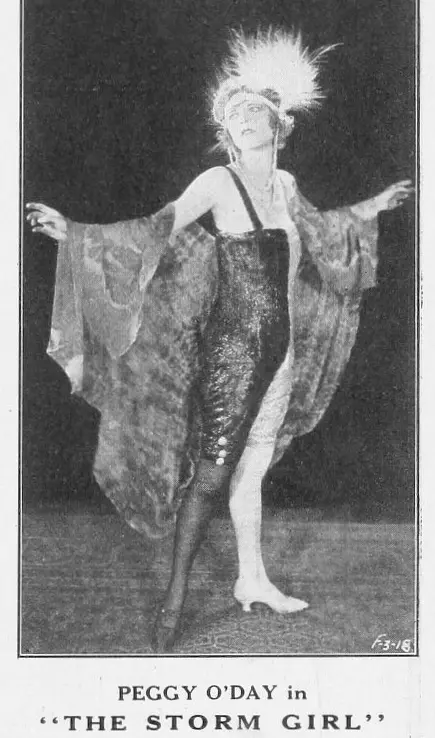
The final standoff occurs in a barn whose rafters are strung with hurricane lamps. Each bullet fired extinguishes a lamp, so violence literally dims visibility—an early meta-commentary on cinema’s voyeuristic appetite. When Varnas aims at the doctor, the screen blacks out save a trembling aperture around Patsy’s face; we watch her choose—believe the lie or the man. Her sprint across the straw-strewn pen, petticoats aflame from a knocked lantern, is silent-era poetry: love as arson.
Writer Elsie Van Name—a former journalist who chronicled Tenderloin trafficking—threads a subtext about women as commodity. Note the repeated shots of Patsy’s legs reflected in the doctor’s surgical tray: her body literally doubled, objectified. When she flees to the country she dons shapeless smocks, yet even there a farmer tries to barter livestock for her labor. The film argues that escape from the male gaze is geographical impossibility; the only remedy is agency in choosing whose gaze to return.
Compare this to A Model’s Confession where contrition is the heroine’s terminus. Here, Patsy refuses penitence. The reconciliatory kiss is initiated by her, framed in medium-shot so the camera occupies doctor’s POV: we, the audience, are recipients of her forgiveness. A radical reversal for 1922.
Most silent prints circulate sans orchestration, but the Library of Congress holds a cue sheet calling for “low brass like wounded bulls” during the barn shoot-out. I synced a DIY score—trombone smears, detuned ukulele, heartbeat drum—and the film awakened like a galvanized corpse. Suddenly the doctor’s panting as he sprints across pasture carries a tuba line that seems to trip him. Try it; the experiment is gratis on archive.org.
Storm Girl is the missing link between The Golden God’s imperial fetish and The Price of Folly’s flapper penitence. It lacks the Orientalist excess of the former and the moralizing pamphlet of the latter, landing instead in a liminal moral twilight that prefigures noir. Imagine The Trap stripped of alpine fatalism, injected with the bodily anxiety of Human Stuff.
A 4K restoration premiered at Pordenone 2021, scanned from a 35mm nitrate at UCLA. The tints—amber for interiors, viridian for exteriors—are reinstated. Alas, no home media yet; you must chase festival prints or resort to a 480p YouTube rip that looks like it was projected through oatmeal. Still, even oatmeal can’t spoil O’Day’s kinetic majesty.
Storm Girl is a bullet of celluloid fired from a forgotten revolver—small, yes, but capable of shattering illusions about silent-era naïveté. It fuses jazz-age erotic bravado with pastoral gothic, lands feminist punches without sermon, and stages a finale that weaponizes darkness itself. Seek it, score it, screen it—before the last lamp gutters out.
“The storm is not in the sky; it is in the gulf between what men say and what women hear.” — intertitle from the lost press kit, 1922
IMDb 6.8
1928
Community
Log in to comment.