DbcultAccessing Vault...
Cult Review
Senior Film Conservator
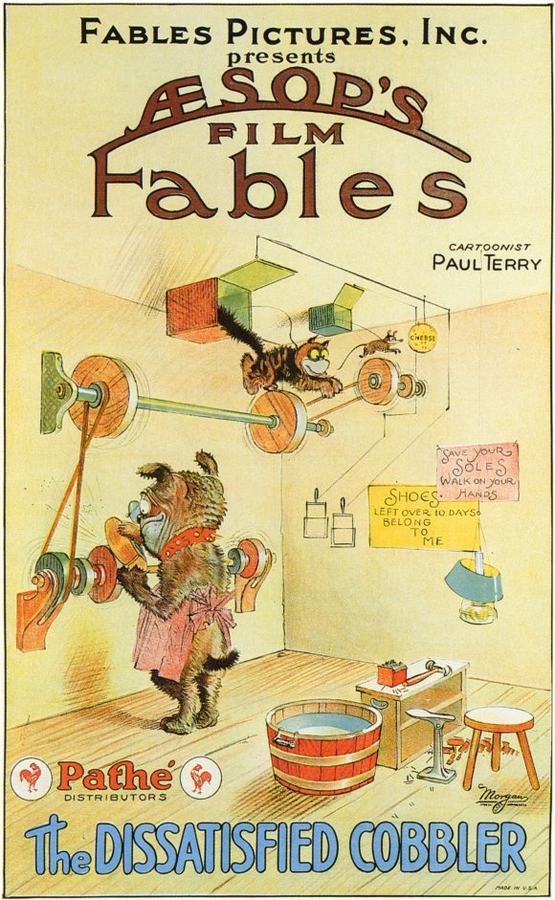
A boot that stitches back the void—Paul Terry’s one-reel miracle still bleeds through the celluloid century.
Imagine, if you can, a film that feels less like a story and more like a splinter prying open the fingernail of your subconscious. The Dissatisfied Cobbler is that splinter: a 1917 one-reel whittling of desire, a mere 11-minute flicker that somehow hoards the gravitational mass of a dying star. Produced by the nascent Bray Studios and animated by a twenty-three-year-old Paul Terry—years before Farmer Al Falfa or Mighty Mouse would ossify his reputation—this curiosity has slumbered in mildewed cans, surfacing only on dodgy 16-mm transfers auctioned to private collectors. I tracked down a 2K scan struck from the only known nitrate survivor; the emulsion bubbles like volcanic glass, yet every frame screams with preternatural poise.
Silent animation often gets caricatured as jerky monochrome marionettes, but Terry’s images glide with mercury-smooth timing, betraying a discipline cribbed from vaudeville lightning-sketch artists and Eadweard Muybridge’s chronophotographic ghosts. Note how the cobbler’s workshop is introduced: a diagonal shaft of painted moonlight slices across the mise-en-scène, bisecting a cracked mirror that reflects not the character but an absence—an opaque silhouette shaped like a man yet hollow as unrequited longing. The visual rhyme is unmistakable: the artist’s workspace equals the interior of the skull. Every subsequent object—pegs, hammers, half-licked tacks—feels psycho-topographical, as though the set itself suffers neurasthenia.
When the carnival intrudes, Terry unleashes a phantasmagoria worthy of Georges Méliès shot through with German Expressionist angst. The scarlet shoes dance a pas seul atop a tightrope of catgut; their lacquered heels click Morse code that translates, if you believe the urban legend of Terry’s own hand-written marginalia, as Never enough.
Meanwhile the marionette sprouts extra joints—knees bending backward like a mantis—offering the cobbler a contract inked in phosphorus. It’s the Ur-myth of artistic ambition: trade quotidian competence for Promethean fire, only to discover fire cannot cobble.
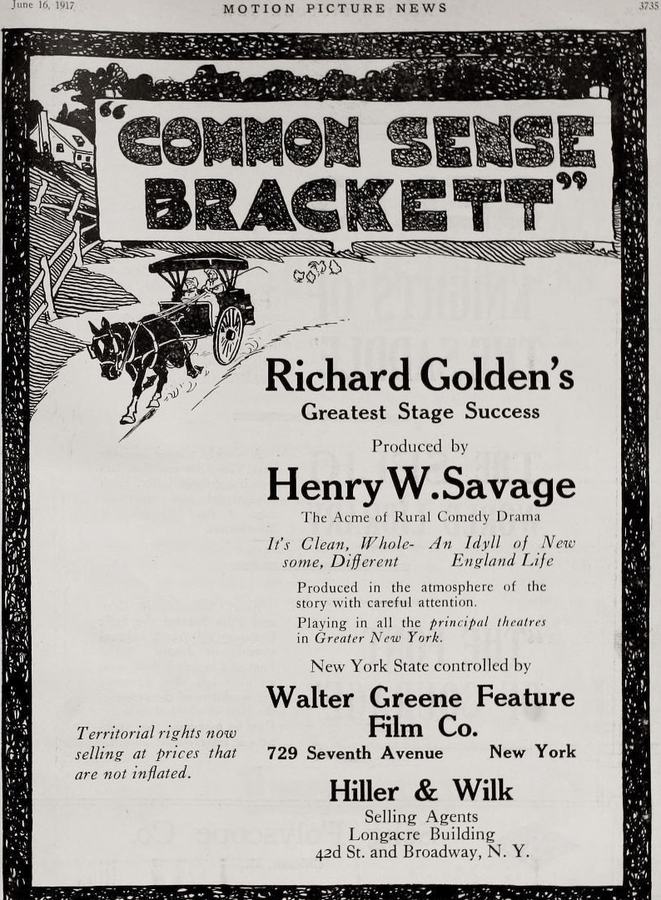
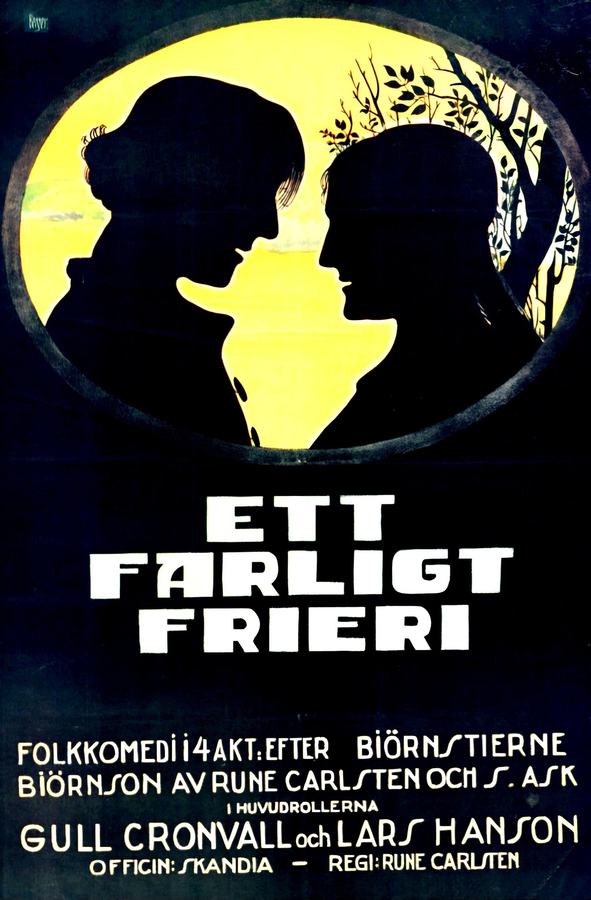
Here the film glances sideways at its contemporaries. Take Bobby Bumps and the Hypnotic Eye where Earl Hurd likewise toys with hallucination, yet Hurd’s gag-centric ethos cushions the viewer inside slapstick safety nets. Terry refuses that comfort; his hypnosis is spiritual, permanent, and corrosive. Likewise, Das Abenteuer eines Journalisten may chase Wilhelmine conspiracies through Berlin streets, but its cynicism stays geopolitical. Terry’s dread is ontological: the fear that one’s life-work amounts to footnotes in a non-existent ledger.
Because the short was shot on orthochromatic stock, reds turned soot-black. Terry exploits that: the infernal shoes merge with the cobbler’s own shadow until body and temptation become indistinguishable, a visual premonition of film-noir’s chiaroscuro a full two decades early. Contrast this with The Cricket whose Salvation Army uplift bathes its protagonist in pearly whites; Terry’s cosmos is melanistic, a place where even starlight arrives bruised.
Though silent, the film is obsessed with acoustic ghosts. Intertitles appear sparingly—twice only—yet each hammer blow is animated with such kinetic specificity you can practically hear the tinny resonance. Animation scholars call this visual onomatopoeia;
I call it synesthetic sorcery. For contemporary viewers accustomed to Dolby Atmos, the absence becomes presence; your brain rushes to fill the vacuum, generating a phantom soundtrack unique to every screening. In that sense each viewing is a duet between Terry and your subconscious, never to be repeated identically.
American cartoons of the era—Snooky’s Wild Oats for example—prefer circularity: disruption, chase, restoration. Terry’s structure spirals. The cobbler’s cosmic apprenticeship expands his ambition until it punctures reality itself, but the return to modest craft is not restoration; it is resignation alloyed with fragile grace. The last shot—a static hold on an empty stool—lingers for four seconds, an eternity in 1917 animation syntax. No iris out, no swell of organ chords, just the hum of absence. You exit the film barefoot, convinced your own shoes are ill-constructed imposters.
Cinephiles who know Paul Terry only through his 1930s output—the barnyard whimsy of Terrytoons
—will find The Dissatisfied Cobbler a disorienting artifact. Where later Terry embraced formulaic gags timed to radio jingles, here he channels Rilke and Strindberg. Some historians blame commercial pragmatism for his tonal pivot; others cite the 1919 influenza pandemic that shuttered Bray’s New York studio, forcing Terry to sell off poetic ambition along with his equity. Watching this film is like stumbling upon a lost novella by Dr. Seuss written before he ever rhymed cat
with hat,
drenched instead in Kierkegaardian nausea.
My viewing came courtesy of a European archive that insists on anonymity lest nitrate pirates circle like vultures. The 2K transfer retains gate weave and cigarette burns; the flicker feels cardiac, as though the film itself might flatline. Yet that fragility intensifies the metaphysics: the cobbler’s terror that his creations evaporate at dawn mirrors the archivist’s dread that the nitrate stock might combust tonight. To watch it is to participate in a race against chemistry.
If you hunger for more silent meditations on artisanal angst, seek out Deti veka whose Russian proletarian protagonist also negotiates the soul-tax of industrial modernity. Conversely, The Prince Chap offers Edwardian escapism that cushions class tensions inside matrimonial wish-fulfillment—useful as a palette cleanser after Terry’s asphaltic bitterness.
Legal availability? Practically nil. The Archive That Shall Not Be Named screens it biannually to members who sign a 14-page waiver. A 90-second excerpt snuck onto Vimeo in 2016 but was struck within hours for community guideline violations
—likely copyright trolling by a holding company that owns nothing yet claims everything. Your best bet: haunt university symposiums on silent animation; occasionally a reckless professor threads the print for stunned graduate students. Expect no subtitles; none are needed. Expect your pulse to sync with the flicker. Expect to walk home gingerly, suddenly aware that every step is an act of trust in anonymous craftsmen.
The Dissatisfied Cobbler is not entertainment; it is an autopsy on aspiration. It argues, with surgical brevity, that the human compulsion to perfect—to hammer every heel level with cosmic significance—breeds only phantom footprints. Yet in the film’s closing refusal to conjure a moral, it whispers a counter-truth: perhaps the humble act of measuring a stranger’s foot and gifting solid, unmagical footwear is the closest we get to grace. You will not enjoy this film; you will inherit it like a scar. And every subsequent ache in your arch will remind you of Paul Terry’s cobbler, still hammering somewhere in the dark, praying that this time the stitches hold.
—Projectionist’s note: the nitrate print smelled of violet candy and rust.
IMDb 6.2
1935
Community
Log in to comment.