DbcultAccessing Vault...
Cult Review
Senior Film Conservator
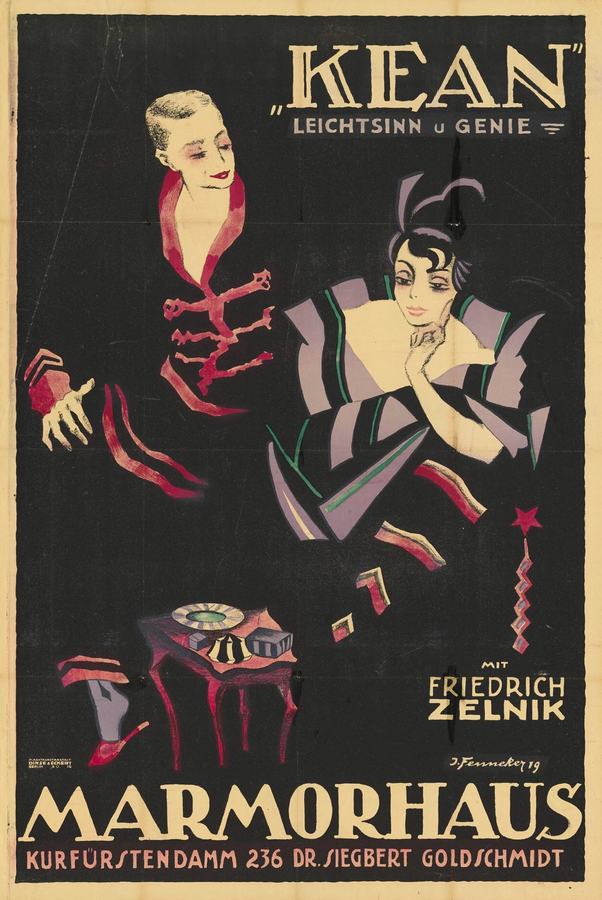
The celluloid ghosts of the late 1910s often whisper of lost grandeur, but in Alfred Halm’s Leichtsinn und Genie, those whispers escalate into a resonant roar of existential angst and creative fervor. Released in 1918, a year of tectonic shifts in both global politics and cinematic language, this film stands as a monumental bridge between the theatrical stiffness of early cinema and the burgeoning psychological depth of German Expressionism. It is a work that demands more than mere viewing; it requires an excavation of the soul.
Drawing its thematic marrow from the writings of Alexandre Dumas fils, the film tackles the archetype of the 'tortured artist' with a nuance that was frequently absent in the more moralistic American productions of the same era, such as Ignorance. While many contemporary films were content to present characters as binary vessels of virtue or vice, Halm and his screenwriting team delve into the gray penumbra of the human condition. The protagonist, portrayed with a haunting, kinetic energy by Frederic Zelnik, is not merely a man who makes poor choices; he is a man whose very essence is a conflagration of talent and self-destruction.
The narrative structure mirrors the chaotic rhythm of a fever dream. We see the protagonist oscillating between the adulation of the theater and the cold, unforgiving reality of his debts and romantic entanglements. Unlike the protagonist in The Accomplice, who finds themselves trapped by external circumstances, the hero of Leichtsinn und Genie is his own most formidable jailer. The 'Genius' of the title is a double-edged sword, a gift that provides entry into the highest echelons of society while simultaneously ensuring the bearer never truly belongs there.
Visually, the film is a masterclass in the use of space to convey internal states. Halm utilizes the depth of field available to him in the 1918 studios to create layers of social interaction. In the lavish ballroom scenes, the camera often captures the protagonist in the foreground, isolated by his own brilliance, while the 'frivolous' nobility blurs into a homogenous mass in the background. This visual isolation serves as a recurring motif, highlighting the loneliness inherent in the artistic pursuit—a theme similarly explored, albeit through a different lens, in Reputation.
Frederic Zelnik’s performance is nothing short of revolutionary for the period. In an age where silent acting often drifted into the realm of the pantomimic and the grotesque, Zelnik employs a restrained intensity. His eyes, frequently caught in tight close-ups that were daring for 1918, convey a spectrum of emotion from the manic high of a successful performance to the hollowed-out despair of a morning-after realization. He captures the essence of a man who is only 'real' when he is pretending to be someone else on stage.
To truly appreciate the sophistication of Leichtsinn und Genie, one must place it alongside its international peers. While The Glorious Lady focused on the external trappings of nobility and the preservation of status, Halm’s film is concerned with the internal erosion of the self. There is a sense of impending doom that permeates the film, a stark contrast to the adventurous escapism found in Captain Alvarez or the rugged individualism of The Girl of the Rancho.
The film’s treatment of gender and romance also warrants scrutiny. Ginetta Traini and Anni Jürgens provide performances that transcend the 'damsel in distress' or 'femme fatale' tropes. Their characters are victims of the protagonist's whims, yes, but they are also portrayed with a dignity and agency that makes their eventual disillusionment all the more tragic. This nuanced portrayal of female suffering and resilience echoes the emotional core of A Woman's Fight, yet it is integrated here into a broader critique of the artistic lifestyle.
While it predates the full-blown arrival of the Expressionist movement, Leichtsinn und Genie features proto-expressionistic elements. The use of lighting to cast long, distorted shadows during the protagonist’s moments of drunken revelry suggests a world that is literally coming apart at the seams. The set design, particularly in the theater's backstage areas, feels claustrophobic and labyrinthine, a physical manifestation of the protagonist's trapped psyche. This atmospheric dread is far more sophisticated than the straightforward melodrama of Cheating Herself.
The film’s pacing is deliberate, almost agonizingly so. Halm allows scenes to breathe, forcing the audience to sit with the discomfort of the protagonist’s failures. There is a specific sequence where the 'Genius' attempts to reconcile with his creditors that is played with such pathetic vulnerability that it borders on the unbearable. It is a far cry from the rhythmic tension of Thunderbolts of Fate, opting instead for a slow-burn emotional devastation.
Alfred Halm’s direction is characterized by a refusal to look away. He utilizes the camera as a clinical observer of the protagonist’s decay. The interplay between Josef Commer and Hermann Seldeneck provides a grounded, almost theatrical weight to the supporting cast, ensuring that the film doesn't drift too far into the abstract. The production values are surprisingly high for the era, with costumes and sets that feel lived-in rather than merely constructed. This tactile reality adds a layer of pathos to the story; when the protagonist loses his wealth, we feel the loss of the physical objects that defined his status.
In comparison to the more exoticized narratives like The Hindu Nemesis, Leichtsinn und Genie is remarkably grounded in the European urban experience. It captures the specific malaise of a society on the brink of collapse, where the only thing that matters is the next performance, the next drink, and the next distraction. This sense of societal rot is handled with a deftness that makes the film feel startlingly modern.
Why does a film from 1918 still resonate today? Perhaps it is because the central conflict of Leichtsinn und Genie remains unresolved in our modern culture. We still struggle with the idea of the 'problematic' artist; we still wonder if talent excuses a lack of character. The film doesn't provide easy answers. It doesn't offer the sentimental redemption found in Merely Mary Ann or the clear-cut moral victory of A Woman's Fool. Instead, it leaves us in the dark, much like the audience in the film’s final theatrical sequence, waiting for a curtain call that may never come.
The film’s exploration of domestic strife and the collapse of the family unit also finds parallels in Josselyn's Wife, but Halm elevates the tragedy by linking it directly to the protagonist’s creative identity. The tragedy is not just that he loses his family, but that he uses that loss as fuel for his next performance. It is a cannibalistic view of art that is both terrifying and profoundly honest.
Leichtsinn und Genie is a difficult, demanding, and ultimately rewarding piece of cinema. It eschews the easy thrills of Mr. Dolan of New York in favor of a psychological depth that was years ahead of its time. It is a film that understands the seductive power of the stage and the corrosive nature of fame. As we watch the protagonist spiral, we are reminded of the inherent danger in living a life for others’ approval—a theme that feels particularly poignant in our current age of digital performance.
For those who appreciate the austere beauty of early German cinema, this film is an essential artifact. It lacks the saccharine sentimentality of För sin kärleks skull, opting instead for a gritty, uncompromising look at the price of genius. Alfred Halm has crafted a work that is as much a philosophical treatise as it is a narrative film, a haunting reminder that while art may be immortal, the artist is tragically, recklessly mortal.
Final Rating: A Haunting Masterpiece of Silent Cinema
A must-watch for students of film history and those who find beauty in the wreckage of the human spirit.
IMDb —
1921
Community
Log in to comment.