DbcultAccessing Vault...
Cult Review
Senior Film Conservator
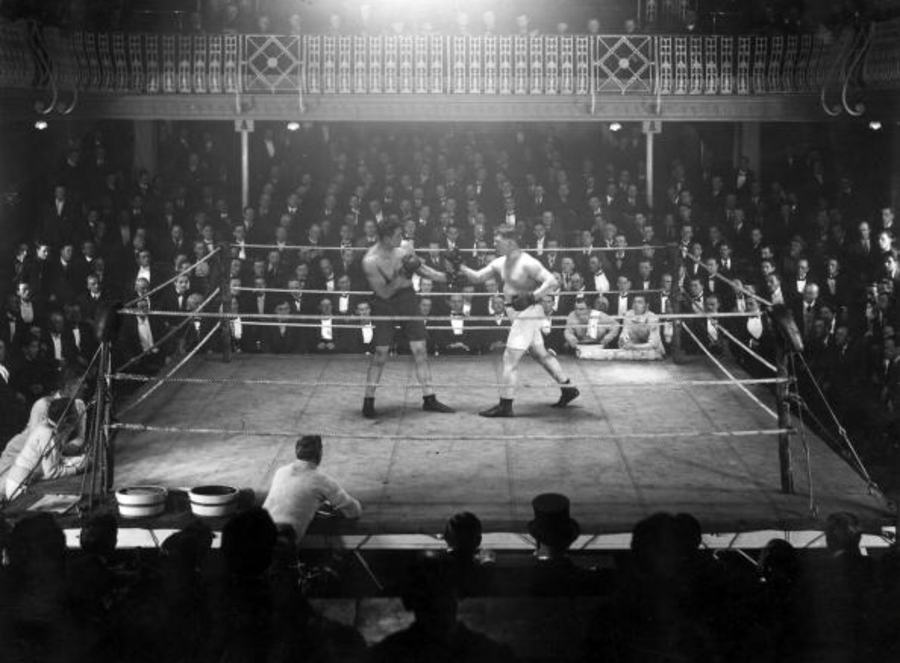
In the lexicon of British silent cinema, 1921 bequeaths us a title that sounds more like a koan than a narrative: The Door That Has No Key. There is, literally, no door in the film that lacks a key; rather, the keyhole gapes, a void into which civility, loyalty, and legal rectitude vanish without echo. Director Adrian Johnstone, adapting a scenario by the cosmopolitan novelist Cosmo Hamilton, weaponizes the drawing-room melodrama until it bleeds into something approaching psychological noir a full decade before the term existed.
What lingers first is the texture of light: cinematographer Gordon Craig (also essaying the rakish confidant) drapes the interiors in pools of umber and sickly amber, so that every character appears to be perpetually standing inside a verdict. The camera prowls rather than observes; it sniffs out guilt like a bloodhound. When Sir Julian Renshaw (Wilfred Seagram) examines the creases of his abandoned wife’s gloves, the close-up is so intimate you half-expect the leather to perspire.
Evelyn Brent’s Evelyn Renshaw enters the film twelve minutes in, but her entrance is so electrically off-hand—she simply steps from a hansom cab, veil lifted by the breeze—that it feels like she has always been there, haunting the negative space of every prior frame. The film cannily withholds exposition; we piece together her past crimes via gossip fragments, a half-burned letter, a torn photograph. The audience becomes the jury, and Brent plays to that gallery with the languid confidence of a woman who has already been condemned and has therefore nothing left to hedge.
Seagram, by contrast, acts with the brittle rectitude of a man whose moral ledger has been balanced until the day someone finds a page torn out. His baritone titles (intertitles lettered in a serif so sharp it could draw blood) vibrate with oratorical cadence. When he confronts Evelyn across the breakfast table—china gleaming, servants hovering like parentheses—his silence is louder than any objection. The film’s great gamble is to make the cuckolded husband simultaneously sympathetic and insufferable; we understand the magnitude of public disgrace awaiting a King’s Counsel whose wife bolted, yet we also sense the cavernous egotism that measures betrayal only in how it reflects on him.
Olive Sloane’s Miss Morland, the secretary promoted to motherhood, is the stealth protagonist. Sloane, often cast as flappers or vamps, here works in minor key: watch the way her pupils dilate when she overhears Evelyn refer to her son as “it.” In that moment the film tilts on its axis; the domestic melodrama becomes a battle for narrative ownership. The child—never named, always swaddled—functions as a living deposition, evidence of nights when grief and gratitude intertwined. The camera favors Sloane’s gloved hands: they tighten around a teacup, smoothing a blanket, closing a ledger. Each gesture is a silent cross-examination.
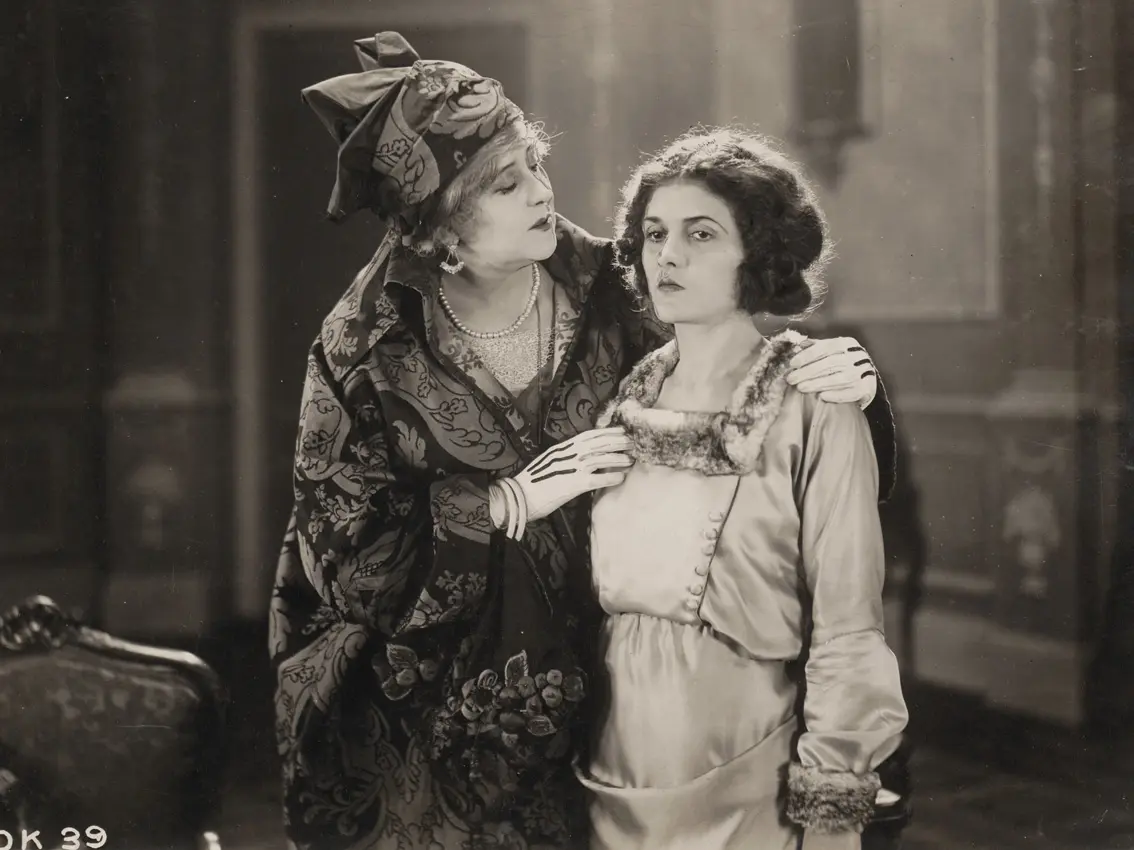
Johnstone stages a devastating sequence in a nursery lit only by a nightlight shaped like Lady Justice. The scale of the blindfolded statuette throws a monstrous shadow so that the scales appear to weigh the baby’s cradle. No intertitle intrudes; the moral calculus is left humming in the dark.
Exterior scenes were shot on ramshackle sets at Beaconsfield, yet the fog is so voluptuous, the gaslamps so juddery, that the city feels dredged from a Doré engraving. A brief, almost throwaway montage—horse hooves splashing through puddles, a poster for The Yellow Typhoon peeling from a kiosk—situates the drama inside a metropolis where entertainment and jurisprudence share the same wet pavement. Compare this to School Days or A Gentleman of Leisure, whose urban spaces merely backdrop the gags; here the city perspires guilt.
Cosmo Hamilton’s original treatment leaned into Grand Guignol—Evelyn was to have murdered a lover in Monte Carlo, forging the key metaphor quite literally from a blood-stained hotel key. Johnstone pruned the sensationalism, substituting emotional contre-jour. The resulting tension feels closer to Henry James channelled through Lubitsch: every parlor pleasantry carries a ricochet. The famous line in the intertitles—“A door once opened may be shut, but the draft it let in circles forever”—is pure Johnstone, a manifesto for the entire silent era’s obsession with irrevocable moments.
Watch A. Harding Steerman as the family solicitor: he enters rooms backward, as though perpetually exiting his own advice. George Relph (decades before his beloved Water Works sketches) plays a vicar whose collar seems two sizes too tight; listen for the micro-gasp when Evelyn kisses his cheek in gratitude—an impropriety that lands like a thunderclap. Even the bit players calibrate their reactions to a quarter-turn less than naturalism; the result is a society that feels maintained by precarious agreement.
“In the arithmetic of disgrace, a woman multiplies, a man merely adds.”
—intertitle, The Door That Has No Key
Critics seeking genealogy will note affinities with Divorce and the Daughter, yet where that film treats separation as social arithmetic, The Door That Has No Key treats it as ontological vertigo. Likewise, The Awakening of Helena Ritchie flirts with moral relapse, but its redemption arc lands inside a church; Johnstone refuses any steeple, ending instead on a pier at dawn, boats creaking like unmade decisions.
Keys appear no fewer than nine times: dangling from a jailer’s ring, clutched by a sleepwalking child, glinting at the bottom of a fountain. Yet the titular door is visible only once—during the climactic confrontation—when Sir Julian slams it so hard the wood splits along the panel, revealing a hollow core. The metaphor is merciless: all barriers are porous. Equally insistent are veils: Evelyn’s lace, Miss Morland’s hat netting, even a curtain wafting between nursery and corridor. Transparency, the film whispers, is just another stratagem.
Johnstone repeatedly frames characters through fractured reflections: a cracked mirror in Evelyn’s boudoir, a teapot’s convex sheen, a rain-pocked puddle. None of these shots feel ostentatious; they accumulate like evidence. By the time Sir Julian peers into a shattered pane to see his wife’s face split into three irreconcilable selves, the device has earned its chill.
Original exhibition notes prescribe Chopin for the salon scenes, yet surviving cue sheets reveal that several cinemas paired the final reel with Beethoven’s Funeral March, a choice so tonally perverse it inadvertently rewrites the ending: instead of tentative reconciliation, the spectator senses a danse macabre. Today’s restorations often opt for a muted string quartet; I urge curators to resurrect the Beethoven anachronism—it transmutes the film into a horror adjacent masterpiece.
Evelyn, defeated not by law but by the collective will of those who refuse to be her collateral, boards a channel steamer. Sir Julian, child hoisted on his hip, watches from the quay. The camera dollies back until the figures resemble chess pieces in a box slammed shut. No iris, no title card, just the sound of gulls that the silent era could only imply. The abrupt cut to black feels modern, as though Johnstone anticipated Resnais or Haneke. One exits the film with the uncanny certainty that the narrative continues off-screen, past the margins of the frame, past even the afterlife of the medium itself.
For decades the film languished in the BFI’s “missing believed lost” ledger until a 2018 discovery of a 35mm nitrate print in a Normandie attic (mislabeled as The Iron Ring) yielded a 4K restoration. Streaming rights currently rotate between BFI Player and Criterion Channel; physical media remains elusive, though rumors swirl of an upcoming Masters of Cinema dual-format edition with commentary by India Hair and Pam Hutchinson.
Is it a masterpiece? The question feels jejune. The Door That Has No Key is something rarer: a film whose very imperfections—its hesitant pacing, its occasional over-cranked symbolism—ventilate the airtight perfection we now expect from prestige reclamations. It endures as a palimpsest onto which evolving moralities can project their anxieties: post-war gender panic then, #MeToo nuance now. Like the best silents, it mutates with each contemporary gaze, a door forever ajar, forever drafty, forever devoid of a key that anyone would dare to use.
Seek it out not for antiquarian curiosity, but for the shiver of recognition: we, too, live in houses whose doors have no keys, only hinges that squeal whenever the past slips in uninvited.

IMDb 3.9
1915
Community
Log in to comment.