DbcultAccessing Vault...
Cult Review
Senior Film Conservator
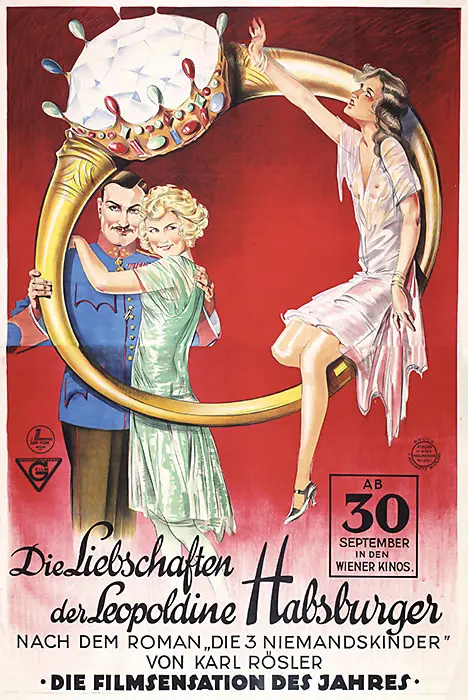
Should you invest your time in a silent German drama from 1927? Short answer: yes, but only if you value historical texture over modern pacing. This film is for the cinephile who enjoys deconstructing the social anxieties of the Weimar Republic; it is absolutely not for anyone looking for high-octane thrills or easy resolutions.
Die 3 Niemandskinder is a heavy experience. It doesn't ask for your attention—it demands your tolerance for bleakness. If you've spent time with The Eternal Grind, you know the drill. This is cinema as a social mirror, reflecting the grime of the street back at an audience that, at the time, was likely trying to look away.
For the modern viewer, Die 3 Niemandskinder is a challenging but rewarding artifact. It provides a window into a world of rigid class distinctions and the crushing weight of poverty. It is worth watching for the performances alone, particularly the legendary Adele Sandrock. However, if you find silent film tropes like exaggerated gesturing and slow-moving title cards frustrating, this will feel like a long walk through a short alley.
This film works because: It captures the genuine desperation of the urban poor without resorting to the sugary sentimentality found in American films like Angel Child.
This film fails because: The pacing in the second act is glacial, often lingering on redundant emotional beats that the audience has already processed.
You should watch it if: You are a student of film history or a fan of early German cinema who wants to see the roots of social realism before it became a standardized genre.
The title itself, 'The 3 Nobody-Children,' sets a tone of erasure. Fritz Freisler isn't interested in heroes. He’s interested in the debris of a broken system. The children aren't just orphans; they are symbols of a generation that the state has failed to recognize. This isn't the whimsical poverty of a Dickens novel. It’s a cold, German industrial poverty. It’s hard. It’s gray.
Consider the scene where the children stand outside a high-society gala. The camera doesn't focus on the glamour inside. Instead, it lingers on the children's reflection in the glass. They are literally seeing a world they can never touch, and the glass acts as a physical barrier that defines their entire existence. It’s a simple metaphor, but in 1927, it was a punch to the gut. It reminds me of the stark contrasts found in The Sawdust Doll, but with a more cynical edge.
Adele Sandrock is the gravitational center of this film. She doesn't just act; she looms. Her presence brings a level of theatrical weight that compensates for some of the script's thinner moments. When she is on screen, the film feels like a grand tragedy. When she leaves, it occasionally drifts back into standard melodrama. Her character represents the old world—stern, unyielding, and ultimately tragic.
On the other end of the spectrum, we see a young Willi Forst. For those used to his later, more polished roles, seeing him here is a revelation. He has a raw energy that cuts through the static nature of the silent frame. He provides the necessary contrast to the children’s passivity. While the children are victims of their circumstances, Forst’s character attempts to manipulate them, showing the early signs of the charisma that would later make him a star.
The children themselves are played with a surprising lack of affectation. In many films of this era, like Blind Love, child actors were coached to be overly precocious. Here, they are tired. They look like they haven't slept in weeks. That commitment to realism is what keeps the film grounded when the plot threatens to become too theatrical.
Fritz Freisler’s direction is competent, if not revolutionary. He understands how to use light and shadow to articulate mood—a staple of the Weimar era. The use of low-angle shots to make the city buildings look like oppressive giants is particularly effective. The city is a character here, and it is a villain. It’s a sprawling, indifferent maze that swallows the 'nobodies' whole.
However, the editing is where the film shows its age. There are sequences that could have been tightened by half. The transition between the children’s storyline and the subplots involving the adults often feels jarring. It’s as if Freisler couldn't decide if he wanted to make a focused character study or a sprawling social epic. By trying to do both, he occasionally loses the emotional thread. It lacks the tight narrative cohesion seen in The Shuttle.
"The film doesn't ask for pity; it demands an acknowledgment of existence. In the world of Die 3 Niemandskinder, being a 'nobody' is a death sentence carried out in slow motion."
Pros:
Cons:
If you are looking for a casual Sunday afternoon watch, look elsewhere. This is a film that requires your full participation. It asks you to sit in the discomfort of its characters' lives. It is a rewarding experience for those who want to understand the evolution of the social drama. It stands alongside films like Her Lord and Master as a testament to the era's preoccupation with power and submission.
The film’s greatest strength is its refusal to provide a 'Hollywood' ending. It remains true to its premise. These are children with no names and no future, and the film doesn't lie to you about their prospects. That honesty is rare, even today. It makes the film feel surprisingly modern in its cynicism.
Die 3 Niemandskinder is a stark, unblinking look at the casualties of class warfare. It is flawed. It is slow. But it is also deeply human. While it may not have the technical flash of some of its contemporaries, it possesses a soul that is hard to ignore. It’s a minor chord in the symphony of Weimar cinema, but it’s a necessary one. If you can move past the technical limitations of 1927, you will find a story that still resonates in any era where people are treated as 'nobodies.' It is a grim, essential piece of history. It works because it refuses to blink.
IMDb —
1917
Community
Log in to comment.