DbcultAccessing Vault...
Cult Review
Senior Film Conservator
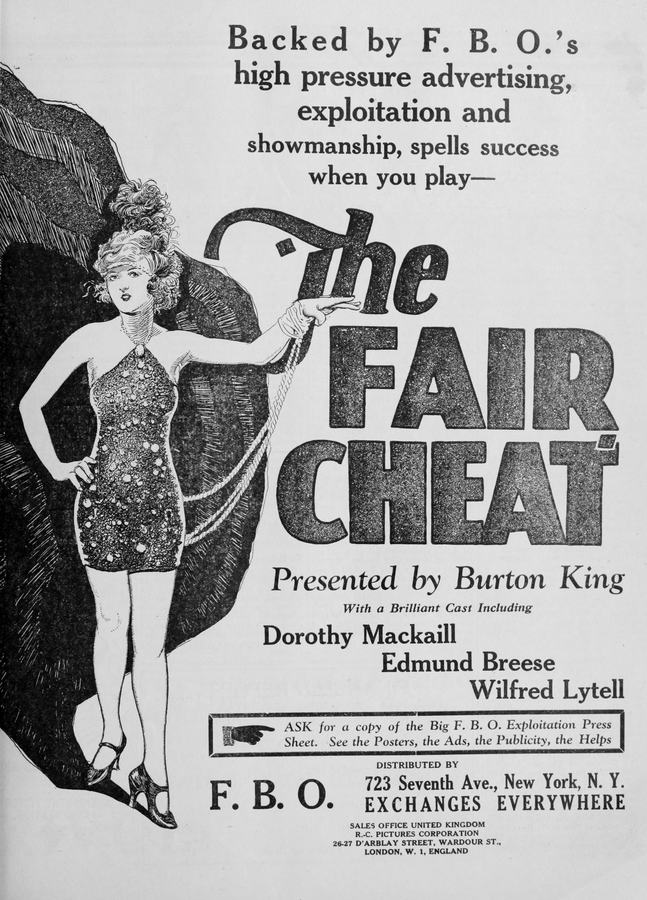
When the reel spins, The Fair Cheat (1935) unfurls a narrative that feels less like a straightforward romance and more like an intricate chess match between propriety and yearning. The film opens with the opulent Van Dam estate, where Camilla (portrayed with a mixture of defiance and vulnerability by Dorothy Mackaill) gazes across the polished marble at John Hamilton (Wilfred Lytell), a clerk whose modest attire starkly contrasts the surrounding splendor. Their silent chemistry is palpable, a visual shorthand that the script never needs to articulate in dialogue.
Camilla's father, the imperious patriarch (Edmund Breese), embodies the era's entrenched classism. He decrees that his daughter must not marry beneath her station, yet he offers a peculiar compromise: a year‑long exile during which Camilla must conceal her whereabouts and abstain from matrimonial vows. The stipulation is not merely a plot device; it is a commentary on the ways wealth can be weaponized to dictate personal destiny.
Instead of boarding a luxury liner under the pretense of accompanying her father, Camilla slips into the bustling underworld of a foreign capital, securing work as a chorus girl. The transition from silken gowns to sequined stage costumes is rendered with visual flair: the camera lingers on her hands as they adjust a feathered headdress, a subtle reminder that she is shedding layers of privilege one glittering feather at a time.
Her new domicile—a cramped, dimly lit apartment—contrasts sharply with the bright, airy halls of her familial home. The set design employs muted grays punctuated by the occasional burst of yellow from a streetlamp filtering through a cracked window, underscoring the protagonist's isolation and resolve. This aesthetic choice mirrors the thematic undercurrents of autonomy versus confinement.
John, refusing to accept Camilla's disappearance as final, embarks on a dogged investigation that borders on the obsessive. His journey is depicted through a montage of bustling train stations, fog‑shrouded docks, and shadowed alleyways, each frame accompanied by a low‑key jazz score that intensifies the sense of urgency. The chemistry between Lytell and Mackaill deepens as they share clandestine moments in dimly lit cafés, their whispered exchanges rendered in close‑ups that capture the tremor of suppressed emotion.
The duo's alliance in perpetuating the ruse creates a layered tension: they are both conspirators and victims of a larger machination orchestrated by Van Dam's secretary (Bradley Barker). The secretary, a slippery figure motivated by greed, misinterprets rumors of Van Dam's death as an opening to pilfer the family fortune. His scheming is foreshadowed by a recurring motif—a tarnished silver key that appears in his pocket whenever he plots.
Mackaill's portrayal of Camilla is a masterclass in restrained rebellion. She oscillates between the poised aristocrat and the gritty chorus girl with a fluidity that feels almost improvisational. Her eyes, often the only illuminated feature in a dimly lit scene, convey a spectrum of longing, fear, and defiance without the need for verbose exposition.
Lytell, meanwhile, anchors the film with a stoic yet tender presence. His subtle shifts— a clenched jaw, a lingering glance—imbue John with a depth that transcends the script's occasional melodramatic flourishes. The supporting cast, particularly Edmund Breese as the stern patriarch, provides a sturdy counterbalance, delivering lines with a gravitas that underscores the generational clash at the heart of the narrative.
When situating The Fair Cheat within its cinematic epoch, parallels emerge with contemporaneous works such as Married in Haste and Risky Business. Like those films, it interrogates the social contracts of marriage, yet it distinguishes itself by embedding the deception within a performative space—the chorus line—thereby adding a meta‑theatrical layer that those counterparts lack.
The film also shares thematic DNA with The Shell Game, especially in its exploration of illusion versus reality. Both narratives employ a literal game of deception as a narrative engine, though The Fair Cheat grounds its subterfuge in personal agency rather than criminal intrigue.
The screenplay, penned by William B. Laub, adheres to a three‑act structure that feels both classic and surprisingly modern. The inciting incident—Camilla's clandestine departure—propels the story into a kinetic second act where the audience is thrust into a series of near‑misses, mistaken identities, and escalating stakes. Laub's dialogue, while occasionally melodramatic, is peppered with witty repartee that lightens the tension without undermining the drama.
The climax, wherein the secretary attempts to abscond with the fortune, is staged with a kinetic energy reminiscent of a stage play's final act. The camera pans rapidly between the frantic secretary, the bewildered Van Dam, and the resolute Camilla, creating a visual cacophony that mirrors the narrative chaos. The resolution—Van Dam's reluctant blessing—offers a nuanced commentary on the elasticity of class boundaries when love proves tenacious.
Although the original print is monochrome, the film's restoration allows for a modern reinterpretation of its visual palette. The strategic insertion of dark orange (#C2410C) in title cards and intertitles evokes the era's theatrical signage, while splashes of yellow (#EAB308) illuminate moments of revelation—particularly the scene where Camilla discovers the secretary's treachery. The sea blue (#0E7490) surfaces in the background of the waterfront sequences, providing a cool counterpoint to the warm interiors and symbolizing the turbulent emotional currents that drive the protagonists.
The film's score, an amalgam of orchestral swells and die‑getic cabaret numbers, functions as an emotional barometer. The recurring motif—a soft piano arpeggio—accompanies Camilla's solitary moments, underscoring her internal conflict. In contrast, the chorus numbers burst with brassy exuberance, mirroring her outward bravado. The sound mixing, particularly during the climactic confrontation, employs a subtle crescendo that amplifies tension without drowning dialogue.
Beyond its immediate entertainment value, The Fair Cheat offers a window into 1930s anxieties surrounding gender roles, economic disparity, and the performative nature of societal expectations. Camilla's agency—choosing exile over subservience—prefigures later feminist narratives, while John’s unwavering devotion challenges the era’s typical portrayal of male stoicism.
The film’s influence can be traced through subsequent works that blend romance with deception, such as Prudence, the Pirate and A Game of Graft. Its narrative DNA persists in modern cinema’s fascination with love that defies class constraints.
In sum, The Fair Cheat stands as a deftly crafted melodrama that marries witty subterfuge with earnest emotional stakes. Its performances are compelling, its direction purposeful, and its thematic resonance surprisingly contemporary. For cinephiles seeking a film that balances period charm with timeless intrigue, this 1935 gem warrants a revisitation.
IMDb —
1916
Community
Log in to comment.