DbcultAccessing Vault...
6.1/10
Senior Film Conservator
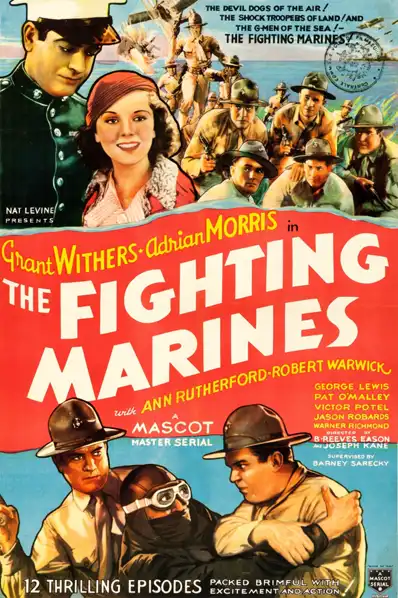
A definitive 6.1/10 rating for a film that redefined the boundaries of cult cinema. The Fighting Marines remains a cornerstone of transgressive art.
So, The Fighting Marines. If you’ve got a soft spot for those old movie serials, the ones that used to play before the main show, then yeah, this might be a fun little trip. For pretty much everyone else, especially if you like your action sleek and modern, you’ll probably find yourself zoning out fast. It’s got a very specific, vintage charm, but it really asks you to meet it halfway. 🕰️
The whole setup is pure 1930s pulp. Marines land on this Pacific spot, Halfway Island, trying to get a landing strip built. Of course, nothing goes smoothly. Because someone really doesn't want them there. That someone is the wonderfully named 'The Tiger Shark,' a mysterious villain with a secret underwater lair. It’s every bit as bonkers as it sounds.
Every single chapter, and there are twelve of them, ends with our heroes in some truly impossible situation. And then, every next chapter, they wiggle out of it by some trick. You often didn't see it coming. Sometimes it feels a little cheap, like the writers painted themselves into a corner and just, poof, new solution. You start to pick up on that after a few episodes.
The 'Tiger Shark' character is just a hoot. He's got this deep, disguised voice, always taunting the Marines from his hidden base. His hideout, by the way, it looks pretty impressive for a 1935 production. All these blinking lights and levers. Very sci-fi for its time. Makes you wonder what audiences back then thought of it.
We spend a lot of time with Max Wagner as Carter, one of the main Marine guys. He’s just… doing his best. He throws punches, he looks determined at maps. Grant Withers plays Captain Frank Radford. He’s got that earnest, square-jawed hero thing down solid. They aren't trying to do any deep character studies here. It’s all about the next explosion or fistfight, really.
The action scenes? Exactly what you’d expect. Lots of running around. Some pretty obvious miniature work for the big explosions. There's a scene where a plane crashes, you can practically see the strings holding the model. But honestly, that’s part of its charm. It isn't trying to fool anyone. Just telling a story.
There's this part where the Tiger Shark uses a remote-controlled plane. For 1935, that's pretty wild! You see the little prop plane flying, then the camera cuts to some guy in a mask pushing buttons. It feels clunky now, but still a neat idea for its era. You get a sense of early sci-fi ambition, even if the execution is a little rough around the edges.
The sound design is… functional. Lots of generic punching noises. And explosions, of course. The music swells up dramatically when something important is happening, right on cue. It’s not subtle. But it gets the job done, makes sure you know when to be excited.
Sometimes the dialogue can feel a bit repetitive. Especially when they're trying to figure out who The Tiger Shark is. Again. 'We must find The Tiger Shark!' Yes, yes, we know. You’ve said it like three times this chapter alone.
Watching this thing, you really appreciate how much filmmaking has changed. But also, how some basic storytelling beats never really go away. Hero, villain, escalating danger. It's all there, just in a much slower, chunkier package. A real time capsule, this one. ⏳
Does it hold up? Parts of it do, in a campy, historical sort of way. The constant cliffhangers can still hook you, even if you’re pretty sure they’ll escape. But for sure, you need to be in the mood. Don’t go in expecting a modern blockbuster. Expect a serial from *way* back. And maybe some popcorn. 🍿
IMDb 6.6
1934
Community
Log in to comment.