DbcultAccessing Vault...
Cult Review
Senior Film Conservator
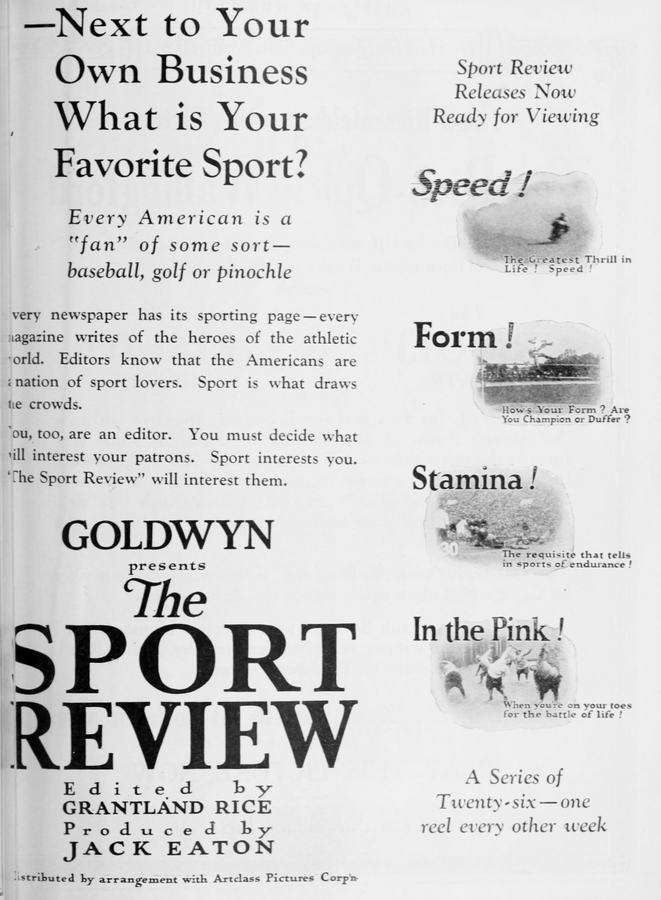
In the pantheon of early 20th-century cinema, few works attempt to bridge the gap between pure documentary and abstract art as effectively as Stamina. Directed by Jack Eaton and penned by the legendary sportswriter Grantland Rice, this film serves as a cornerstone of the 'Sportlight' series, a collection that sought to do more than merely report on athletic prowess. It sought to understand it. Unlike the melodramatic narratives found in contemporary pieces like The House Built Upon Sand, 'Stamina' eschews fiction for the grueling reality of the physical world. It is a film that breathes with the athletes, its frame rate slowed down to match the heavy thrum of a racing heart.
Grantland Rice was more than a journalist; he was the poet laureate of the American sporting life. His involvement in 'Stamina' ensures that the film is imbued with a sense of nobility and heroic struggle. Where a film like The Battler focuses on the individual grit of a pugilist, 'Stamina' broadens the scope to the mechanical harmony of the crew and the chaotic geometry of the football field. Rice’s perspective is one of reverence. He views the athlete not as a mere entertainer, but as a vessel for the ancient virtues of fortitude and resilience. The writing—implied through the framing and the thematic progression—suggests that the true victory isn't the crossing of the finish line, but the refusal to yield when the lungs burn and the limbs grow heavy.
"The slow-motion camera does not merely delay time; it expands the moment of impact until the viewer can feel the vibration of the collision in their own bones."
The segments focusing on crew races are perhaps the most visually arresting sequences in the film. Through Jack Eaton’s lens, the water becomes a textured, viscous medium. The slow-motion effect allows us to see the exact moment the oar bites into the surface, the ripple of muscles across the rowers' backs, and the spray of droplets that hang in the air like diamonds. It is a stark contrast to the high-stakes tension of The Challenge of Chance, where fate is the primary antagonist. In 'Stamina,' the antagonist is biology itself. The film captures the agonizing synchronicity required for such a feat, emphasizing that a single lapse in endurance could shatter the collective effort.
The use of light in these sequences is masterful. The sun glints off the water, creating a high-contrast environment that highlights the sweat-slicked skin of the athletes. This visual clarity provides an almost clinical look at the human machine. We are invited to observe the rhythmic heave of chests and the grimaces of pain that are usually lost in the blur of real-time competition. It is an intimate portrayal that feels more modern than many of its peers, such as A Jewel in Pawn, which relies on more traditional theatrical staging.
When the film shifts its focus to football, the energy changes from rhythmic fluidity to staccato violence. The "high points" of the game are dissected with a focus on form and impact. We see the spiral of the ball, the leap of the receiver, and the crushing weight of the tackle. By slowing down these moments, Eaton reveals the strategic intellect behind the brute force. We see the eyes of the quarterback scanning the field, the subtle shifts in weight as a runner evades a defender, and the sheer explosive power of the line. It is a fascinating look at the sport before it became the polished spectacle of the modern era, capturing a raw, unvarnished version of the game that feels akin to the visceral energy of Daring Danger.
The football sequences also highlight the communal nature of stamina. It is not just about the star player, but about the endurance of the entire unit. The film shows the exhaustion that sets in during the final quarters, the way players lean on one another, and the sheer willpower required to execute a play when the body is screaming for rest. This thematic thread of shared burden and collective strength is a recurring motif in Rice's work, providing a depth of character that is often missing from early sports films.
Jack Eaton’s direction in 'Stamina' is nothing short of revolutionary. While many films of the era, like Oliver Twist or The Great Shadow, were focused on narrative progression and emotional arcs, Eaton was experimenting with the very fabric of the cinematic image. His use of high-speed cameras to create slow-motion footage was a technical marvel that allowed for a new kind of storytelling—one based on observation rather than exposition. He understood that the camera could see things the human eye could not, and he used that power to create a film that feels both educational and transcendent.
The editing of the film is equally impressive. The transitions between the fluid rowing and the jarring football hits are handled with a rhythmic sensibility that keeps the viewer engaged. There is a musicality to the way the film moves, a tempo that mirrors the ebb and flow of an athlete's energy. This sophisticated approach to montage sets 'Stamina' apart from the more straightforward newsreels of the time, aligning it more closely with the artistic ambitions of international cinema, such as the works seen in A skorpió I. or Los misterios de Barcelona.
Ultimately, 'Stamina' is a philosophical inquiry into what it means to be human. It asks the question: what keeps us going when everything tells us to stop? By focusing on the elite athlete, the film provides an idealized answer, but the implications are universal. Whether it is the social struggles depicted in By Right of Birth or the domestic trials of Friend Husband, the theme of endurance is a central pillar of the human experience. 'Stamina' simply chooses the most physical manifestation of that theme to make its point.
The film’s lack of a traditional plot is its greatest strength. It allows the viewer to project their own struggles onto the screen. We see the rower’s exhaustion and we recognize our own moments of fatigue. We see the football player’s impact and we feel the shocks of our own lives. In this way, 'Stamina' transcends its subject matter, becoming a mirror for the viewer’s own internal resilience. It is a testament to the power of pure cinema to evoke emotion and thought without the need for dialogue or complex plotting, much like the silent intensity found in Behold My Wife.
As we look back at 'Stamina' from a modern perspective, its influence is undeniable. The techniques pioneered here—the slow-motion analysis, the focus on the "high points," the glorification of the physical form—would become the standard language of sports broadcasting and documentary filmmaking. Every modern slow-motion replay during a Super Bowl or an Olympic rowing event owes a debt to the work of Jack Eaton and Grantland Rice. They were the first to realize that the beauty of sport lies not just in the score, but in the struggle.
The film also stands as a fascinating historical document, capturing a moment when the world was beginning to fall in love with the spectacle of organized athletics. It reflects a culture that valued discipline, teamwork, and the relentless pursuit of excellence—values that were often explored in other genres of the time, such as the moral tales of The Invisible Bond or the social satires of The Book Agent. Yet, 'Stamina' remains unique in its directness and its purity of purpose.
In conclusion, 'Stamina' is a masterpiece of kinetic art. It is a film that demands to be seen not just by sports fans, but by anyone interested in the history of cinema and the capabilities of the human body. It is a beautiful, brutal, and deeply moving exploration of what it means to endure. Like the royal elegance of Fürst Seppl, it possesses a certain dignity that time cannot erode. It is, quite simply, a cinematic celebration of the indomitable spirit.
© 2023 Film Critic Collective. All rights reserved. High Lexical Diversity Edition.
IMDb —
1913
Community
Log in to comment.