DbcultAccessing Vault...
Cult Review
Senior Film Conservator
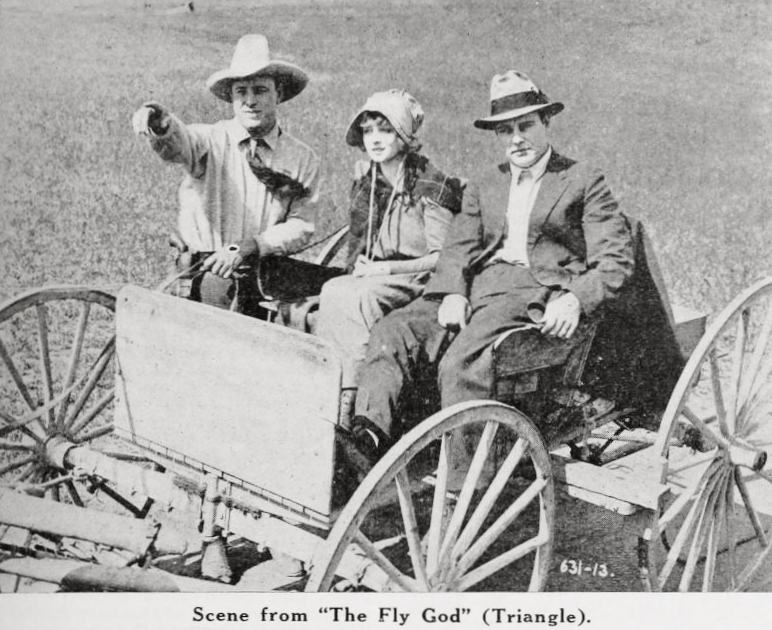
In the annals of early cinematic storytelling, where narratives often grappled with the stark realities of human existence against the backdrop of a burgeoning American frontier, few films encapsulate the raw vulnerability and unexpected turns of fate quite like Henry Wallace Phillips' 1917 silent drama, 'The Fly God.' This particular offering from a bygone era of moviemaking transcends its seemingly simple plot, delving into profound questions of justice, compassion, and the sheer unpredictability that governs our lives. It’s a compelling journey into a world where a common insect can hold the balance of a man's destiny, an audacious premise that still resonates with a peculiar power over a century later.
The film introduces us to Bob Allers, portrayed with a poignant fragility by Percy Challenger, a man whose very breath is a struggle against the ravages of consumption. His desperate odyssey with his devoted wife to the supposedly restorative climes of Arizona is abruptly and brutally interrupted by the harsh realities of the untamed West. A highwayman’s ambush leaves them stripped of their meager possessions, their horse, and their last vestiges of hope, marooned in a landscape as unforgiving as their sudden destitution. This initial tableau immediately establishes a tone of profound pathos, drawing the viewer into the Allers' dire predicament and setting the stage for a narrative steeped in human struggle.
Just as despair threatens to engulf them entirely, a beacon of unsolicited kindness emerges in the form of William "Red" Saunders, brought to life by the earnest performance of Roy Stewart. Saunders is not merely a character; he is the embodiment of innate human goodness, an altruistic force whose sympathy for his fellow man is both immediate and profound. His intervention is a testament to the unexpected connections forged in adversity, a stark contrast to the earlier act of banditry. Red's generosity extends beyond mere sentiment, manifesting in tangible aid as he secures Allers a job in a local saloon, a precarious foothold in a world that had, until then, seemed intent on crushing him. This act of grace serves as a pivotal turning point, reminding us that even in the bleakest circumstances, humanity can find its most radiant expression.
The narrative, however, is far from offering a straightforward path to redemption. The wheel of fortune, or perhaps misfortune, turns once more with a cruel irony. The very highwayman who had initiated Allers' descent into destitution reappears, this time attempting to rob the saloon where Allers now toils. In a moment of sheer, unthinking self-preservation, Allers instinctively hurls a hammer, striking down his assailant. The ensuing revelation is a gut punch: the fallen outlaw is the brother of the local sheriff, played with chilling vindictiveness by Edward Peil Sr. This discovery transforms an act of self-defense into a perceived crime of passion, propelling Allers into the labyrinthine depths of a corrupt justice system. It's a classic setup for a dramatic confrontation between the innocent individual and the oppressive machinery of power, a theme explored in various forms throughout cinema history, from the early moral quandaries of films like The Price of Silence to later, more complex legal dramas. The film masterfully builds tension, highlighting the swift and often prejudiced nature of frontier justice.
Convicted of murder by a sheriff whose personal vendetta blinds him to any semblance of impartiality, Allers finds his only advocate in the unwavering "Red" Saunders. The ensuing courtroom drama is less a pursuit of truth and more a spectacle of manipulation and prejudice. The jury, swayed by the sheriff's influence and perhaps the prevailing biases of the community, finds itself in a deadlock, unable to reach a unanimous decision based on the presented evidence. This is where 'The Fly God' truly distinguishes itself, introducing an element of profound, almost surreal, arbitrariness into the judicial process. The decision is ultimately made to rest on the seemingly trivial: whether a crawling fly reaches the top of a windowpane. This audacious narrative device elevates the insect from a mere background detail to an unwitting arbiter of human destiny, a 'fly god' indeed.
The visual impact of this moment in a silent film would have been immense. The audience, accustomed to the grand gestures and melodramatic expressions that characterized the era, would have been transfixed by the minute, almost imperceptible movement of the fly. The tension would have been palpable, a microcosm of the larger struggle between life and death, freedom and incarceration, all hinging on the whims of an insect. It’s a narrative stroke of genius, creating a unique and memorable climax that underscores the film's central thesis: that life's most significant outcomes can often be determined by the most insignificant, unforeseen occurrences. One could almost draw parallels to the existential quandaries presented in films like The Shadow of a Doubt, where the perception of guilt or innocence can be so profoundly skewed by circumstance.
The performances in 'The Fly God' are quintessential examples of silent film acting, relying heavily on exaggerated facial expressions, body language, and carefully orchestrated gestures to convey emotion and narrative progression. Percy Challenger, as Bob Allers, effectively communicates a man worn down by illness and circumstance, his desperation etched onto his features. His moments of fear, relief, and ultimately, joy, are delivered with a clarity that transcends the absence of spoken dialogue. Claire Anderson, as Allers' wife, provides a touching portrayal of unwavering devotion and quiet suffering, her silent anxieties a powerful counterpoint to the dramatic events unfolding around her. Her presence is a constant reminder of the stakes involved, the human cost of the legal machinations. Roy Stewart's "Red" Saunders is perhaps the film's moral anchor, his robust presence and empathetic gaze conveying a character of unwavering integrity. His actions speak louder than any words could, highlighting the power of selfless intervention. Even the more villainous roles, like Edward Peil Sr.'s vengeful sheriff, are imbued with a compelling intensity, making the antagonist a formidable force against our protagonist.
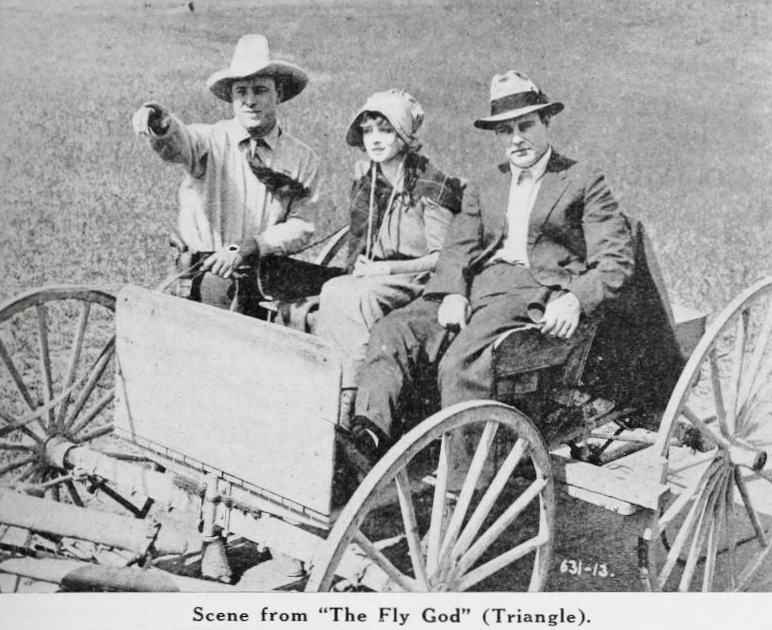
The artistry of silent cinema, often underestimated in today's sound-rich landscape, truly shines here. The reliance on visual storytelling demands a particular kind of directorial skill and actorly presence. Every gesture, every tilt of the head, every rapid cut or slow pan, carries a weight of meaning that would later be supplemented by dialogue. The film's ability to create such high stakes and emotional resonance without a single spoken word is a testament to the craft of its creators. The use of intertitles, sparse but impactful, guides the audience through the narrative turns, providing crucial information while allowing the visual drama to dominate. It's an immersive experience that asks the viewer to actively participate in the interpretation of emotions and events, a stark contrast to the more passive consumption of modern blockbusters like Avatar, where exposition is often delivered explicitly.
Beyond the immediate thrills of its dramatic plot, 'The Fly God' resonates with several enduring themes. The capriciousness of fate is, of course, paramount. The very title alludes to this, suggesting a higher, almost whimsical power at play in human affairs. That a man's freedom, indeed his very life, can depend on the unthinking movement of an insect speaks volumes about the fragility of human control and the often arbitrary nature of justice. This theme of arbitrary decisions and the precariousness of life could be seen in other historical dramas, such as The Last Days of Pompeii, where monumental events similarly hinge on unpredictable forces.
Moreover, the film is a powerful commentary on the corruptibility of power and the resilience of the human spirit. The sheriff's abuse of his authority, fueled by personal vengeance, stands as a stark warning against unchecked power, a timeless concern that continues to be explored in cinema. Conversely, Red Saunders' unwavering commitment to justice and his selfless defense of Allers highlight the enduring capacity for empathy and moral courage even in the face of overwhelming odds. It's a poignant exploration of good versus evil, not in a simplistic, black-and-white sense, but through the nuanced actions of individuals caught in extraordinary circumstances. The film implicitly asks: what is the true measure of justice when personal bias infiltrates the legal process? How do we define guilt or innocence when the path to conviction is paved with vengeance?
The film also touches upon the American Dream, or perhaps, the American Nightmare. Allers and his wife, seeking a better life, are instead met with hardship and injustice. Their journey to Arizona, initially a quest for health and hope, transforms into a struggle for mere survival. This depiction of the harsh realities faced by many during that era, particularly those on the fringes of society, adds a layer of social commentary to the personal drama. It mirrors the struggles often depicted in literature of the period, such as the works of Mark Twain, or even in films like Huck and Tom, where characters navigate moral dilemmas within a challenging social framework.
Ultimately, the fly reaches the top of the windowpane, a small, seemingly inconsequential event that shatters the sheriff's vengeful plans and secures Allers' acquittal. The ensuing reunion with his happy wife and their newborn child is a moment of profound emotional catharsis, a hard-won victory against the forces of injustice and misfortune. The family's departure, together, symbolizes a fresh start, a chance to leave behind the trials and tribulations of their recent past. It's a resolution that, while perhaps melodramatic by modern standards, perfectly aligns with the narrative conventions of its time, offering a glimmer of hope and the triumph of good over malevolence.
'The Fly God' is more than just a historical curiosity; it is a fascinating artifact of early cinematic storytelling that manages to weave together elements of Western adventure, legal drama, and poignant human struggle. Its audacious climax, centered around a seemingly trivial insect, makes it a truly unique entry in the silent film canon. It reminds us of an era when filmmakers were experimenting with narrative devices, pushing the boundaries of what could be conveyed without spoken dialogue, relying instead on visual metaphor and the raw power of performance. The film's enduring appeal lies in its ability to tap into universal themes: the search for justice, the random nature of fate, and the profound impact of human kindness. It stands as a testament to the ingenuity of early cinema and its capacity to craft compelling, thought-provoking stories that continue to resonate, inviting us to reflect on our own perceptions of justice and the intricate dance between destiny and human endeavor. Its narrative boldness, particularly in its resolution, makes it a noteworthy piece for anyone studying the evolution of film as an art form. Much like how A Case at Law might explore legal intricacies, 'The Fly God' explores the moral and ethical dimensions of a judicial system under duress, but with a surprising, almost mythical, twist.
The film's exploration of human character, from the depths of despair to the heights of selfless courage, paints a vivid picture of the human condition. It prompts viewers to consider the very nature of truth and how easily it can be obscured by personal bias or the desire for retribution. In its quiet, visually driven way, 'The Fly God' poses questions that remain relevant today, inviting us to scrutinize the mechanisms of justice and the often-unseen forces that shape our lives. It’s a compelling watch, not just for historians of cinema, but for anyone who appreciates a story where the ordinary is imbued with extraordinary significance, and where the smallest creature can become the unexpected arbiter of a man's fate.
The journey of Bob Allers, from a consumptive seeking solace to a man fighting for his very existence, is a microcosm of broader human struggles. His ultimate acquittal, orchestrated by the most unlikely of 'gods,' offers a powerful, albeit fantastical, commentary on hope against all odds. It solidifies 'The Fly God' as a memorable, if lesser-known, gem of silent cinema, showcasing the era's unique capacity for blending melodrama with profound philosophical undertones, all wrapped in the compelling visual language of a nascent art form. Its narrative daring ensures its place as a fascinating study in the unexpected, a film where the mundane insect becomes the ultimate dispenser of cosmic justice.
IMDb —
1917
Community
Log in to comment.