DbcultAccessing Vault...
7.3/10
Senior Film Conservator
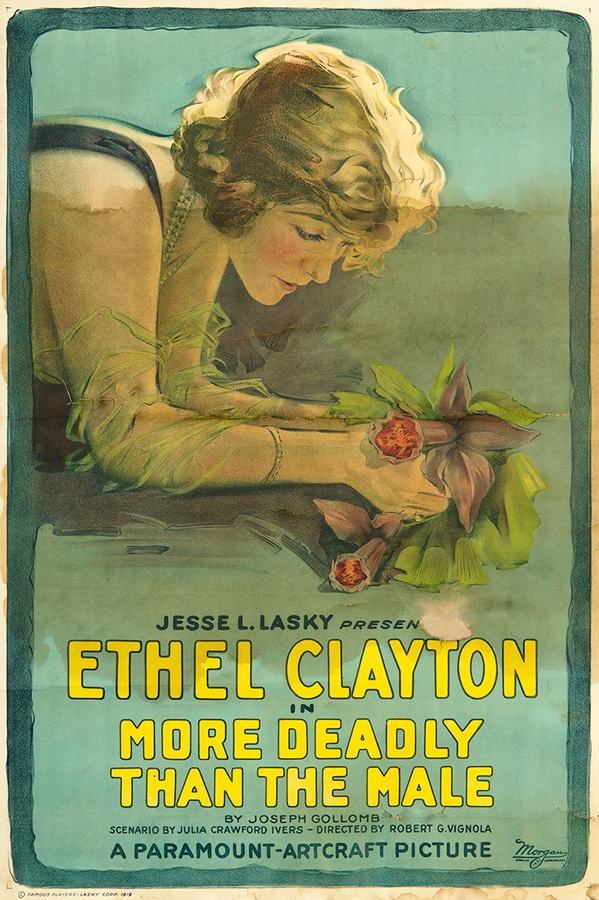
A definitive 7.3/10 rating for a film that redefined the boundaries of cult cinema. More Deadly Than the Male remains a cornerstone of transgressive art.
When Helen O'Hara steps onto the screen, she does not merely occupy space; she commands it, her poise a veneer for a mind that navigates the treacherous waters of desire and power. The film opens with her flirtatious banter directed at Richard Carlin, a wealthy clubman whose reputation for audacious exploits precedes him. Their conversation quickly spirals from polite repartee to a philosophical debate about the allure of the untamed, with Richard claiming that chasing African women—protected by ferocious, jealous males—offers a thrill unattainable in the predictable corridors of "civilized" society.
Helen, aware of the cultural fetishism embedded in Richard’s worldview, leverages it to her advantage. She introduces him to her husband, Terry, a move that seems at first a straightforward social courtesy but soon reveals itself as a calculated gambit. By inviting Richard to a remote mountain camp, she engineers a scenario where the veneer of propriety can be stripped away, exposing raw, animalistic instincts.
The camp scene is a masterclass in visual storytelling. Snow‑capped peaks loom like silent judges as Helen and Richard share a charged embrace. The camera lingers on their faces, capturing the flicker of excitement that dances in Richard’s eyes—a mixture of conquest and genuine affection. Terry’s sudden intrusion shatters the moment, and the ensuing duel is filmed with kinetic intensity; each swordstroke echoes the internal battle between civilization and primal desire.
Terry’s wound is not merely physical; it symbolizes the fragility of the social contracts that bind the characters. Helen’s confession—she met Richard in college, and now loves him—adds a layer of temporal complexity, suggesting that the seeds of this entanglement were sown long before the mountain’s icy wind blew.
Just as the narrative appears to settle into a conventional love‑triangle, a dam gives way, unleashing a torrent that threatens a downstream hospital sheltering crippled children. The urgency of this crisis forces Helen and Richard into a cooperative effort, replacing the dam’s logs with frantic determination. Their teamwork momentarily eclipses personal ambition, hinting at a shared humanity that transcends their earlier rivalry.
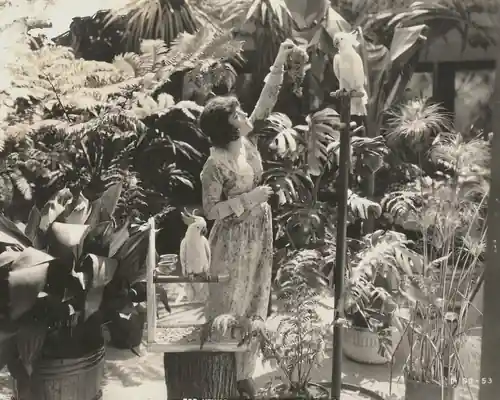
The dam sequence is a visual metaphor for the characters’ emotional barriers. Each log they hoist represents a piece of their façades, and as the structure steadies, the audience glimpses the possibility of redemption—a fleeting glimpse that is brutally interrupted.
Richard’s impulsive decision to kidnap Helen onto his yacht escalates the tension to its zenith. The yacht, sleek and isolated on a dark sea, becomes a floating arena where power dynamics shift with each wave. Harbor police board the vessel, prompting Richard to plunge into the water. The collision with a police patrol boat is filmed in stark, high‑contrast black‑and‑white, emphasizing the chaotic clash between law, love, and violence.
When Richard regains consciousness, he discovers Terry unharmed—an unexpected twist that redefines the entire narrative. Terry is not Helen’s husband at all; he is her brother, a revelation that reframes Helen’s machinations as a calculated orchestration rather than a betrayal of marital vows. The final tableau reveals Helen’s triumph: she has ensnared Richard’s heart while maintaining the veneer of "civilized" respectability, subverting the gendered expectations of her era.
At its core, More Deadly Than the Male interrogates colonial fantasies, gender performance, and the fluidity of identity. Richard’s fascination with African women is not merely an exotic longing; it reflects a broader Western desire to dominate the "Other" while preserving a veneer of superiority. Helen’s manipulation of this desire exposes the hollowness of such fantasies, suggesting that the true "wildness" resides within the civilized sphere itself.
The film’s title itself is a provocation. It insinuates that women, when wielding agency, can be more lethal than their male counterparts—a notion that resonates powerfully in the silent era, when female characters were often relegated to passive roles. Helen’s strategic use of flirtation, deception, and emotional intelligence underscores a sophisticated understanding of power dynamics that predates modern feminist discourse.
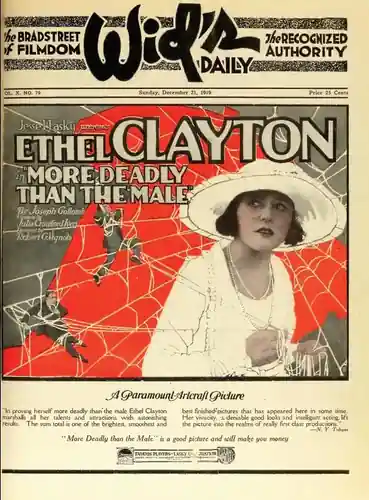
When placed alongside contemporaneous works such as Szulamit or Gambler's Gold, the film distinguishes itself through its focus on psychological manipulation rather than pure adventure. While Szulamit revels in exotic locales and Gambler's Gold glorifies material greed, More Deadly Than the Male turns the gaze inward, examining the internal landscapes of desire and control.
In contrast, A Sister of Six offers a more straightforward melodrama, lacking the layered subtext that Helen embodies. The nuanced performances of Edward Coxen and Peggy Pearce provide a counterpoint to the more archetypal portrayals in The Empress, highlighting the film’s ambition to transcend genre conventions.
Visually, the film employs chiaroscuro lighting to accentuate the moral ambiguity of its characters. The mountain camp scenes are bathed in cold, silvery light, mirroring the starkness of the duel, while the dam disaster is illuminated with harsh, flickering lanterns that underscore the precariousness of human endeavor. The yacht sequence, drenched in midnight blues, uses the sea as a metaphor for the unconscious—a turbulent realm where Richard confronts his own limitations.
The editing rhythm is deliberate, allowing moments of tension to breathe before snapping into rapid cuts during action set‑pieces. This pacing mirrors the characters’ emotional oscillations, granting the audience space to contemplate the underlying power plays.
Peggy Pearce, as Helen, delivers a performance that balances coquettish charm with steely resolve. Her eyes convey a calculating intellect, and her gestures—subtle hand movements, measured steps—communicate intent without a single spoken word. Edward Coxen’s portrayal of Richard oscillates between swaggering bravado and vulnerable yearning, creating a complex portrait of a man torn between societal expectations and personal longing.
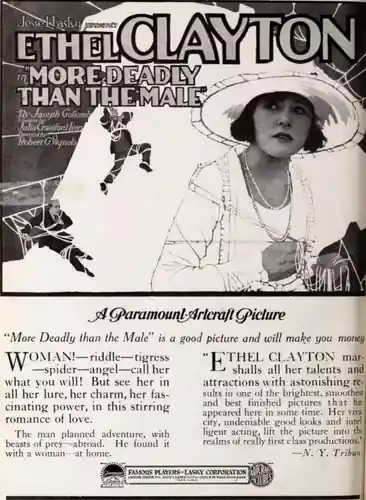
Herbert Heyes, cast as Terry (the brother), provides a grounding presence, his calm demeanor serving as a foil to the surrounding chaos. Hallam Cooley’s cameo as the harbormaster adds a touch of bureaucratic rigidity, reinforcing the film’s commentary on institutional authority.
The film’s structure is a mosaic of episodic encounters that, when assembled, form a cohesive argument about the nature of power. The initial flirtation, the mountain duel, the dam crisis, and the yacht climax each function as a distinct act, yet they are bound by a through‑line of Helen’s strategic manipulation. This modular approach allows the director to explore varying thematic concerns—colonial desire, gender politics, moral responsibility—without sacrificing narrative momentum.
While some silent-era productions suffer from meandering subplots, More Deadly Than the Male maintains a taut focus, each scene propelling the story forward. The pacing accelerates as the stakes rise, culminating in a denouement that feels both inevitable and surprising.
Julia Crawford Ivers and Joseph Gollomb craft intertitles that are succinct yet evocative. The language is peppered with period‑appropriate idioms, but the subtext is unmistakable: Helen’s lines often carry double meanings, while Richard’s boasts conceal insecurities. The intertitles function as narrative bridges, guiding the audience through emotional shifts without resorting to exposition.
The script’s economy is commendable; every line serves a purpose, whether to reveal character motivation, advance the plot, or underscore thematic resonance. This restraint is a hallmark of effective silent storytelling.
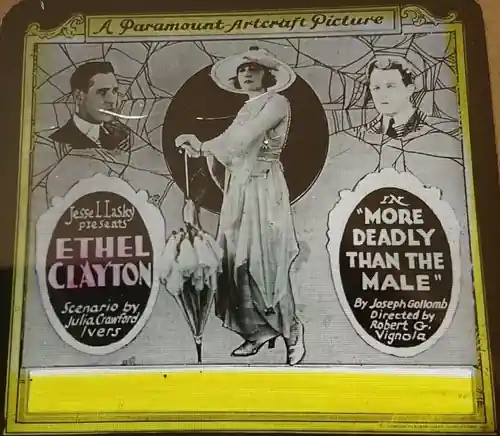
In an era where discussions of consent, representation, and power dynamics dominate critical discourse, More Deadly Than the Male offers a surprisingly prescient exploration of these issues. Helen’s agency challenges the patriarchal norms of the 1920s, while Richard’s fetishization of the "exotic" anticipates contemporary critiques of cultural appropriation.
The film’s resolution—Helen’s triumph through emotional intelligence rather than physical force—aligns with modern narratives that celebrate female empowerment. Yet the story does not shy away from the darkness inherent in manipulation, prompting viewers to question the ethical dimensions of Helen’s tactics.
Although the title may not be as widely recognized as The Big Sister or Confession, its thematic daring paved the way for later silent dramas that interrogated gender and colonialism. The film’s visual language can be traced in the work of directors like D.W. Griffith, who similarly employed stark lighting to convey moral ambiguity.
Modern scholars often cite More Deadly Than the Male when discussing early feminist cinema, noting how Helen’s character subverts the "damsel in distress" trope. The film’s nuanced portrayal of a woman who wields power through intellect rather than brute strength remains a touchstone for contemporary filmmakers seeking to reinterpret classic narratives.
Through its intricate plot, richly textured characters, and bold thematic inquiries, More Deadly Than the Male stands as a testament to the silent era’s capacity for sophisticated storytelling. Its blend of romance, adventure, and social commentary invites repeated viewings, each revealing new layers of meaning. For cinephiles interested in the intersection of gender politics and colonial critique, the film offers a compelling, timeless experience.
IMDb 6
1935
Community
Log in to comment.