DbcultAccessing Vault...
Cult Review
Senior Film Conservator
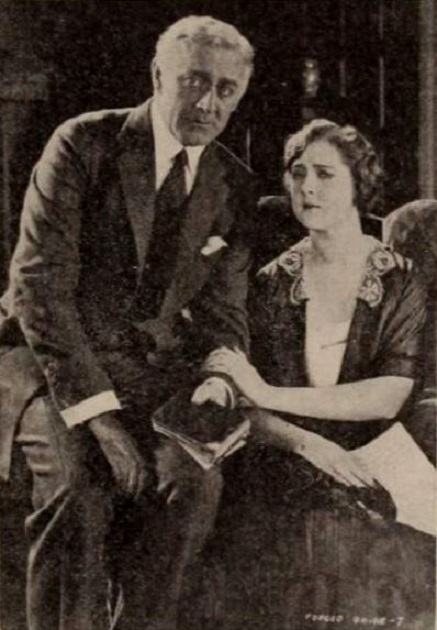
A counterfeit father, an heiress-in-hiding, and the signature that could unmake them both.
The Forged Bride belongs to that exquisite interregnum when silent cinema had already learned how to make light sing yet still refused to open its mouth. Shadows are characters here; they slink across lace curtains, pool like spilled ink beneath a courtroom bench, stretch elongated fingers across a ballroom floor as if to snatch the dancers. Director J.G. Hawks—best remembered for marshalling thrills in Whispering Smith—treats each frame like a palimpsest: you sense earlier drafts bleeding through the current image, ghosts of alternative plots. The result is a narrative that feels half-remembered even while you watch it, a daydream wrestled into celluloid.
There is thrift-born genius in how cinematographer Hal Hoadley (pulling double duty as scenarist) turns fiscal shackles into aesthetic liberation. Instead of opulent sets, we get negative space: a cavernous courtroom rendered through looming silhouettes of pillars, a prison corridor suggested by a single vanishing stripe of light. The beach resort—supposedly gilded—appears mostly in silhouetted long shots against a slate ocean, affluent leisure reduced to a geometry of parasols and yacht masts. The palette is graphite and bone, with sudden sulphuric intrusions of yellow press pages, a crimson sash on the rival’s dress, the sea-blue ribbon Dick gifts Peggy. Those hues prefigure the German expressionist love of symbolic color, yet they emerge two years before Variety trumpeted Die Nibelungen’s tinting triumphs.
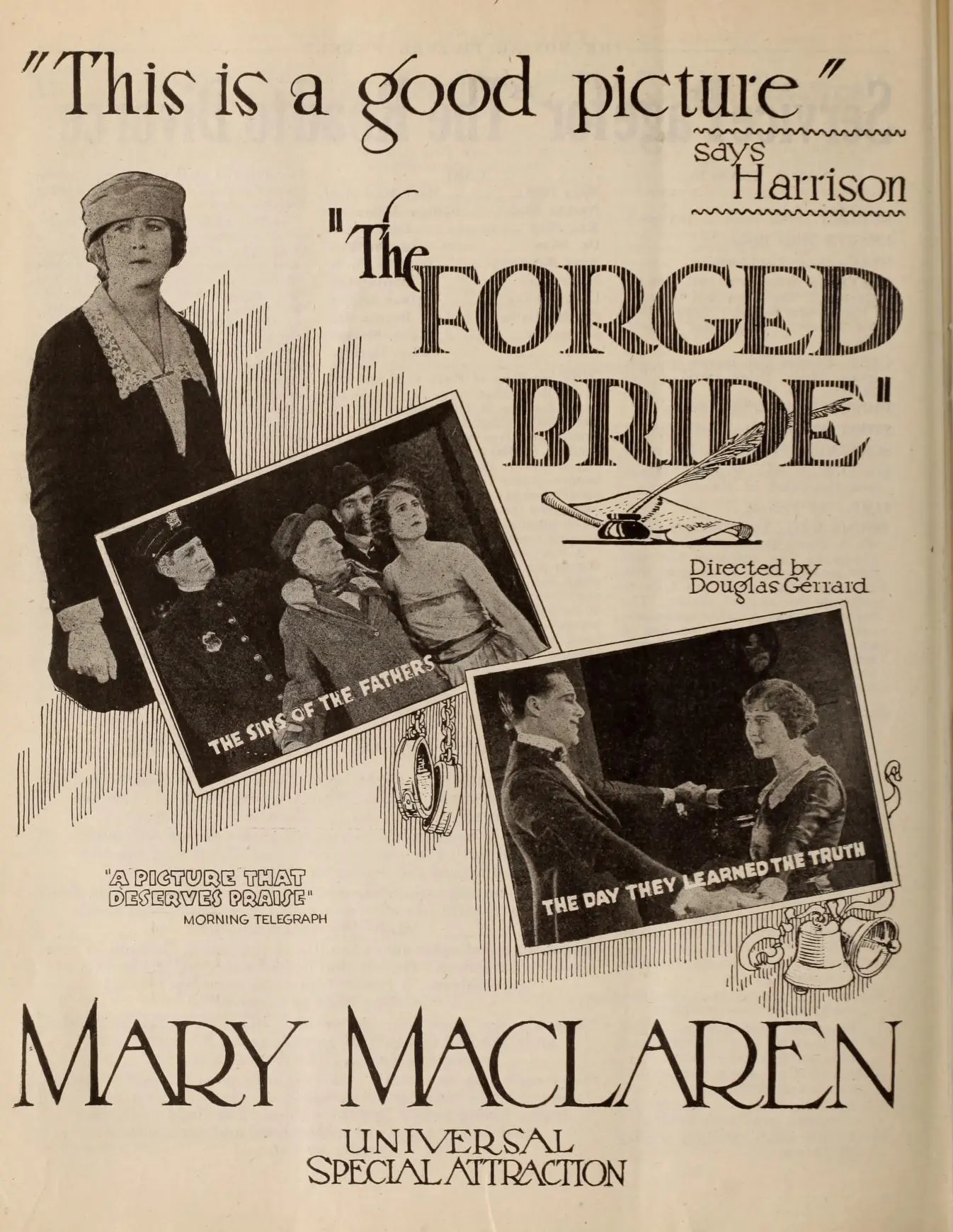
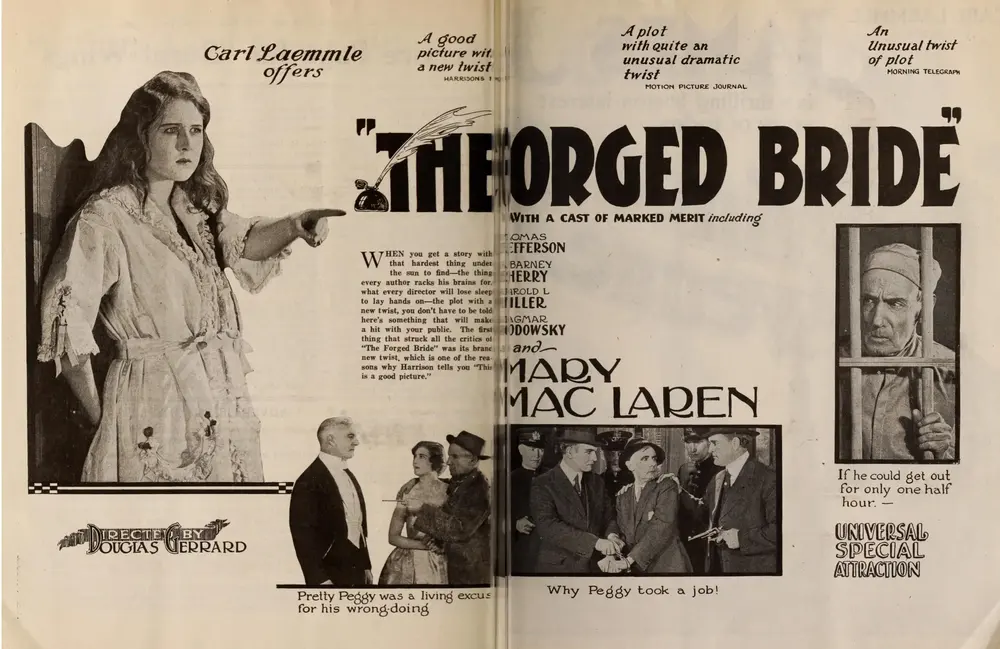
Thomas Jefferson (no relation to the president, though the publicity department winked otherwise) plays Bill Butters as a hunched maestro of micro-gestures: the twitch of graphite-stained fingers when he hears the jury foreman stand, the involuntary smile when he recalls Peggy learning to hold a pen “like a lady.” Frances Raymond’s Judge Farrell is all Apollonian restraint—until a late-film confrontation where his powdered wig of civility slips, revealing a paternal panic equal to Bill’s. As Peggy, Dagmar Godowsky navigates the perilous bridge from ingénue to woman of resolve without the aid of spoken transition; watch how she lowers her gaze in medium shot, then lifts it in close-up, a silent declaration that she will author her own life from here on.
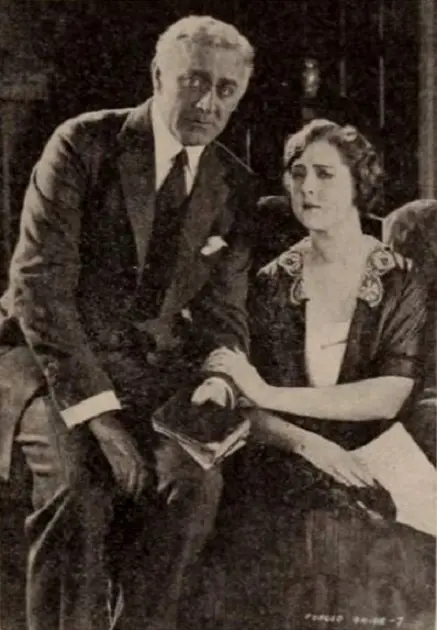
Harold Miller’s Dick Van Courtland could have been mere bland prince charming, but Miller gifts him a distracted quality—he’s always half-searching the horizon, as though destiny were a sail he expects to appear. When he learns Peggy’s lineage, his face doesn’t contort into villainous rejection; instead, Miller chooses a tremor of the eyelid, a swallow that travels the length of his throat. It’s a reaction more devastating than any mustache-twirling abandonment.
Dorothy Hagan’s unnamed rival—credited only as “The Interloper”—glides through the narrative like a couture-clad scythe. She employs the era’s new technologies of malice: telegram boys bribed to bear false timestamps, Kodak snapshots doctored in darkroom baths to suggest clandestine trysts, gramophone records swapped so that a lovers’ waltz becomes a mocking laugh. Hawks films her in triplicate mirrors, a visual echo of identity splintering. In one bravura sequence, she practices forging Peggy’s handwriting while powdering her face; each time she dots an “i,” a puff of talc rises, as though virtue itself were being aerosolized into oblivion.
Silent cinema seldom indulged the modernist penchant for interior monologue, yet The Forged Bride invents a surrogate: superimposed handwriting scrawls across stone walls, each line a plea or confession. When Bill hears rumor of Peggy’s marital peril, the words arrive in frantic cursives, then smear as if rain-soaked. Hawks overlays these texts atop the judge’s silhouette—justice and perpetrator fused into a single glyph. The implication: every sentence handed down sentences the judge, too, to a life of moral bookkeeping.
Bill’s ultimate rebellion is aesthetic: he volunteers for the warden’s literacy program, teaching fellow inmates to write letters home. In close-up, we see him guide a convict’s trembling hand across paper; the ink line wavers yet holds—a metaphor for the film’s faith that identity, though forged under duress, can still carry authentic weight.
The film’s social geometry recalls Cecil B. DeMille’s pre-spectacle mosaics, yet Hawks refuses DeMille’s didactic moralizing. Peggy’s ascension into the Van Courtland sphere is shot from a low angle, chandeliers looming like crystal predatory birds. Conversely, prison scenes peer down from high gantries, bodies arranged in a grid of stripes. The juxtaposition exposes both realms as theaters of performance: debutantes rehearse etiquette while inmates rehearse penitence. When Peggy visits her father behind bars, the camera adopts a horizontal tracking shot—eye-level, egalitarian—suggesting that love, if not law, can flatten hierarchies.
Spoiler etiquette forbids divulging whether the marriage survives, yet the finale deserves annotation for its sheer poetic audacity. Dick races to the shore where Peggy once collected shells, hoping to intercept her before self-exile. Hawks intercuts three temporal planes: the present pursuit, a flashback of Peggy teaching Bill to skip stones, and a future-tense fantasy of a child’s sandcastle—achieved through double exposure. Dick spots Peggy’s name traced in wet sand, already half-erased by tide. He kneels, not to propose again, but to sign his own name beside hers. The implication: identity is not fixed document but tidal palimpsest, perpetually rewritten. A final iris-out closes on the couple’s silhouettes as gulls wheel overhead, their cries supplied by the orchestra’s violins—an aural forgery of nature.
Viewers lured by occult melodrama may recall Vera, the Medium, where a daughter also shoulders the spectral guilt of parental sin, though Vera deploys séances where The Forged Bride wields fountain pens. Conversely, fans of The Outcast will recognize the motif of social ostracism, yet that narrative punishes its protagonist while Hawks’ film countenances redemption through self-inscription.
Though Paramount only ever struck a handful of distribution prints, extant 16 mm fragments reveal an artwork obsessed with the ethics of replication—eerily mirroring its own fate as a frequently bootlegged title in the 1970s home-movie market. Each unauthorized dupe became, paradoxically, a validation of Bill Butters’ creed: authenticity is not in the artifact but in the intent animating it.
Contemporary debates about AI-generated art, deep-fake identities, and cryptographic provenance find uncanny antecedent in this 1923 parable. Hawks posits that a signature’s value lies not in its unrepeatable flourish but in the social covenant it forges. Replace ink with blockchain and the film could premiere tomorrow at Sundance to admiring gasps.
Modern revivals often commission new scores; the Alloy Orchestra’s 2019 suite used typewriter percussion to evoke Bill’s craft, while a 2022 string quartet at MoMA interpolated Debussy’s La mer to mirror Dick’s yachting milieu. I recommend pairing a viewing with Max Richter’s The Blue Notebooks: its repetitive piano motifs echo the film’s fixation on handwriting drills, and the solo violin arrives like a pardon delivered too late.
Great cinema tattoos its imagery onto the subconscious; The Forged Bride inscribes in cursive loops that only fully unfurl days later when you find yourself hesitating before signing a check, suddenly aware that each stroke of your pen is a miniature contract with whoever you decide to be. Hawks and Hoadley bequeathed us a meditation on forgery that, ironically, could not be more authentic.
Verdict: Essential viewing for anyone convinced that identity is a fixed asset. (Spoiler: it’s a volatile currency, forever subject to market crashes of the heart.)
IMDb 7
1919
Community
Log in to comment.