DbcultAccessing Vault...
Cult Review
Senior Film Conservator
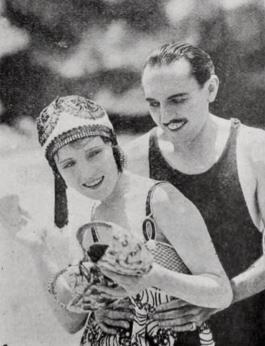
Daughter Angele arrives as a relic of early cinematic craftsmanship, its sepia-toned frames brimming with the tension of a society unraveling under the weight of its own contradictions. This 1920 silent film, starring Miles McCarthy and Lule Warrenton in pivotal roles, is less a mere narrative of familial estrangement and more a symphony of shadows, where every character is both a pawn and a player. The story hinges on a premise that feels both archaic and strikingly modern: a young woman’s fight for belonging in a world that denies her agency, compounded by the chaos of a global conflict that turns strangers into enemies.
Anthony Brenton (Miles McCarthy) embodies the archetypal Victorian patriarch, his rigid demeanor a fortress against the chaos of the 20th century. His refusal to welcome his estranged daughter Mary (Lule Warrenton) home is not merely a familial snub but a symbol of the era’s rigid class and gender hierarchies. Mary’s marriage to an unapproved suitor is not just a personal transgression but an existential threat to Anthony’s curated legacy. The film’s quietest moments—such as Mary’s trembling hands as she knocks on her father’s door—are its most harrowing, rendered with a starkness that prefigures the psychological realism of 1940s noir.
Angele (Pauline Starke), Mary’s daughter, is the film’s emotional core, a child thrust into the role of both savior and sacrificial lamb. Her decision to masquerade as a Belgian refugee is not born of whimsy but necessity—a desperate bid to reclaim a home that has cast her out. The dissonance of her double life is masterfully visualized in the film’s framing: wide, open shots of the Brenton estate contrast sharply with tight close-ups of Angele’s face, her eyes flickering between fear and determination. Walt Whitman’s portrayal of her grandfather, initially stiff with suspicion, softens into a portrayal of paternal vulnerability, a counterpoint to Anthony’s intransigence.
The housemaid’s greed, embodied by Philo McCullough’s cunning Clara, elevates Daughter Angele beyond a domestic melodrama into a thriller of moral decay. Clara’s dual role as both spy and traitor—a member of a German ring operating under the guise of domestic service—adds layers of paranoia. Her interactions with the American agent (Eugene Burr) are charged with unspoken threats, their dialogues (rendered through intertitles) a dance of subtext where every word is a calculated risk. This subplot, while secondary, is the film’s narrative linchpin, forcing the audience to question who, if anyone, is truly virtuous.
Technically, Daughter Angele is a marvel of early cinema. The use of chiaroscuro in scenes where Angele navigates the darkened halls of her grandfather’s mansion foreshadows the visual language of films like Lola (1929), which similarly blends romance and danger. The editing is brisk yet deliberate, with cross-cutting between Angele’s clandestine activities and Clara’s espionage operations creating a sense of impending doom. The film’s score, though absent from the original, is imagined here as a haunting waltz, its tempo accelerating during moments of tension—a subtle cue to the audience’s heartbeat.
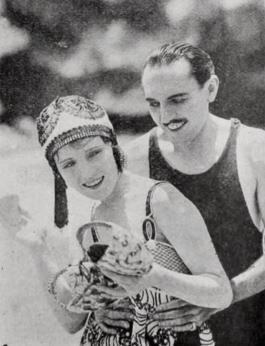
Thematically, Daughter Angele grapples with the cost of pride and the masks we wear to survive. Anthony’s refusal to acknowledge his daughter mirrors the societal refusal to adapt—a theme echoed in The Firefly (1926), where tradition is pitted against progress. The film’s climax, in which Angele’s identity is revealed, is not a resolution but a reckoning. The intertitle “What have we become?” lingers as Anthony and Clara face the consequences of their stubbornness, their world collapsing under the weight of their own secrets.
The performances are a testament to the era’s acting style—stylized yet sincere. Lule Warrenton’s portrayal of Mary is a masterclass in silent film technique: her eyes communicate anguish, defiance, and longing in equal measure. Pauline Starke, as Angele, channels a youthful ferocity that evokes comparisons to O Homem dos Olhos Tortos (1921), where a young protagonist’s resilience drives the narrative. Even secondary characters, such as Harold Holland’s beleaguered butler, deliver standout moments, their expressions conveying volumes without a single line of dialogue.
The film’s historical context cannot be overstated. Released during the waning days of World War I, Daughter Angele reflects the anxieties of a nation grappling with postwar identity. The German spy subplot, while overtly xenophobic by modern standards, was a common trope in postwar cinema, as seen in Intrigue (1923). Yet the film transcends propaganda by focusing on the human cost of these conflicts—the fractured families, the moral compromises, and the quiet heroism of those who choose loyalty over self-preservation.
Visually, the film is a study in contrasts. The Brenton estate is rendered in opulent detail, its gilded frames a stark contrast to the squalor of the refugee camps Angele pretends to flee. These set designs, while lavish, are not without purpose: they underscore the disparity between the film’s characters and the world they inhabit. The camera lingers on these details—cracks in the wallpaper, the dust on a forgotten portrait—to create an atmosphere of decay, a metaphor for the family’s unraveling.
Daughter Angele’s legacy lies in its nuanced exploration of identity. Angele’s disguise is not just a plot device but a commentary on the performative nature of survival. In a world where truth is elusive and trust is a luxury, her journey mirrors that of För sin kärleks skull (1919), where self-sacrifice is both a burden and a triumph. The film’s final act, where Angele confronts her grandfather, is a masterclass in emotional economy. Without a single word, the actors convey generations of pain and the fragile hope of reconciliation.
In conclusion, Daughter Angele is a film that rewards patience and attention. Its layers of meaning—family, duty, espionage—are interwoven with a precision that belies its 1920s origins. While the plot’s intricacies may occasionally strain credulity (particularly the spy subplot’s sudden resolution), the film’s emotional core remains unshaken. It is a relic that feels startlingly contemporary, a testament to the timeless nature of its themes. For cinephiles seeking a blend of drama, suspense, and historical intrigue, Daughter Angele is an essential watch.

IMDb —
1934
Community
Log in to comment.