DbcultAccessing Vault...
3.6/10
Senior Film Conservator
A definitive 3.6/10 rating for a film that redefined the boundaries of cult cinema. The Governor's Ghost remains a cornerstone of transgressive art.
Melodrama, at its most fevered, insists that geography is destiny: a bridge buckles, a bungalow glows like a sin-soon lantern, and a birthmark—no bigger than a tear—becomes the Book of Judgement. The Governor’s Ghost, released in March 1915 by the short-lived but ferociously productive Victor Film Co., is such a cartography of catastrophes, folding provincial politicking into proto-noir fatalism a decade before the term existed.
Stuart Homer—part reformer, part self-wrought deity—believes that ballots can scourge the world clean. His campaign headquarters throb with brass bands and the camphor of printer’s ink, yet the first crack in his marble façade is a three-line billet-doux: “Come to my bungalow. I love you. We will go away together. Believe me, sincerely, Jeff.” Director Will S. Davis lets the camera loiter on that scrap longer than on any campaign poster, as though the kinetics of democracy itself were being devoured by cursive.
Helen Homer—wife, mother, unwilling keeper of secrets—snatches the note and races into a night already twitching with heat-lightning. The cross-cut that follows is proto-Griffith yet nastier: Alice, veiled against discovery, tiptoes across a bridge whose planks resemble rotten piano keys; Helen, breath clouding the cab window, clutches the paper like an arrest warrant; Reverend Walters, totem of moral absolutism, spies Helen entering the bungalow and files the image under damnation. When the bridge collapses, Davis abandons grandeur for savage intimacy: Alice’s shoe pirouettes into the ravine, a silent scream swallowed by wet leaves. The storm does not roar—it slurps.
Victorian theatre once used “front curtain tableaux” to denote elapsed decades; Davis simply exposes a calendar whose pages are torn away by invisible hands while the screen floods with manganese-blue tint. When the iris re-opens, Homer’s side-part has silvered into a governor’s mane, and the reform party’s banners have transmogrified into statehouse drapery. Yet the moral ledger is blood-splattered: Alice’s coffin nail has become a festering splinter in the Homer hearth; Helen, presumed dead, has been refashioned by speakeasy neon into a reluctant procuress known on Broadway as “the Duchess of 47th.”
The film’s most radical ellipsis is Helen’s off-screen descent. We never witness the automobile party of “questionable character,” only the aftermath: a gaunt woman in beaded fringe, eyes lacquered with kohl and defeat. Davis trusts the viewer to imagine the gauntlet of gin-joints, assignation houses, and police shakedowns, thereby turning absence into accusation—against Homer, against the electorate, against us.
Mary Homer—bred in boarding-school chapels where virtue is measured by the starch in collars—steps into the narrative like a naïve photocopy of Alice. Her disappearance is no random abduction but a symmetrical reverb: the daughter must pay for the father’s refusal to read the female heart. “The Master,” a scar-faced pimp with a top-hat tilted like a guillotine blade, operates from a loft papered by Toulouse-Lautrec rejects and stale opium smoke. The set design is a fever dream of sea-blue shadows and jaundiced gaslight, prefiguring the German Strassenfilm cycle by a full decade.
Enter Reggie Wilde—detective, raconteur, wearer of checked suits that screech like taxi-horns. Wilde’s infiltration of the gang via a greasy spoon called “The Chow Mein” supplies the film’s lone comic oxygen. Yet even here, Davis undercuts levity with danger: a single long shot shows Wilde’s reflection multiplied in a wall of cracked mirrors, each shard framing a different face of corruption.
When Helen spies the strawberry mark on Mary’s shoulder blade, the film lands its most brutal irony: the same body that once signified sin (the note clasped by Helen) now resurrects motherhood. Davis stages the recognition in a doorway back-lit by sodium flare; the women’s silhouettes merge, then separate, as though even affection must pay rent to chiaroscuro. The pistol shot that fells “the Master” is less a climax than a caesura—Helen’s reclamation of narrative authorship.
Yet the law, that blindfolded clerk, cannot read birthmarks. Helen is caged under the alias “Smith,” and Mary—ignorant of maternity—testifies against her. The courtroom sequence, shot in cavernous long takes, exposes the masculine machinery of justice: twelve puff-necked jurors, a prosecutor whose eyebrows resemble apostrophes of disdain, and Governor Homer in the gallery, gagged by his own signature on every procedural form.
Homer’s decision to pardon Helen—to publicly immolate his reputation—would have delivered a stinging last-reel catharsis. Instead, Davis denies even that meager balm. Helen, her appetite amputated by shame, expires before the ink dries. The camera tilts up from the deathbed to a barred window where dawn light pools like diluted milk. Homer enters, parchment in hand, and finds a body already cooling into the title’s promised ghost. The Governor’s nemesis has evaporated, yet the victory tastes of iron: a Higher Court—whether theological or narrative—has stolen his restitution.
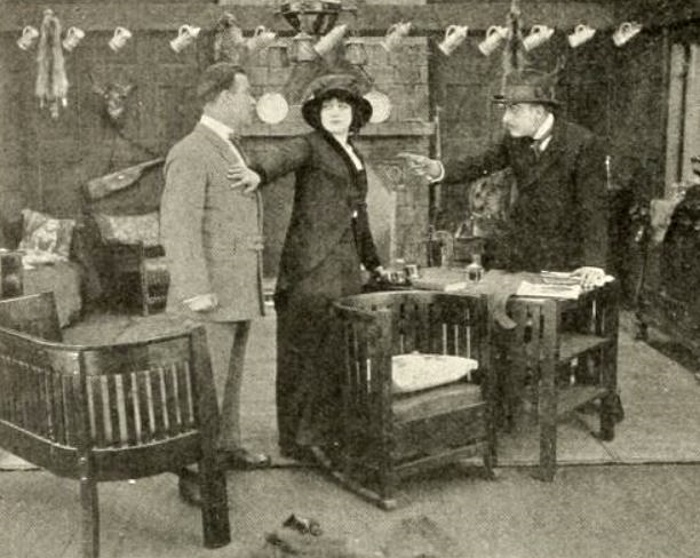
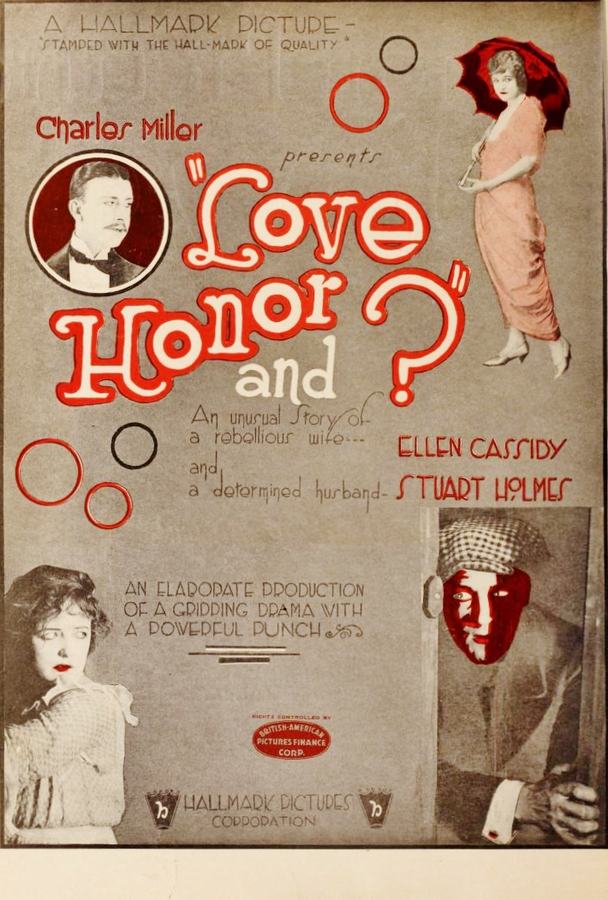
Stuart Holmes, later a horror stalwart, plays Homer with the ramrod posture of a man who mistakes vertebrae for morals. Watch his hands: they start out flamboyant, slicing air like oratorical scimitars, but by reel five they’ve retreated into pockets, afraid of their own fingerprints. Edith Hallor’s Helen is even more kinetic; she ages not via wrinkle lines but via gait—her shoulders folding inward like broken parasols. In the loft scene she moves with feral liquidity, a testament to months spent observing taxi-dancers at Hammerstein’s.
Marie Boyd’s Alice is onscreen barely twelve minutes, yet her collapse into the ravine—filmed by a camera strapped to a descending freight elevator—remains one of silent cinema’s most vertiginous stunts. Jack Hopkins as Jefferson Blair has the thankless task of embodying thwarted desire; he compensates by letting his pupils quiver like tuning forks whenever Alice’s name is mentioned.
The surviving 35 mm print at MoMA preserves the original tinting strategy: amber for exteriors, cyan for night, rose for interiors of presumed innocence, and sickly green for the loft. The tonal shifts are not mere ornament; they function as moral diacritics, coaching the viewer’s diaphragm when to tighten. Davis’s preferred composition is a medium two-shot framed by doorways—characters conversing across thresholds that symbolize the permeable membrane between public rectitude and private rot.
Compare this chromatic schema to The Marconi Operator’s stark monochrome, or the saturated religiosity of The Sign of the Cross. Where DeMille wallows in pageant excess, Davis opts for the sour aftertaste of parable.
No original cue sheets survive, but contemporary exhibitors recommended a pastiche of Grieg’s “Åse’s Death” for Alice’s bridge plunge and Liszt’s “Mephisto Waltz” for the loft orgies. Modern festivals often commission new scores—my favorite remains the 2018 Pordenone rendition for string quartet and musical saw, whose tremolo evoked the aural equivalent of a gas-lamp shiver.
Released the same year that Australia Calls beat the drum for empire, The Governor’s Ghost channels anxieties closer to home: the 1910 Mann Act, the sensational Traffic in Souls, and the simultaneous elevation yet suspicion of politically visible women. Helen’s journey from spouse to outcast mirrors contemporaneous debates about birth-control pamphlets and the ballot. The film never utters “suffrage,” yet every man in it legislates female mobility—who may cross bridges, enter bungalows, or quit marriages.
Place this narrative beside Fedora’s circular mother-daughter fatalities or Dzieje grzechu’s fall from bourgeois comfort into carnal abyss, and you’ll notice a shared grammar: the punitive arc of sexually knowledge. Yet whereas those European entries aestheticize suffering, Davis’s American tale moralizes it—salvation lies not in transcendence but in premature death.
Likewise, fans of The Master Cracksman will sniff a proto-type of that film’s eponymous anti-hero in “the Master,” though here the villain is stripped of swashbuckling charm and rendered as pimp-as-predator, a reflection of Progressive Era vice commissions.
Why resurrect a melodrama whose final reel denies every emotional contract it once inked? Because The Governor’s Ghost anticipates the noir axiom that the past is an unindicted co-conspirator. It stages recognition as catastrophe, love as entrapment, and redemption as a signature that dries on a corpse. In an age when political scandals cycle faster than newsreel churn, the film whispers that every ballot cast in self-righteous ignorance engineers a bridge somewhere, poised to snap.
Stream it if you can—preferably at 2 a.m., when city sirens outside your window harmonize with the film’s invisible orchestra. Keep the lights off; let the tints bleed into your retinas. And when the Governor’s final close-up fades to black, resist the urge to google absolution. Davis already told you: the file is missing, the pardon unsigned, the ghost elected to another term.
IMDb —
1925
Community
Log in to comment.