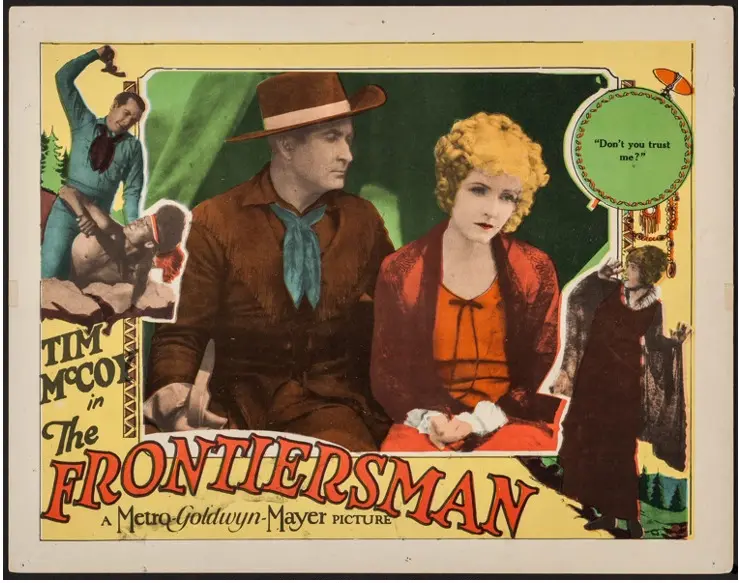
Is The Frontiersman a film that warrants your time in an age saturated with digital spectacle? Short answer: yes, but with significant caveats that ground it firmly in its historical context. This is a journey back to the foundational myths of American cinema, a silent-era Western that, for all its antiquated charm, offers a compelling glimpse into early storytelling prowess and the enduring appeal of the genre.
This film is unequivocally for those with a deep appreciation for cinematic history, particularly fans of silent Westerns and the foundational performances of actors like Tim McCoy. It is not for viewers seeking fast-paced action, complex character arcs by modern standards, or dialogue-driven narratives. Expect a different kind of immersion, one built on visual storytelling and the raw magnetism of its lead.
The Silent Saga of the Untamed West
Revisiting The Frontiersman is akin to unearthing a time capsule, a cinematic artifact that speaks volumes about the early days of Hollywood and its fascination with the American West. Directed with a steady hand by Gordon Rigby, the film presents a vision of the frontier that is both romanticized and starkly brutal. It’s a testament to the power of visual narrative, where sweeping landscapes and the stoic expressions of its cast carry the emotional weight often conveyed by dialogue in later eras.
The film centers on a nameless frontiersman, brought to life by Tim McCoy, whose very presence embodies the rugged individualism of the era. McCoy, a real-life cowboy and soldier, brought an authenticity to his roles that few could match. His performance here is less about overt emoting and more about an enduring, hardened spirit communicated through his posture, his watchful eyes, and the deliberate economy of his movements. It’s a masterclass in silent-era acting, requiring the audience to lean in, to interpret the subtle nuances of his character.
The plot, while straightforward by today's standards, is a classic Western template: a lone figure caught between the forces of expansion and the preservation of an older way of life. The conflict arises from the arrival of a new wave of settlers, spearheaded by Russell Simpson's determined, if somewhat naive, prospector. This influx inevitably clashes with the established order, including the indigenous tribes, represented with quiet dignity by Chief John Big Tree, and the opportunistic outlaws who prey on the vulnerable.
Scene from The Frontiersman
Cinematic perspective: Exploring the visual vocabulary of The Frontiersman (1927) through its definitive frames.
One of the film's most striking elements is its ability to convey profound tension without a single spoken word. Consider the scene where McCoy's character first encounters the prospector's family: a long shot frames him on horseback, observing from a ridge, his silhouette stark against the horizon. The camera then cuts to close-ups of Lillian Leighton's anxious gaze, then to the wide-eyed curiosity of Louise Lorraine. No dialogue is needed to establish the wary respect, the potential threat, and the nascent connection between these disparate lives. It’s pure cinematic language, eloquently delivered.
The pacing, a common critique of silent films for modern audiences, is deliberate. It allows the vastness of the Western landscape to become a character in itself, emphasizing the isolation and the sheer scale of the challenges faced by its inhabitants. While some might find it slow, it rewards patience with moments of genuine suspense and visual poetry. The chases across dusty plains, the tense standoffs in ramshackle frontier towns – these are the building blocks of a genre that continues to captivate.
The Unspoken Power of Tim McCoy
Tim McCoy's portrayal of the frontiersman is the undeniable anchor of the film. He isn't merely acting; he seems to inhabit the role, drawing upon his own experiences to imbue the character with a gravitas that feels utterly authentic. His interactions, particularly with Louise Lorraine's character, are handled with a quiet chivalry that speaks volumes about the moral code of the frontier hero. There's a subtle protectiveness in his every glance, a sense of responsibility that transcends personal gain.
The film's strength lies in its commitment to simple, powerful archetypes. McCoy is the stoic protector; Lorraine, the symbol of innocence and hope; Simpson, the embodiment of frontier ambition. These characters, though perhaps lacking the psychological depth we expect today, serve their purpose beautifully within the film's framework, driving the narrative forward through their actions and reactions rather than introspection.
This film works because it masterfully leverages the visual storytelling inherent to the silent era, allowing Tim McCoy's authentic presence and the stark beauty of the Western landscape to carry its powerful narrative.
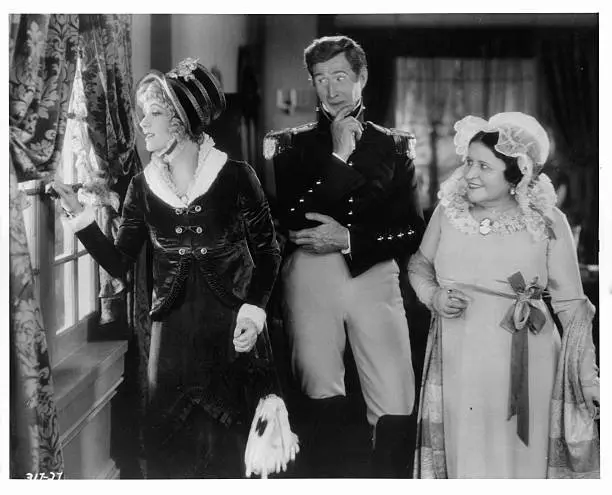
Scene from The Frontiersman
Cinematic perspective: Exploring the visual vocabulary of The Frontiersman (1927) through its definitive frames.
This film fails because its pacing and lack of modern narrative complexity may alienate viewers unaccustomed to the conventions of silent cinema, leading to a perception of slowness rather than deliberate tension.
You should watch it if you are a cinephile, a Western enthusiast, or someone interested in understanding the foundational elements of American film history and silent-era acting.
A Glimpse into Early Hollywood Directing and Cinematography
Gordon Rigby's direction, coupled with the work of cinematographers who understood the nascent power of the moving image, creates a world that feels both expansive and intimate. The use of natural light, the sweeping vistas of the American West, and the carefully composed frames all contribute to a sense of grandeur that belies the technical limitations of the time. There's an artistry here that transcends mere documentation; it's about crafting an experience.
Consider the outdoor sequences: the way the sun glints off the dust kicked up by horses, or the deep shadows cast by towering rock formations. These aren't just pretty backdrops; they're integral to the film's mood and authenticity. A particular sequence involving a perilous river crossing, while perhaps staged with early special effects, still manages to convey genuine peril through clever camera angles and the actors' commitment. It’s a testament to the ingenuity of early filmmakers.
The film's tone oscillates between adventure, nascent romance, and moments of stark drama. There are no grand speeches, no swelling orchestral scores to guide the audience's emotions, only the subtle shifts in expression, the quickening of actions, and the intertitles. This reliance on visual cues makes the acting all the more impressive. Lillian Leighton, as the matriarch, conveys fear and resilience with just a glance, while the villainous presence of Frank Hagney is established through his sneering posture and menacing strides.
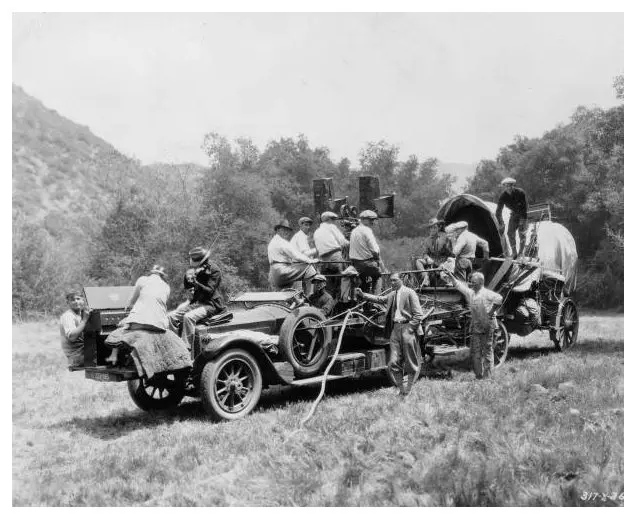
Scene from The Frontiersman
Cinematic perspective: Exploring the visual vocabulary of The Frontiersman (1927) through its definitive frames.
One unconventional observation: the film’s portrayal of the indigenous characters, particularly Chief John Big Tree, while still rooted in the problematic tropes of the era, attempts a degree of dignity that was not always present in contemporary Westerns. Big Tree’s scenes, though brief, often depict him with a quiet authority and a sense of connection to the land that offers a slight counterpoint to the 'savage' stereotype. It's a small detail, but one that hints at a nascent, albeit flawed, attempt at more complex representation.
The Writers' Vision: Crafting Frontier Narratives
The screenplay, credited to Tom Miranda, Gordon Rigby, Madeleine Ruthven, and Ross B. Wills, is a tightly constructed piece that understands the core appeal of the Western genre. It's a narrative built on clear conflicts: good versus evil, civilization versus wilderness, and the individual's struggle against overwhelming odds. While the plot beats are familiar, their execution in the silent medium requires a particular skill in visual storytelling.
The writers understood that in the absence of dialogue, action and iconography must speak loudest. The recurring motif of the lone rider against the vast landscape, the quick draw in a dusty street, the desperate flight from pursuit – these are the narrative engines. They build tension through visual cues, like the slow approach of a group of horsemen on the horizon, or the subtle shift in a character's posture indicating impending danger. It works. But it’s flawed.
A strong, debatable opinion: While the film succeeds in establishing its hero's moral compass, it arguably misses an opportunity to delve deeper into the psychological toll of frontier life. The characters, while compelling in their archetypes, remain somewhat static. A more nuanced exploration of their internal struggles, even within the confines of silent film, could have elevated the narrative from strong genre piece to something more profoundly human. The potential was there, especially with McCoy's expressive face, but the narrative often prioritizes external conflict over internal journey.
Another debatable point: The film's depiction of Native American characters, while perhaps progressive for its time, still operates within a framework that ultimately serves the white protagonist's journey. Chief John Big Tree, despite his presence, feels more like a symbolic force of nature or a plot device than a fully realized character with agency. This is a common failing of early Westerns, and The Frontiersman, for all its merits, does not entirely escape this historical limitation.
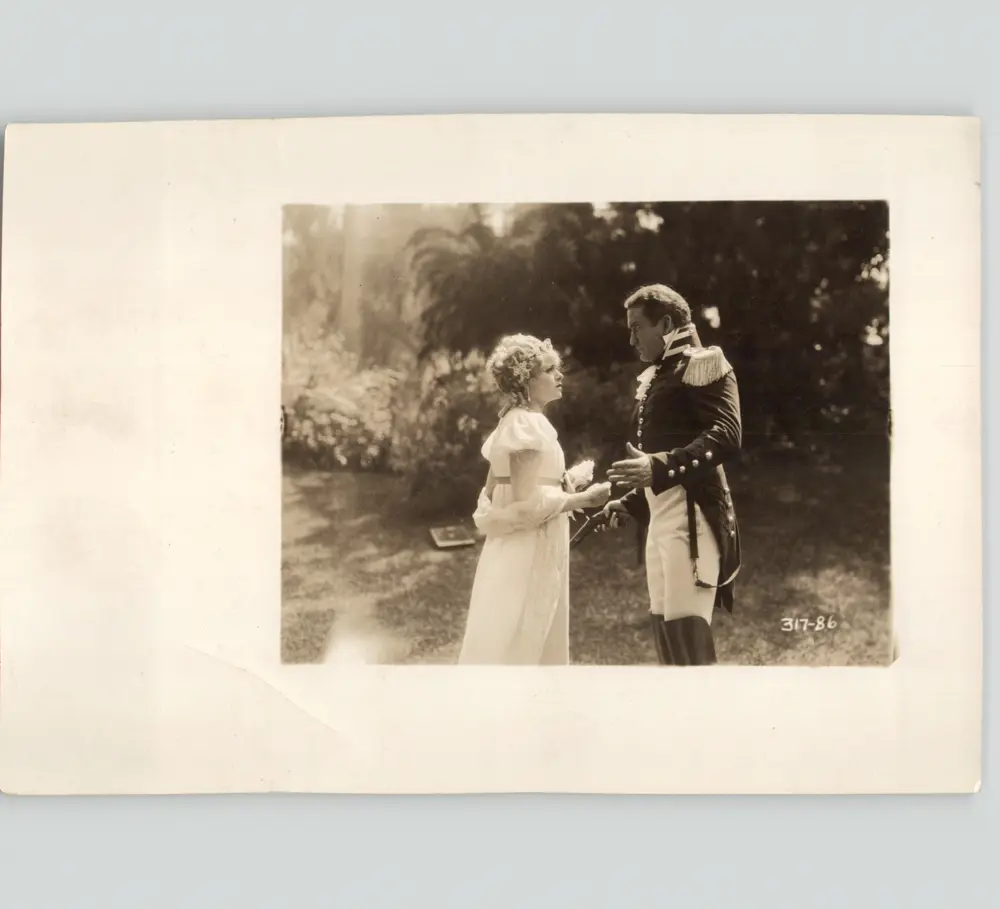
Scene from The Frontiersman
Cinematic perspective: Exploring the visual vocabulary of The Frontiersman (1927) through its definitive frames.
Comparing The Frontiersman to its Contemporaries
When placed alongside other films of its era, The Frontiersman holds its own. It shares the narrative simplicity and emphasis on action seen in films like The Show, but with the added gravitas of the Western setting. It doesn't attempt the comedic escapism of something like Beach Nuts, nor the dramatic intensity of Vengeance Is Mine! Instead, it carves out its niche as a solid, earnest entry in the burgeoning Western genre.
Its focus on a singular, iconic hero echoes the star vehicles of the time, much like how Charlie Chaplin dominated The Boat. However, McCoy's performance is less about overt gags and more about an enduring, quiet strength. The film's reliance on visual storytelling and the power of its setting is a precursor to the grander Westerns that would follow in the sound era, laying some groundwork for future classics.
Key Takeaways
Best for: Enthusiasts of silent cinema, classic Westerns, and those interested in early film history.
Not for: Viewers seeking modern pacing, complex dialogue, or intricate character development.
Standout element: Tim McCoy's authentic and commanding screen presence, which grounds the entire film.
Biggest flaw: A narrative simplicity and slow burn that can test the patience of contemporary audiences unfamiliar with silent film conventions.
Pros and Cons
PROS:
Authentic lead performance by Tim McCoy.
Beautiful, expansive cinematography of the American West.
Strong sense of genre iconography and foundational Western tropes.
Historical value as an early example of the Western genre.
CONS:
Pacing can feel slow for modern viewers.
Character development is largely archetypal, lacking modern depth.
Narrative is simplistic and predictable by today's standards.
Limited emotional range due to silent film conventions.
Some problematic historical representations, particularly of indigenous characters.
Verdict
The Frontiersman is a film that demands a specific kind of engagement. It is not a casual watch, nor is it a forgotten masterpiece waiting to be universally acclaimed. Instead, it is a valuable piece of cinematic history, a robust example of early Western filmmaking, and a showcase for the understated power of Tim McCoy.
Its strengths lie in its visual poetry, its commitment to genre, and the sheer authenticity of its lead. Its weaknesses are largely a product of its time – a slower pace, less complex characterization, and narrative simplicity that might not resonate with contemporary audiences. Yet, for those willing to adjust their expectations and appreciate it within its historical context, there is much to admire.
Ultimately, The Frontiersman is a journey worth taking for the discerning cinephile. It offers more than just entertainment; it provides a window into the origins of a genre that would define American cinema for decades. It's a foundational text, perhaps not a thrilling ride for everyone, but an essential one for understanding where it all began.