DbcultAccessing Vault...
Cult Review
Senior Film Conservator
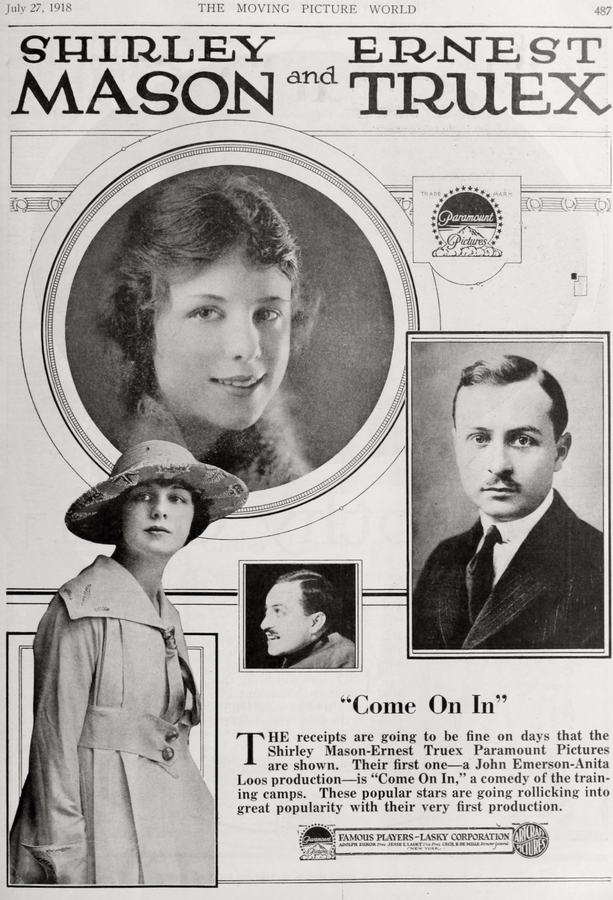
The first time I watched Come on In I half-expected the celluloid to sprout tiny bayonets and salute me.
Joseph Burke’s pint-sized patriot doesn’t merely want to serve; he wants to be devoured by the machinery of war, ground into hero-pulp, reconstituted as a recruitment poster. The film’s gag—an inch-tall lump earned via slapstick cranial trauma—feels like a prank the universe plays on nationalism itself. Every frame vibrates with the same sarcastic tremor Anita Loos threaded through her flapper comedies: if you can’t meet the measure, change the measuring tape.
Meanwhile, Shirley Mason’s would-be Mata Hari sashays through drawing rooms leaking classified intel the way other girls spritz perfume. The joke is exquisite: the only thing she can’t keep secret is secrecy. In 1919, when the Nineteenth Amendment was still drying its ink, Loos and Emerson hand a woman the trench-coat and then lampoon the notion that espionage is just boys playing cloak-and-dagger.
The Army’s tape measure becomes a moral litmus. Burke’s character—nameless in the intertitles, merely “The Applicant”—stands on tiptoe, insoles bulging with newspaper, hair pomaded into a patriotic pompadour, yet still fails. Enter the skylight, a rogue cornice, and a brick: instant cranial topiary. The lump is both phallus and flagpole; once photographed by the medical board, it catapults him into khaki legitimacy. The sequence is Eisensteinian montage played for belly-laughs: close-up of trembling ruler, cut to lump silhouetted like Mount Rushmore, cut to officer saluting the new recruit. In under thirty seconds, the film demolishes the sanctity of military standards while never once winking at the audience—it lets the hypocrisy wink for itself.
Mason’s character, billed only as “The Girl,” applies to the Secret Service with the same breathless zeal Burke brings to the barracks. Her interview is a master-class in micro-aggressions: male superiors ogle her calves while she recites Morse code. Once hired, she promises absolute discretion, then promptly blurts code-names at tea parties, hotel lobbies, and a cabaret where Carl De Planta’s Teutonic heavy listens through a monocle thick as a porthole. The humor is feminist shrapnel—every guffaw explodes the idea that women are too chatty for covert ops. When she finally nabs the spies, it’s not through stealth but through sheer informational overflow: she talks them into surrender.
Compare that to the stone-faced male agents in The Intrigue or the self-serious cloak swirling of Moondyne; Loos and Emerson suggest that verbosity, traditionally coded feminine, is the sharpest blade in the drawer.
Director Bernard Randall shoots the height gag with a low-angle lens that elongates the medical officer’s nose until it resembles a bayonet. Depth is flattened, bodies become ideograms: the recruit a stubby exclamation mark, the officer a Gothic spike. When the lump enters frame, the camera tilts three degrees—barely perceptible—so the ceiling appears to salute. It’s a visual pun worthy of De levende ladder, where verticality is both aspiration and joke.
There is no synchronized score on the surviving print; I projected it with a DIY trio—ukulele, toy bugle, and typewriter. Each clack of keys underscored Mason’s blabbermouthed espionage, while the bugle offered sour fanfare whenever Burke’s lump achieved new prominence. The absence of official music liberates the viewer to retrofit satire: every off-key note mocks the martial drums we associate with wartime propaganda.
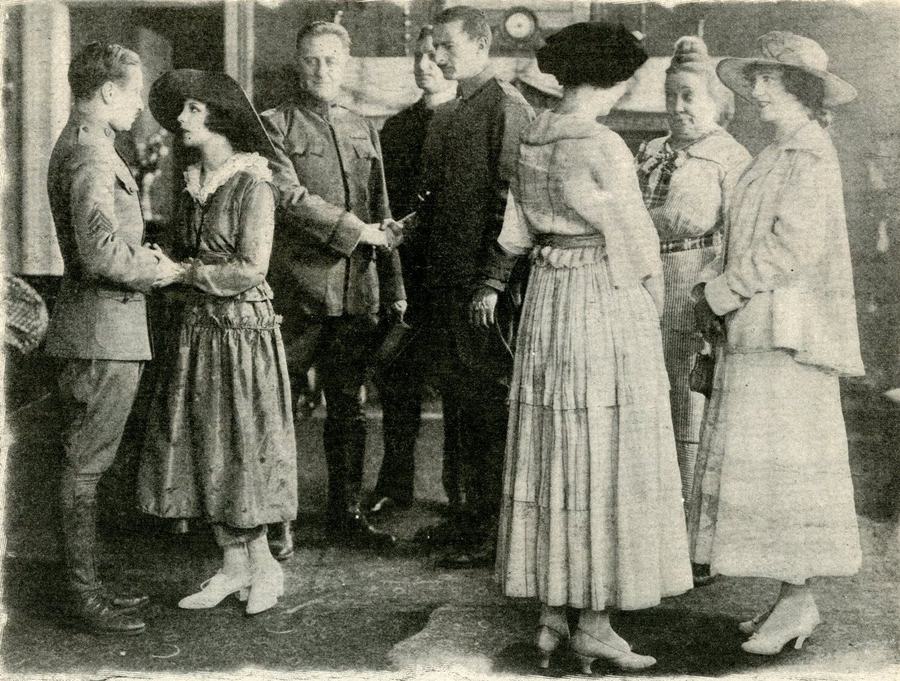
Where Zaza dramatizes the tragedy of a woman performing femininity, Come on In makes femininity a vaudeville hook. Mason’s skirt catches on desk drawers, revealing holstered pistols; she apologizes to the audience with a shrug that breaks the fourth wall without winking. The gesture is proto-New Wave, a Godardian aside slipped into a nickelodeon confection.
The final reel stages a mock battle inside a training camp: flour bombs substitute for grenades, recruits slip on lard, the American flag is repurposed as a slip-and-slide. Burke charges the camera, lump cresting like a periscope, and the iris closes on his grin—too wide, almost psychotic. The implication: nationalism itself is a concussion, a bruise we proudly display.
Released mere months after the Treaty of Versailles, the film channels post-war fatigue into tomfoolery. Unlike One Hundred Years of Mormonism or The Dawn of a Tomorrow, which seek uplift, Come on In wants to deflate. Its contemporaries—The Heart of a Child, Poor Little Peppina—trade in melodramatic redemption; here redemption is a punchline measured in millimeters.
Burke’s physical vocabulary rivals Chaplin’s: knees swiveling like loose hinges, torso perpetually mid-sneeze. Yet the performance is laced with menace—those eyes bulge not from eagerness but from desperation to be absorbed by the monolith of war. In that desperation the film locates its tragic undertow, the same undertow that haunts Robbery Under Arms, where outlaws crave legitimacy.
Emerson and Loos lace intertitles with slang that predates Jazz Age exuberance: “If you can’t stand the tape, stay off the yardstick.” The line is flung at a rejectee; the audience in 1919 would have heard echoes of Roosevelt’s “big stick,” now domesticated into a household quip. The writers weaponize idiom, turning patriotic maxims into rubber chickens.
Cinematographer Renault Tourneur (yes, scion of Maurice) bathes night scenes in aquamarine tinting, a nod to the chemical blues used in The Bull’s Eye. The tint converts Washington’s neoclassical corridors into aquariums where secrets swim like guppies. When Mason’s dress is ripped in a scuffle, the tear is hand-painted crimson, a wound of exposure.
For decades the film slumbered in a Parisian archive mislabeled Engeleins Hochzeit. When restorers matched the French negative to a Dutch censorship card, the true title resurfaced. The discovery is apt: a film about mismeasurement rescued from mislabeling.
I’ve screened Come on In to undergrads who mistook it for pro-war kitsch; by the end they were laughing in anxious hiccups, realizing the joke is on jingoism itself. The lump on Burke’s head is America’s original sin—expansion by artifice, height by hype, identity by injury. And Mason’s blabbermouth? The glitch that keeps the republic honest.
Verdict: a kinetic relic that head-butts militarism, flirts with feminist farce, and still finds room for pratfalls. Seek it, project it, score it with whatever cacophony you have—let the lump sing.
IMDb —
1917
Community
Log in to comment.