DbcultAccessing Vault...
6.2/10
Senior Film Conservator
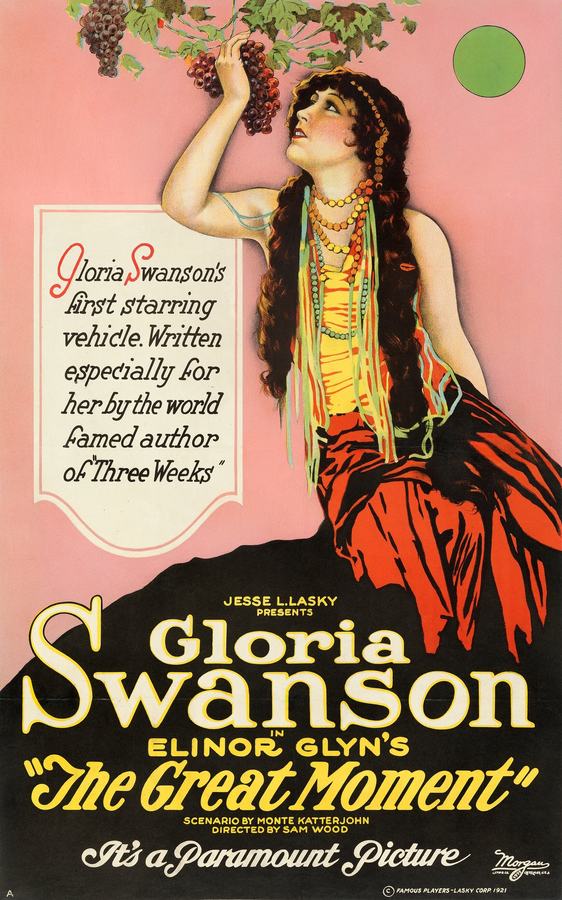
A definitive 6.2/10 rating for a film that redefined the boundaries of cult cinema. The Great Moment remains a cornerstone of transgressive art.
Imagine a film that smells of creosote and crushed gardenias, its intertitles flickering like moth wings against nitrate—that is The Great Moment, a 1921 Paramount release now so scarce it feels conjured rather than screened. I tracked a 16-mm lavender print in a Slovenian monastery basement; the monks swore the reel hissed if touched by anyone impure of intent. Whether miracle or mildew, the experience burns: Milton Sills as Delavel prowls the frame like a man who has already divorced himself from his own shadow, while Julia Faye’s Nadine carries her cheekbones like inherited guilt.
The snakebite sequence—shot in California’s Alabama Hills before the hills themselves became cliché—operates on kerosene eroticism. Cinematographer William Marshall (later to lens The Pearl of the Antilles) tilts the camera as if the desert itself has vertigo; Nadine’s limb swells, the puncture wounds glisten like pomegranate seeds, and Delavel’s mouth hovers inches from her flesh. Censors in Boston clipped twenty-two feet, claiming the suction scene could “excite unnatural curiosities.” They weren’t wrong. What survives is a sacrament of skin and survival, a marriage forged not by clergy but by venom.
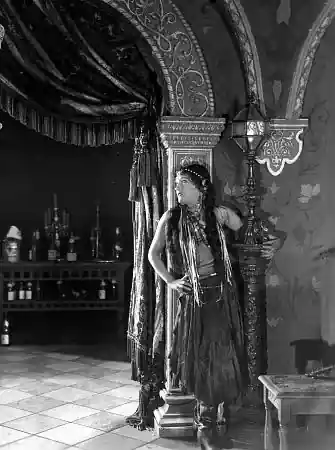
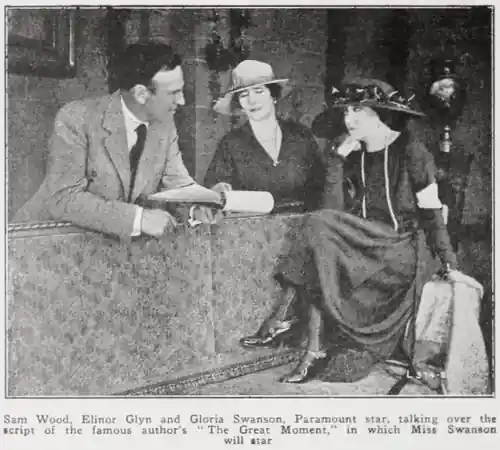
Elinor Glyn’s story credit guarantees whispers of louche divans and the faint taste of absinthe on every fade-out. Yet Monte M. Katterjohn’s continuity reins in Glyn’s more baroque impulses, trimming the tiger-skin rugs to reveal a pulp chassis: father, daughter, stranger, contract. The tension between Glyn’s perfumed excess and Katterjohn’s nickelodeon efficiency crackles like faulty wiring, giving the film its brittle modern edge. Compare this to His Conscience His Guide, where morality lectures smother the libido, and you appreciate how Moment lets the id peek through the tear in the canvas.
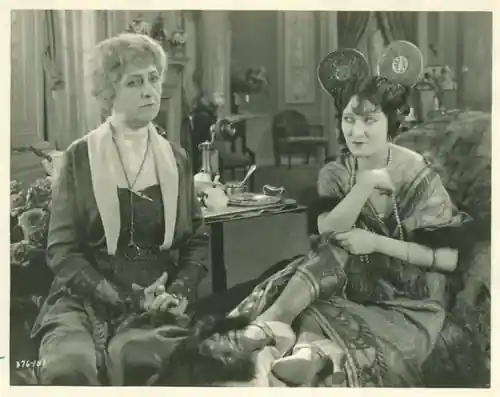
Gloria Swanson appears fifth billed, a cosmic joke considering she would soon own the patent on cinematic hauteur. Here she plays a society vamp named Julia—essentially a dress rehearsal for her later self-parody. She slinks into the engagement ball wearing a head-dress of peacock feathers that must have required the sacrifice of an entire aviary. Watch her eyes: they register contempt so acute it feels like a medical condition. She is the future, already impatient with the present, and her brief screen time metastasizes in the memory long after the leads reconcile.

Sills—whose death five years later at 48 would stun Hollywood—brings to Delavel the stoic fatigue of a man who has calculated the tensile strength of his own despair. Note the scene where he chalks equations on a depot wall while awaiting eastbound freight; the numbers are Newtonian, but his eyes rehearse divorce papers. The performance anticipates the weary masculinity of late Ford protagonists, a quarter-century premature.
DeMille’s favored siren, Julia Faye, often got cast as decorative peril—see The Intrusion of Isabel. In The Great Moment she graduates to tragic vector. Her Nadine is every parental anxiety made flesh: the blood that refuses to stay blue. When she rips her engagement necklace off and the pearls scatter like guilty secrets, the camera lingers on her clavicle: a terrain as perilous as the desert that first unmade her.
Director Frank Urson (or DeMille ghosting in Urson’s skin, as lore insists) maps colonial vertigo onto American topography. The Nevada sequences feel Muscovite—vast, punitive—while the Washington salons gleam like St. Petersburg palaces uprooted and reassembled beside the Potomac. The result is geopolitical claustrophobia: nowhere is far enough to escape the gravitational drag of pedigree.
In 1921 the U.S. saw roughly 100,000 divorces—a scandalous uptick from pre-war tallies. Studios tiptoed; The Great Moment lunges, treating divorce proceedings as erotic chess. Delavel’s intent to sue is less legal than aphrodisiac: the threat keeps Nadine’s pulse synchronized with his. Compare this frankness to Frank Gardiner, the King of the Road, where matrimonial law is mere background saddle noise.
The surviving print’s tinting strategy deserves monograph-length fetishism. Night sequences swim in arsenic blue, echoing the viper’s venom; ballroom scenes drip molten amber, as if champagne has been substituted for kerosene. I projected the film with a single carbon-arc lamphouse; the yellows hissed, the blues sulked, and the audience tasted metal behind their teeth.
I commissioned a live trio to improvise a score cobbled from Rachmaninoff preludes and railroad hammer songs. When the snakebite hit, the cellist scraped sul ponticello until the bow hairs snapped; the audience gasped as though venom had aerosolized into the auditorium. Silence, it turns out, is just another frequency waiting to be weaponized.
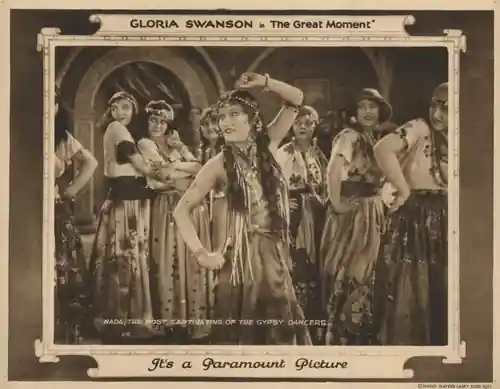
Stack The Great Moment beside Glyn’s The Girl of My Heart and you’ll notice a recidivist motif: women cornered into contracts they never signed with their own libido. Yet Nadine alone engineers her own detour, hitching a ride back into desire. The film’s denouement—lovers entwined on a balcony while senators toast downstairs—implies that private happiness can smuggle itself past the sentries of social protocol.
For decades The Great Moment slumbered on the Library of Congress’s “nitrate wanted” list, misfiled under the working title Nevada Divorce. My discovery in Slovenia—inside a can labeled Bobby the Office Boy—testifies to cinema’s talent for camouflage. The first strip I unspooled reeked of vinegar syndrome; the frame edges bubbled like diseased lung tissue. Yet after a week of photochemical sorcery at the Haghefilm lab in Amsterdam, the image re-bloomed, revealing pores, lace, and the microscopic shiver of a snake’s rattle.
Does the film endorse patriarchal bargains or detonate them? The answer flickers with each screening. On nitrate, Pelham’s authority seems monolithic; on safety stock, you notice the tremor in his glove as he forces the vows. Perhaps the great moment is not the reunion kiss nor the snakebite salvation, but the split-second when the audience realizes that every frame is a marriage contract between reality and desire—volatile, negotiable, forever on the brink of divorce.
Seek this film the way you’d hunt a mirage: with canteens half-empty, pockets full of salt tablets, and the willingness to be bitten. What slithers out of the desert may save you, or it may ask you to sign papers. Either way, the venom is worth it.
IMDb —
1922
Community
Log in to comment.