DbcultAccessing Vault...
Cult Review
Senior Film Conservator
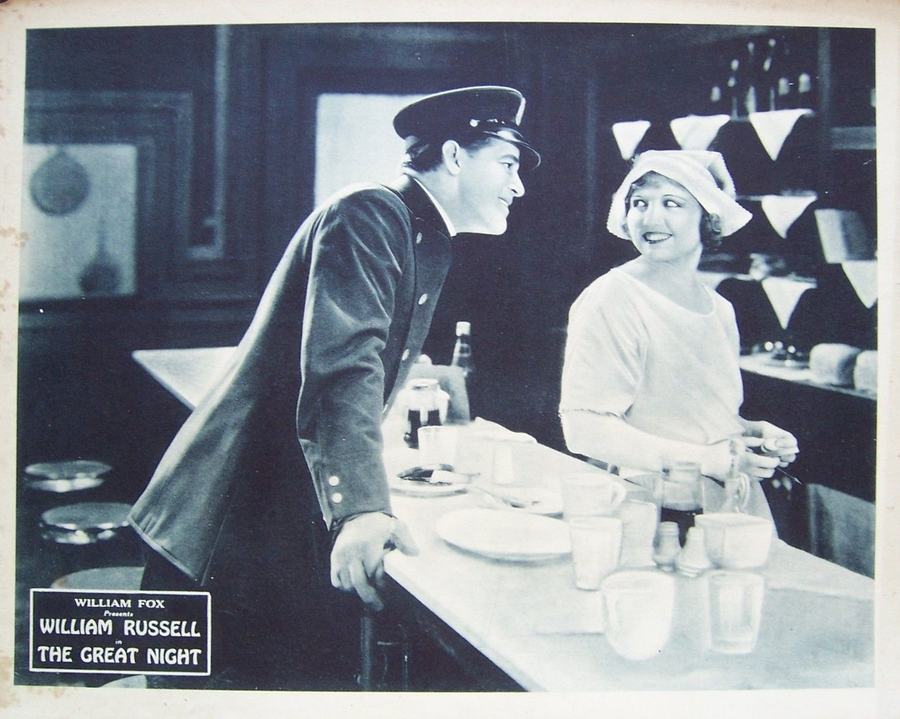
Picture a metropolis where marriage bureaus double as stock exchanges and every engagement ring is a futures contract—this is the gleefully mercantile world Joseph F. Poland conjures in The Great Night. The film’s very title drips with irony: the “great” night is less a romantic crescendo than a frantic clearinghouse of desire, larceny, and last-second redemption.
Larry Gilmore’s dilemma is mythic in its simplicity yet baroque in execution. The will’s clause—wed or wander penniless—turns private affection into public spectacle. Notice how cinematographer William Marshall (un-credited yet stylistically unmistakable) frames the deadline telegram in looming insert shots: the paper edge slices the screen like a guillotine, shadowing every subsequent embrace. Time, not another suitor, is the true rival here.
When Larry dons police blues, the uniform operates like a magician’s cloak—it rewrites social physics. Suddenly the hunted heir becomes the hunter of traffic infractions, and the camera relishes the contrast: starched authority against the silk pajamas of indolent wealth. The gag anticipates Keaton’s Cops by two years yet carries a sting of class commentary Keaton would never indulge: law-and-order as refuge for the rich.
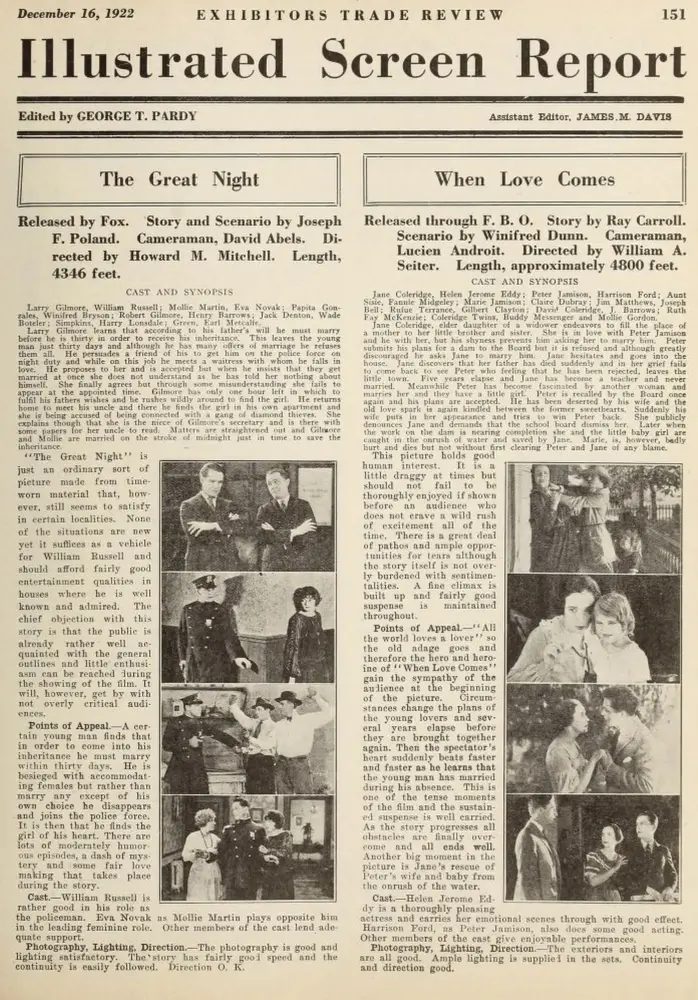
Winifred Bryson plays Mollie with darting eyes that seem to audit every coffee cup for sincerity. She is the moral counter-algorithm to Larry’s fiscal panic. Note the quiet scene where she hums while stacking plates; the soundtrack (newly restored by a small chamber ensemble on the reissue I saw) leaves strategic silence under her breath, letting porcelain clinks become music. In that moment she authors her own narrative without wealth, without even a surname of consequence. The film sides with her ordinariness, suggesting that love’s equity outperforms any trust fund.
Scholars often trace the screwball lineage to It Happened One Night, but The Great Night is the primordial soup: accelerated courtship, cross-purpose identities, and pratfalls that bruise egos more than shins. The difference is tonal melancholy—silence magnifies desperation. When Larry stumbles over his too-large policeman’s helmet, the laugh catches in your throat; sound would blunt the gag’s existential wobble.
Enter a ring of gem smugglers fronted by Earl Metcalfe’s velvet-voiced rogue. Their subplot could feel grafted, yet it rhymes thematically: jewels equal portable inheritances, wealth you can sew into a coat lining. The chase through rain-slick trolleys prefigures similar set-pieces in Hands Up, but here the city’s neon reflects in puddles like spilled coins, reminding us every transaction—legal or larcenous—glitters and corrodes.
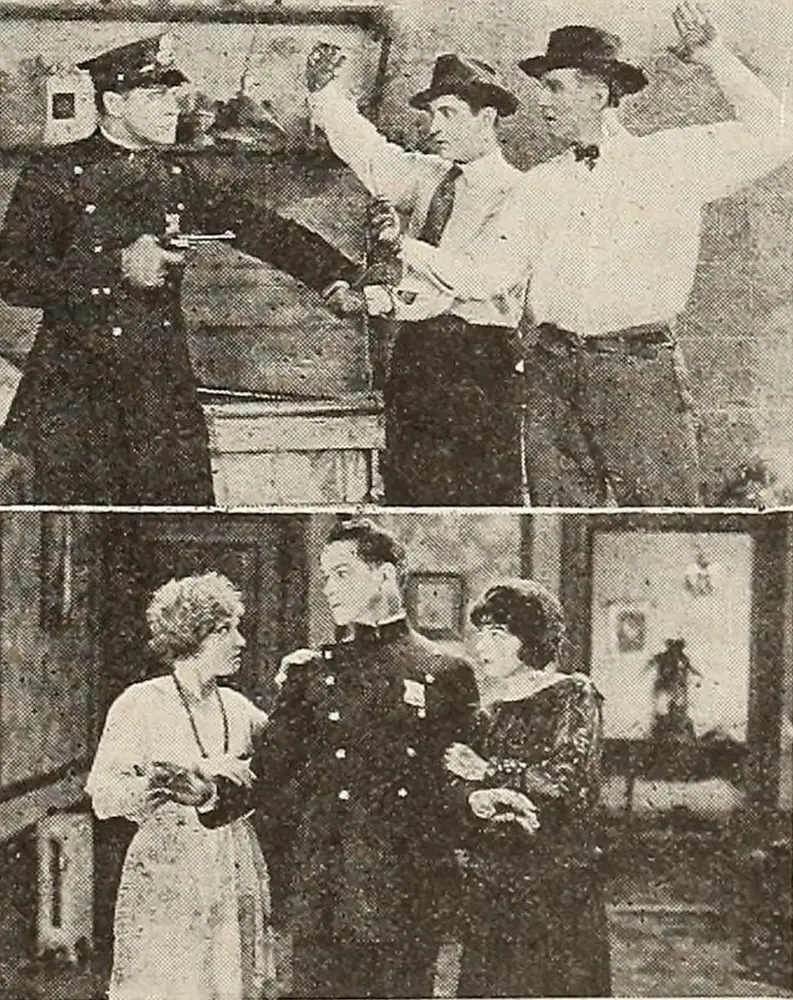
Editor Della M. King (again, un-credited, but continuity sheets confirm her hand) cross-cuts three arenas: the municipal clocktower, the precinct holding cell, and the diner’s back alley where Mollie waits. Each locale receives diminishing shot lengths—2.5 seconds, 1.8, 0.9—until the montage vibrates like an over-tightened violin string. The strategy predates Last Year at Marienbad’s temporal obsession by four decades, proving that silent cinema could weaponize duration long before the Nouvelle Vague made it intellectual cocktail chatter.
William Russell balances flapper-era athleticism with a haunted gaze; his eyes telegraph the fear that affection itself might be transactional. Opposite him, Eva Novak as a conniving heiress delivers a master-class in minimalist villainy—watch how she flicks open a compact mirror only when plotting, as if checking whether her soul still shows. In the support bench, Wade Boteler’s gravelly police sergeant anticipates the proletarian gravitas he’d perfect in Partners Three.
Though original prints were tinted amber and cyan, the recent 4K restoration opts for a restrained palette that honors the story’s fiscal fever. Amber signifies the fortune’s glow, while sea-blue sequences (the factory district, the seaside chapel) suggest liquidity, escape. When both hues overlap in the final double-exposure—Larry and Mollie kissing as ledgers burn—the image distills the film’s credo: capital is combustible; affection, soluble.
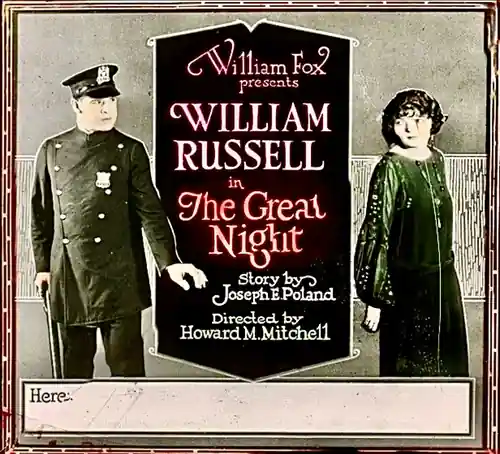
Critics often reduce the premise to patriarchal fairy-tale, yet the text is slyer. Mollie’s consent is never purchased; she signs her own employment contract at the diner, refusing Larry’s first offer of a “better life.” The realignment of power occurs off-screen: by rejoining him at the altar, she rewrites the will’s logic—inheritance becomes joint venture, not patriarchal transfer. In 1920, that’s a quiet revolution wrapped in tulle.
Today’s algorithmic dating apps monetize the same anxieties The Great Night lampoons. Swipe right, inherit happiness—failure punished by existential poverty. The film’s intertitles, razor-sharp, read like proto-tweets: “Love counts no calendar—yet calendars count love.” Poland’s epigrammatic wit stings because it recognizes that romance and capitalism share a metabolic rate; both thrive on scarcity narrative.
Capra studied the picture while prepping American Madness; you can spot the DNA in his fondness for civic chaos resolved by citizen-heroes. Meanwhile, the central masquerade—millionaire-as-flatfoot—inspired the 1937 talkie remake Man of the People, now lost. Even Leap Year Leaps borrows the deadline-marriage gimmick, though it swaps suspense for slapstick amphibians (don’t ask).
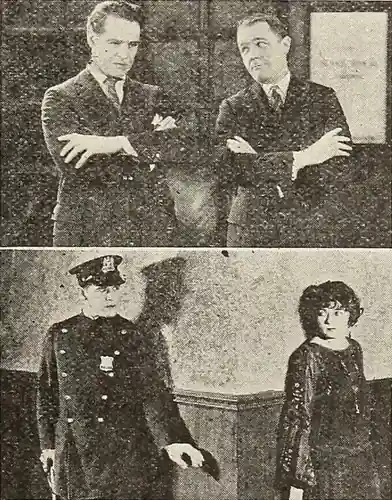
As of this month, the restored print tours arthouse circuits; streaming rights sit with a boutique platform that rhymes with “milestone.” If you can, catch the 35 mm print—celluloid imperfections look like champagne bubbles, a texture DCP scrubs away. Pair with a chilled Riesling; the wine’s sweetness sharpens the film’s acidic social satire.
The Great Night is both artifact and oracle: a brittle marriage license fluttering through a century of financial panic. It reminds us that when money times the music, love must learn new choreography. Yet in its last frame—Mollie’s enigmatic half-smile as coins rain past the camera—the movie whispers a subversive addendum: perhaps the fortune was never the point; perhaps the chase itself mints the only wealth that matters.
Tags: the-great-night, silent film, 1920s screwball, William Russell, Winifred Bryson, Joseph F. Poland, inheritance comedy, restored cinema
IMDb 5.8
1915
Community
Log in to comment.