DbcultAccessing Vault...
Cult Review
Senior Film Conservator
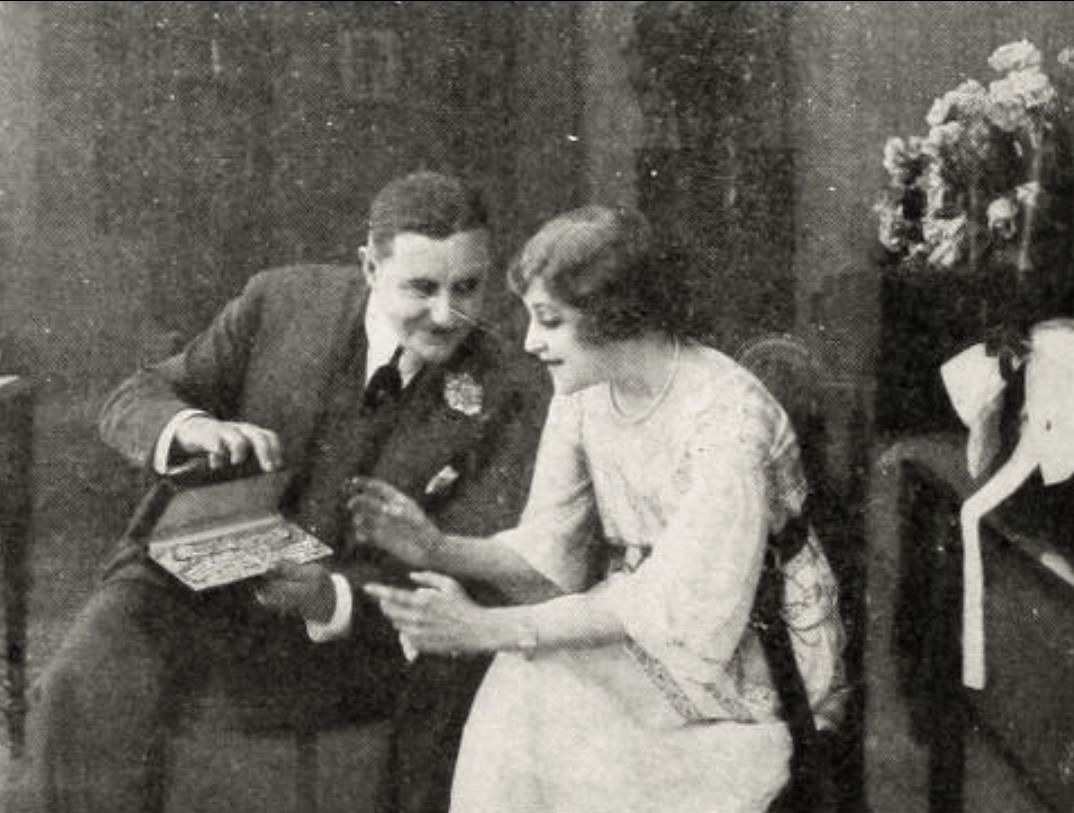
Imagine a reel unspooling inside a velvet darkness flecked with cigar embers; the projector’s carbon arc throws amber ghosts across a canvas where Mexico’s ochre dust still clings to the perforations. The Woman Next Door (1915) arrives like a pressed violet between the brittle pages of an Owen Davis scenario—its melodrama so ripe it bruises, its moral geometry so stark it could slice bread.
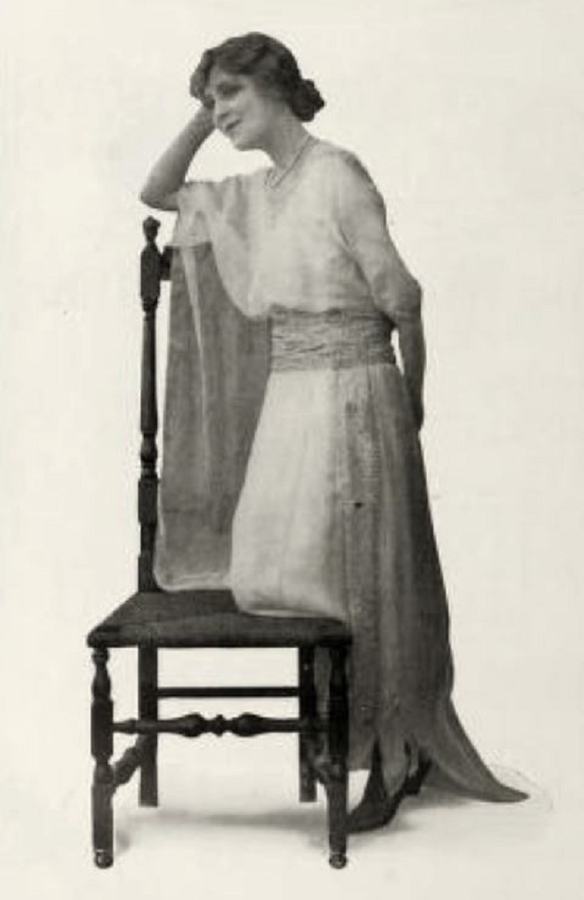
William Bechtel’s Tom Grayson embodies the era’s idealized engineer: jaw like a surveyor’s transit, ethics calibrated to decimal. Opposite him, Irene Fenwick’s Jenny Gay flickers between defiance and fatigue, eyes holding the bruised luster of a marquee bulb left burning at dawn. The camera, corseted by 1915 grammar, cannot dolly through her psyche, so her face must semaphore every ricochet of shame and hope. She succeeds; when Lake utters “Hello, Jenny,” her micro-flinch travels like hairline fracture through porcelain.
John Nicholson plays Lake not with moustache-twirling boilerplate but with the oleaginous bonhomie of a confidence man who has memorized the price of every soul in the room. Watch him in the Mexican cantina: fingers drumming against a glass of mescal syncopate the off-screen conspiracy, a Morse code of greed. Later, in Connecticut, his ice-cream suit remains immaculate even as moral sludge laps at his cuffs—visual irony that the film never underlines, trusting the viewer to taste the bitterness.
The New England village—actually Fort Lee backlots—exhales rectitude: pickets like prison bars, windows like widows’ eyes. Director Walter Edwin blocks interiors so that Jenny enters through doorways already crowded with shadows, as though the house itself refuses to metabolize her notoriety. Compare this spatial moralizing to The Primrose Path, where corridors curve toward temptation; here they converge into judgment.
The pivotal hotel-room entrapment—shot in a single cavernous set lit by hallway flare—distills 1915 anxieties about feminine mobility. Jenny, returning from the theater, is still powdered with footlight dust; Lake emerges from the closet like a parasitic twin of her success. When the detectives burst in, the staging evokes not justice but voyeuristic tableau, prefiguring the scandalous chromolithographs of La Salome yet trading eroticism for reputational slaughter.
Curiously, the film’s catharsis hinges not on pistols but on stenographers: federal agents transcribe Lake’s confession like medieval monks illuminating a contrition. The mechanical clack of the typewriter bleeds through the intertitles, a modernist heartbeat inside a Victorian body. One senses Owen Davis yearning to splice the procedural coolness of The Conspiracy with the sentimental blaze of dime-novel contrition.
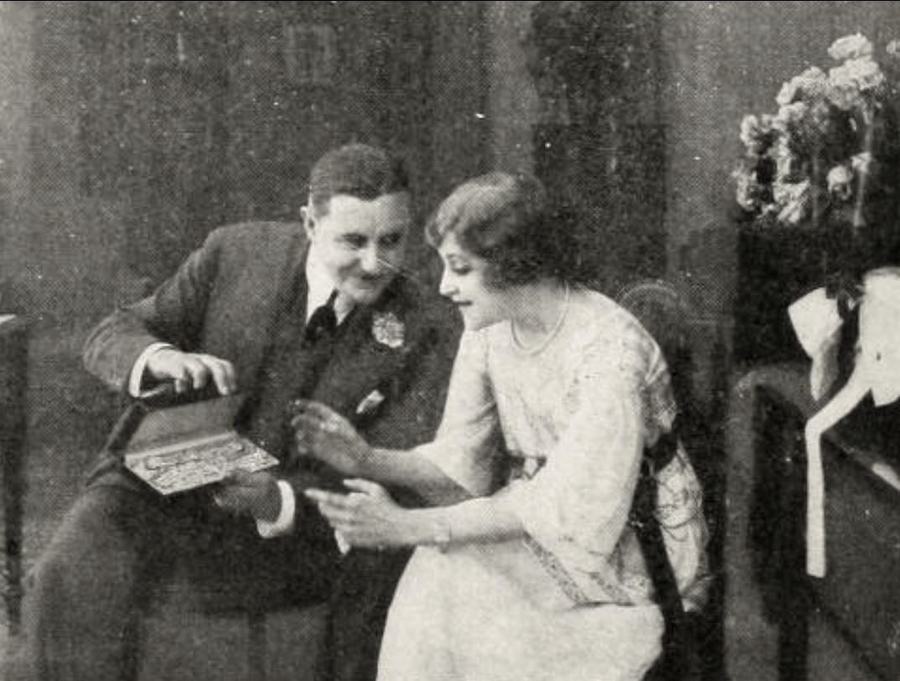
Della Connor’s Cecelia functions as moral tuning fork: when she offers Jenny a bouquet of lilacs, the gesture vibrates at a frequency of uncorrupted acceptance. Albert Andruss’s Judge Grayson supplies granite gravitas; his final nod to the couple carries the weight of statutory acquittal. Note how Lawson Butt’s brief turn as the Mexican comandante injects a whiff of cigar-and-leather authenticity, a pre-Hollywood nod to cultural specificity that evaporates once the narrative steams northward.
Cinematographer Rial Schellberg favors medium two-shots that pin character dynamics like butterflies: Tom and Jenny framed against a parlor clock whose pendulum slices their rapprochement into measurable seconds. Close-ups arrive as revelations—Jenny’s tear dilating on the brink of overexposure, Lake’s canine smile when he believes the mining swindle is sealed. Tinting oscillates between amber for Mexico’s nocturnal peril and cerulean for Connecticut’s daylight hypocrisy, a chromatic dialectic more nuanced than the monochrome cynicism of The Shadows of a Great City.
Archival records suggest the original tour accompanied this print with a medley including “A Perfect Day” and a jaunty “La Cucaracha” for the Mexican sequences. Contemporary festival restorations often substitute a minimalist piano motif, letting the film’s rhetorical pauses resonate like held breath. Either approach works; the narrative’s emotional sine curve is robust enough to survive interpretive mutation.
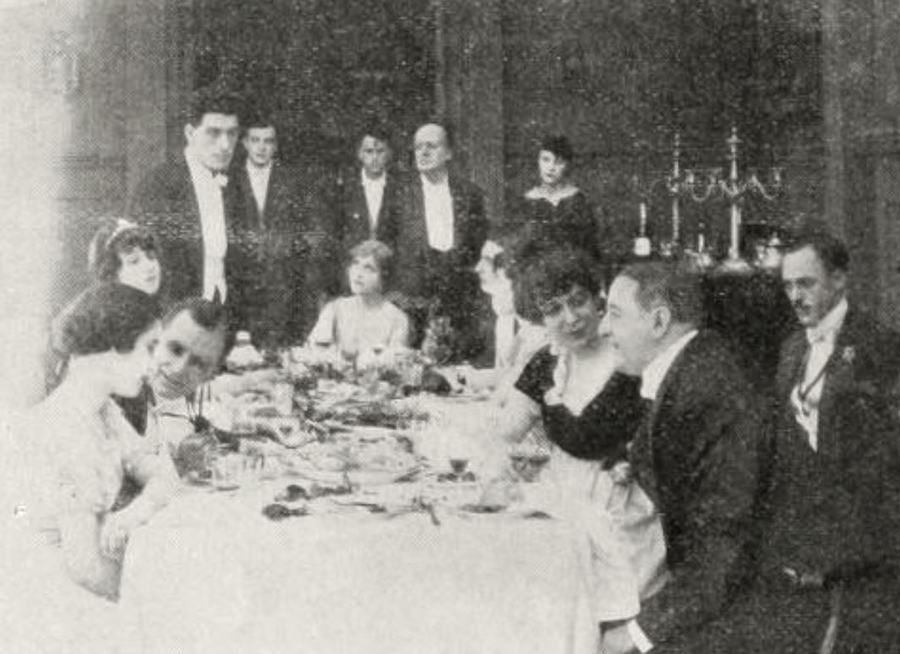
Viewed today, the film’s most subversive charge is its refusal to let Jenny’s sexual history define her ontological core. The script insists that a woman’s past can be both colorful and irrelevant—a proposition studio censors would soon neuter via the Hays Code. Jenny’s declaration, “I was a star, not a saint,” spoken in an intertitle whose font trembles with conviction, lands as proto-feminist manifesto, predating the fallen-woman rehabilitation arc of Anna Karenina adaptations by a full decade.
Only two nitrate prints are known: one at MoMA (incomplete, Spanish intertitles) and a 9.5 mm Pathé-Baby abridgment in a private Swiss collection. The Museum’s negative suffers from vinegar syndrome along the margins, producing solarized flares during the hotel confrontation—an accident that eerily aestheticizes Jenny’s moral combustion. Digital 4K scans stabilize the frame but cannot resuscitate lost footage; roughly eight minutes of Mexican exposition remain gone, leaving modern viewers to interpolate motives from gestures rather than establishing shots.
Stacked beside The Fatal Night, whose amnesiac protagonist wanders through urban chiaroscuro, The Woman Next Door feels pastoral yet equally paranoid—its villainy wears a frock coat rather than a burglar’s mask. Compared to Only a Factory Girl, which trades on working-class pathos, this film’s class anxieties are genteel, the threat reputational rather than starvation-based.
The Woman Next Door survives as a testament to early cinema’s ability to braid pulp with proto-psychological nuance. It is not a perfect artifact—its racial epithets toward Mexican characters grate, and its resolution relies on deus-ex-stenographer—but within its 63-minute circumference beats a surprisingly modern heart: the conviction that identity is negotiable, that scandals are consumable fictions, and that love can be a form of exoneration. If you chance upon a rare archival screening, arrive early; sit close enough to see the tremor of emulsion, the place where history’s fingerprint smudges the story. Let the projector’s rattle remind you that every frame of this nearly-forgotten melodrama once passed through human hands, those same hands that still reach—across a century—toward forgiveness.
IMDb —
1921
Community
Log in to comment.