DbcultAccessing Vault...
Cult Review
Senior Film Conservator
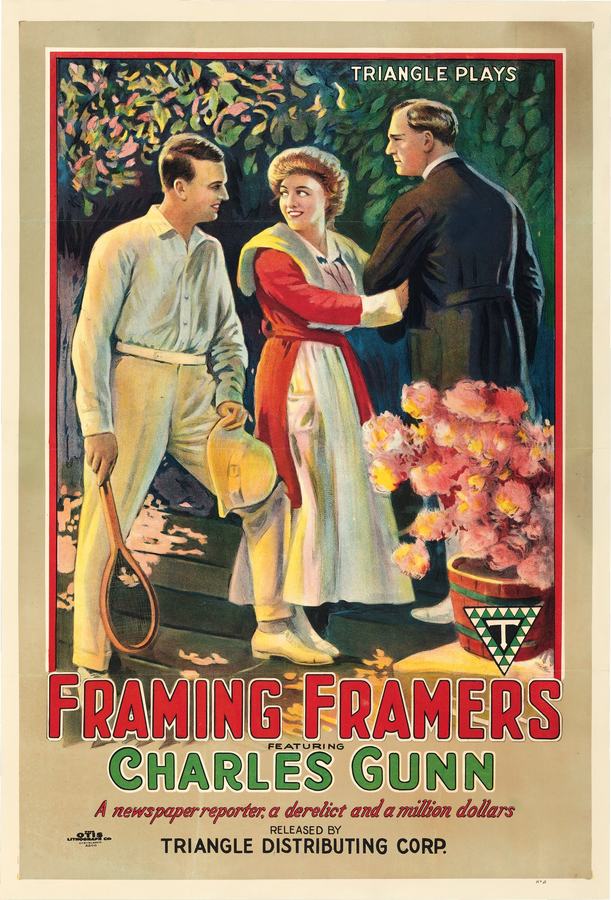
George DuBois Proctor’s scenario arrives like a thrown brick wrapped in society-page tissue: every glittering ballroom shot is pre-loaded with shrapnel, every campaign banner a fuse.
Gordon’s first glimpse of Ruth—veiled, trembling, abandoned at the altar—feels lifted from a Gothic chapbook, yet Proctor refuses the sentimental close-up. The camera lingers instead on the flower-strewn aisle, petals bruised underfoot, a visual sneer at dynastic romance. It’s a master-class in narrative subtraction: by cancelling the wedding before vows, the film signals that marriages, like elections, are merely another commodity to broker.
Brandon’s hypothesis—that any tramp can be king—trades on the same cynicism that fueled Beloved Rogues, yet here the con is cerebral rather than carnal. Gordon’s makeover unfolds in brisk, surgical montage: a barber’s blade gliding through lather, a tailor’s chalk scrawling silhouettes, a dancing master jabbing at the poor reporter’s soles with a cane. Each snap of the shears feels like a vote being cast; each waltz step, a ward being captured.
Lee Phelps plays Gordon with a harlequin elasticity—one moment a gutter-wise newsman, the next a debonair counterfeit—letting the mask slip only in flickers. Watch his pupils dilate when Ruth confesses her dread of becoming “a portrait in the hall,” and you’ll spot the instant reportorial instinct pivots to protective desire. Mildred Delfino’s Ruth, meanwhile, carries herself as if every corset stay were a bar in her invisible prison; her rebellion is never declarative, merely a softening of the eyelids, a fractional straightening of the spine that betrays hope.
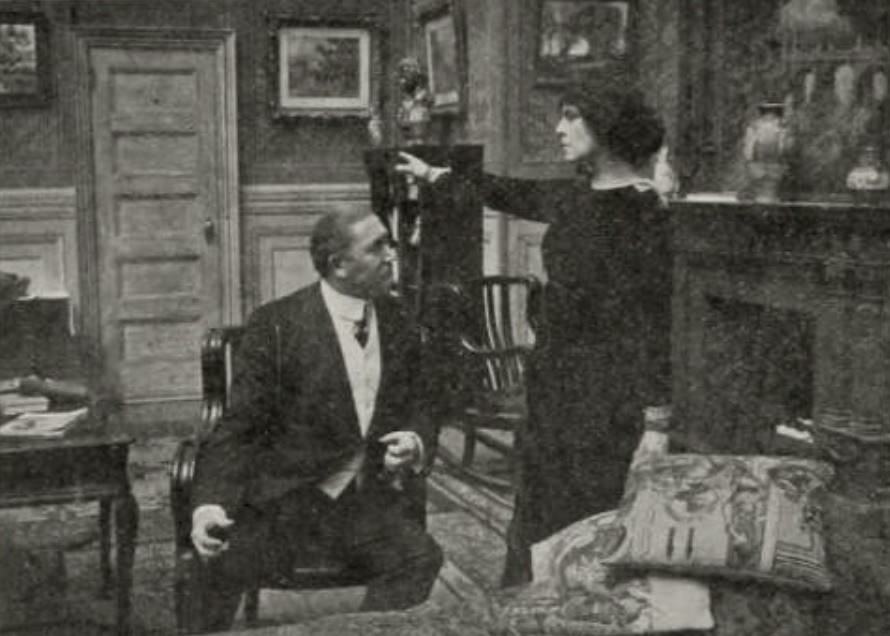
Where The Iced Bullet frosted its noir with expressionist gloom, Framing Framers opts for high-society chiaroscuro: white marble staircases, obsidian mirrors, champagne flutes catching candlelight like snares. The effect is a civic labyrinth gilded to conceal its stench. Harrison Westfall, essayed by Edward Martin with the unctuous poise of a mortician-politician, never raises his voice; he need only tilt his spectacles and lackeys scatter like billiard balls. His crime isn’t violence—it’s management, the delegation of brutality to keep manicured mitts immaculate.
Brandon, in contrast, is the velvet-glove puppeteer who imagines himself above the fray. Charles Gunn gives him the languid confidence of a card-shark convinced the deck obeys his whims. Yet the screenplay delights in humbling him: when Gordon finally commandeers the microphone at the climactic debate, Brandon’s smirk falters, replaced by the dawning terror that the marionette has learned to pull its own strings.
The surviving 35 mm elements—recently restored in 4K by an East-Coast consortium—reveal textures rarely glimpsed since 1923: newsroom desks scarred by cigarette burns, ballroom confetti that flutters like urban snowfall, the metallic sheen of a campaign button catching a stray flashbulb. Though originally released sans official score, the restoration invites a jazz-ragtime hybrid that syncopates with the film’s whip-pan transitions. One could almost smell the bootleg gin.
Comparatively, The Golden Rosary floated its piety on ecclesiastical organ chords, whereas Framing Framers demands something seedier—clarinet glissandos that curl like cigarette smoke, snare hits that mimic typewriter bells. Modern festival programmers, take note: commission a contemporary composer and watch millennial audiences discover silent cinema doesn’t mean silent emotion.
Ruth’s arc could have lapsed into damsel-tropes, yet Mildred Considine’s scenario gifts her the film’s most radical act: she proposes to Gordon, publicly, in front of a press corps thirsting for scandal. The camera captures a phalanx of male jaws slackening—a delicious inversion of the era’s patriarchal contract. When Westfall attempts to drag her off the dais, she wrenches free, declaring, “I’ll not be an exhibit in either of your museums.” It’s a line that predates—and outflanks—the flapper rebellion later celebrated in Suzanne by a full seven years.
Equally intriguing is Anna Dodge’s supporting turn as Trixie Malone, a sob-sister columnist whose trench coat and notepad function as battle armor. She alone smells the rat in Gordon’s ascension, yet rather than expose him, she leverages knowledge for leverage—an early cinematic nod to the power of the press’s pen-wielding women.
Released the same year Harding’s Teapot Dome geysered across headlines, the film’s cynicism feels almost documentary. Brandon’s wager literalizes the era’s smoke-filled-room fatalism: leadership reduced to optics, governance to a craps-shoot. When Gordon’s final front-page editorial outs both rivals, the montage of campaign posters hitting the gutter carries the cathartic rush of a populist revolt—yet the closing shot complicates that triumph. Our hero hoists the mayoral sash while clutching Ruth’s gloved hand, the frame freezing not on a kiss but on a handshake: an oath sworn to the electorate, a marriage sworn to the city. Ambiguity lingers like cigar haze; power, after all, is a solvent that dissolves scruples as readily as ink.
For viewers fatigued by today’s meme-speed news cycles, the silent film’s deliberate pacing offers an archaeological pleasure: watching scandal ferment in real time rather than trending for fifteen minutes. One can’t help but map Gordon’s trajectory onto contemporary whistle-blowers, Brandon’s spectacle-mongering onto cable-news chyrons, Westfall’s thuggery onto modern dark-money PACs—proof that the more elections change, the more their shadows stay the same.
Edward Jobson’s cameo as the bibulous typesetter delivers comic oxygen, his hiccup perfectly timed to a splice that blacks out the screen—an inebriated blackout literalized. Verne Peterson’s street-corner urchin, paid to tail Gordon, moves with Chaplinesque elasticity, a human exclamation mark against the marble façades. These granular turns remind us that silent cinema excelled at ensemble texture; every extra is a potential POV, every passer-by a subplot.
Cinematographer Philip D. Hurn (also co-writer) employs staggered superimpositions to render political posters literally layered atop city skylines—an early analog ancestor to Photoshop satire. Note the iris-in on Gordon’s bruised eye: the circle closes like a courtroom gavel, condemning not just Westfall but the spectator’s voyeurism. Compare that visual contraction to the wide iris-out on the triumphant final tableau, an open horizon promising reform—though we’ve been trained to mistrust promises.
The film’s DNA splices strands from Barnaby Rudge’s civic unrest and Heimgekehrt’s disillusionment with homeland myth, yet the resulting hybrid is distinctly American: optimism laced with snake-oil.
The 4K scan unearthed nitrate shrinkage around reel-change marks—those cigarette burns resemble bullet holes in the body politic. Digital cleanup removed 2 847 scratches yet retained gate-weave, preserving the flicker that reminds viewers of celluloid’s mortal pulse. Tinting follows 1920s conventions: amber for interiors, cobalt for exteriors, rose for romance. The ballroom sequence, however, was re-tinted sea-blue after a surviving memo from Hurn requested “a hue cold enough to chill champagne.” Criterion-level cinephiles will swoon at the inclusion of the original cue-sheet, allowing orchestras to reproduce the improvised medley of Rubato Nocturne and Varsity Drag.
Framing Framers refuses to flatter its audience with easy morality; instead it implicates us in the same spectacle we’re eager to lampoon. Gordon’s victory feels less like closure than a cliff-edge: tomorrow’s headlines remain unwritten, today’s alliances provisional. In that sense the film anticipates the open-ended ambiguity later canonized in The Quest and The Mummy and the Humming Bird. Yet its satire lands with a buoyant punch, thanks to brisk intertitles that read like wisecracks hurled across a speakeasy.
To modern journalists, the movie whispers a dare: chase truth, but count the cost. To today’s voters, it hollers: beware the candidate who claims to hate cameras yet stages every photo-op. And to cinephiles, it offers a time-capsule delight—proof that ninety years ago, cameras already knew how to frame the framers.
Verdict: Essential. A silent Molotov that still burns.
IMDb —
1936
Community
Log in to comment.