DbcultAccessing Vault...
5.5/10
Senior Film Conservator
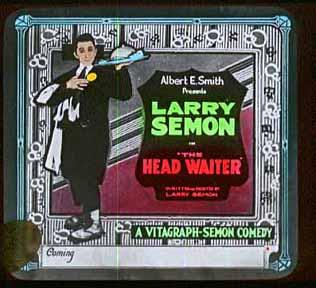
A definitive 5.5/10 rating for a film that redefined the boundaries of cult cinema. The Head Waiter remains a cornerstone of transgressive art.
In the pantheon of silent cinema, the name Larry Semon often occupies a peculiar, almost liminal space. While contemporaries like Chaplin and Keaton sought pathos and geometric precision, Semon leaned into a chimerical, often destructive form of kineticism that bordered on the surreal. The Head Waiter (1919) stands as a definitive artifact of this philosophy, a film that weaponizes the mundane anxieties of the service industry and explodes them across the screen in a shower of broken crockery and frantic escapades.
The premise is deceptively simple, yet it taps into the zeitgeist of post-Great War industrial friction. A group of waiters, pushed to their limits, downs tools and demands a living wage. In any other genre—perhaps a heavy-handed drama like Stolen Honor—this would be the catalyst for a somber exploration of proletarian struggle. However, under Semon’s pen and direction, the strike is merely the fuse for a pyrotechnic display of physical comedy. The 'scabs' brought in to replace the strikers are not mere strike-breakers; they are sacrificial lambs in a gauntlet of vaudevillian violence.
Larry Semon’s screen persona—a pale, wide-eyed avatar of chaos—functions differently than the tramp or the stone-face. He is a catalyst for environmental destruction. In The Head Waiter, his movements are characterized by a frantic, almost insectile speed. When he navigates the dining room, he isn't just serving food; he is dancing with disaster. This film highlights his unique ability to turn a simple task, like balancing a tray, into a high-wire act that rivals the tension found in a thriller like Time Lock No. 776.
One cannot discuss this era of Semon’s work without noting the presence of Oliver Hardy. Long before his legendary partnership with Stan Laurel, Hardy was a staple of the Vitagraph comedies, often playing the heavy or the foil to Semon’s manic energy. In The Head Waiter, Hardy provides a necessary gravitational pull. His physical presence acts as a sturdy anchor against which Semon’s frantic energy can bounce. The chemistry is nascent but undeniable, offering a fascinating contrast to the more grounded character work seen in films like All Man.
The technical sophistication of the stunts in The Head Waiter is frequently overlooked. Semon was known for his massive budgets and his willingness to destroy entire sets for a single gag. The restaurant in this film is a marvel of rigged floors and collapsing furniture. The way the strikers use the environment to harass the new waiters feels less like a comedy routine and more like a tactical siege. There is a visceral quality to the impact of the gags—a sense of real weight and danger that is often missing from the more whimsical shorts of the period, such as Sadie Goes to Heaven.
While The Head Waiter prioritizes the laugh, its underlying theme of the replacement worker’s plight offers an accidental mirror to the grittier realities found in The Miner's Curse. Where the latter treats the dangers of the workplace with a heavy-handed moralism, Semon finds the absurdity in the struggle. The waiters aren't just fighting for wages; they are fighting for the very right to exist within the frame of the film. This meta-textual struggle makes the film feel surprisingly modern, despite its century-old vintage.
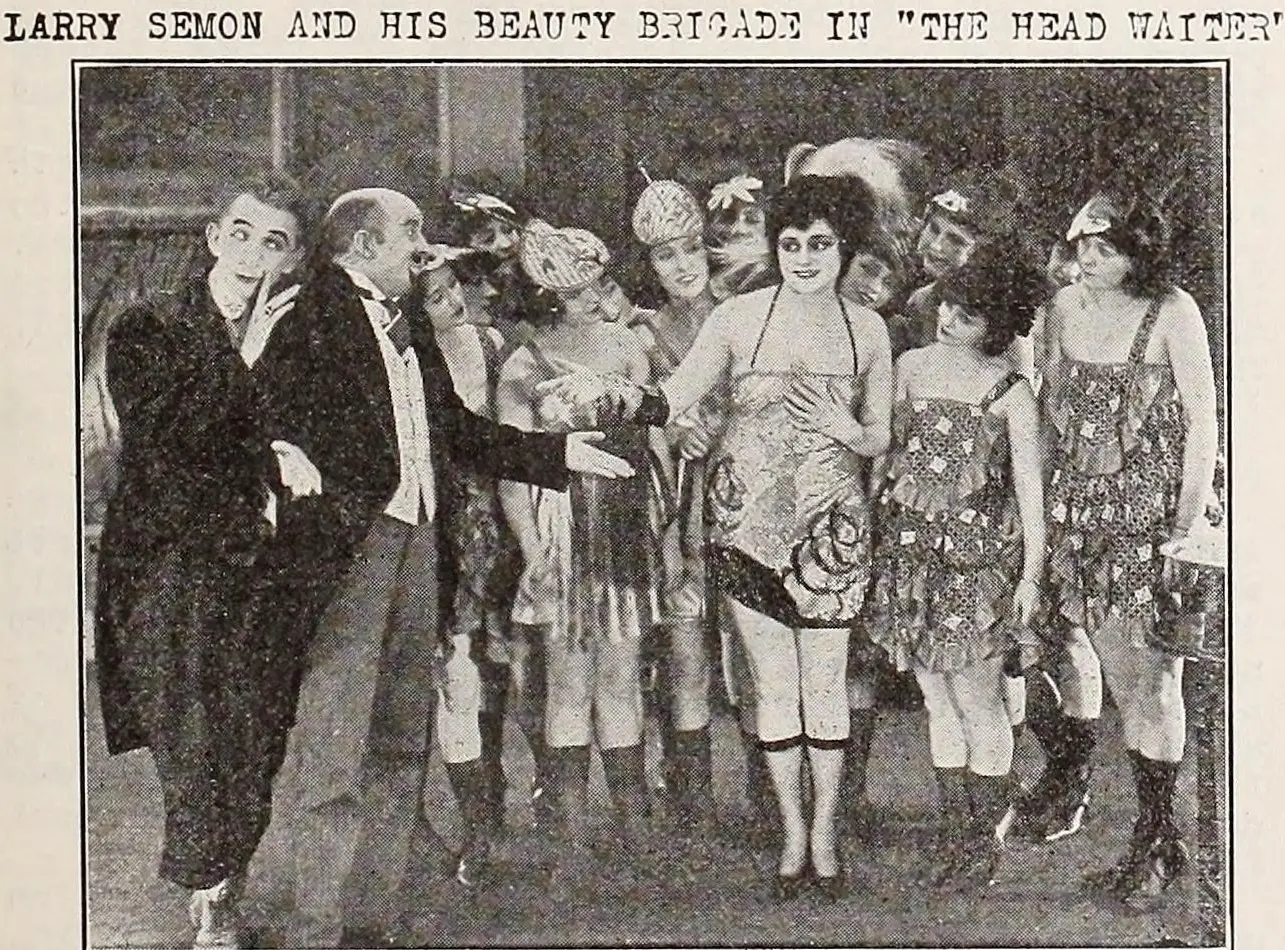
Phyllis Allen and Lucille Carlisle provide more than just window dressing; they navigate the domestic and professional spheres of the film with a sharp comedic timing that complements the male leads. Carlisle, in particular, often served as the emotional core of Semon's films, a role she plays here with a grace that offsets the surrounding bedlam. Their presence elevates the film beyond a mere boys' club of physical comedy, much like the ensemble dynamics in The Girl in the Dark.
The pacing of The Head Waiter is relentless. Semon understood that slapstick is a function of timing and mathematics. The film’s editing—likely overseen by Semon himself—is sharp, cutting on the action to emphasize the impact of every fall and collision. This rhythmic precision is what separates a Semon short from the more languid pacing of European imports like Stormfågeln or the dramatic tension of Michael Strogoff. In Semon’s world, there is no room for silence, even in a silent film; the visuals are so loud they demand an internal soundtrack of crashes and whistles.
Interestingly, the choice to make the protagonist a 'scab'—a replacement worker—is a bold narrative move that complicates the audience's sympathy. In a more traditional narrative like Come Out of the Kitchen, we are meant to root for the underdog in a domestic setting. Here, the 'underdog' is technically undermining a collective bargaining effort. Yet, because it is Larry Semon, his incompetence is his redemption. He is so spectacularly bad at being a waiter that he becomes a force of nature, eventually defeating the strikers not through malice, but through a sheer, accidental destructive capability that they cannot hope to match.
Visually, the film captures the opulence of the pre-Prohibition era with a clarity that is often lost in surviving prints. The contrast between the tuxedoed waiters and the grimy, improvised weapons of the strikers creates a visual friction that mirrors the film's thematic core. It’s a clash of classes played out with custard pies and seltzer bottles. This aesthetic duality is reminiscent of the stylistic shifts in The Devil's Playground, where the setting becomes a character in its own right, dictating the actions of the inhabitants.
To watch The Head Waiter today is to witness a master at the height of his powers, just before the excesses of his production methods began to alienate studios. It is a loud, messy, and brilliant piece of work that refuses to be categorized simply as a 'short.' It is a microcosm of a world in flux, where the only constant is the inevitability of a tray of soup landing on someone’s head. While it lacks the philosophical depth of Grekh, it possesses a raw, unbridled joy for the medium of film itself—the sheer wonder of what can be achieved when you point a camera at a man falling through a table.
Whether you are a scholar of the silent era or a casual fan of physical comedy, this film demands attention. It serves as a bridge between the primitive chases of early cinema and the sophisticated gag-structures of the 1920s. Larry Semon may be a forgotten name to the masses, but in the frame of The Head Waiter, his genius is immortal, chaotic, and wonderfully, hilariously destructive.
IMDb 6.5
1931
Community
Log in to comment.