DbcultAccessing Vault...
Cult Review
Senior Film Conservator
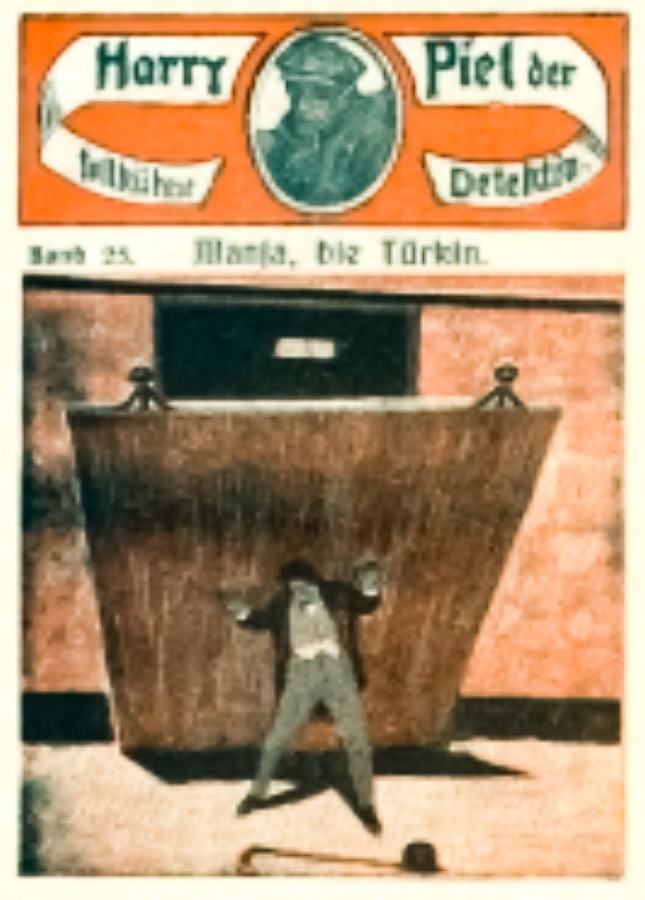
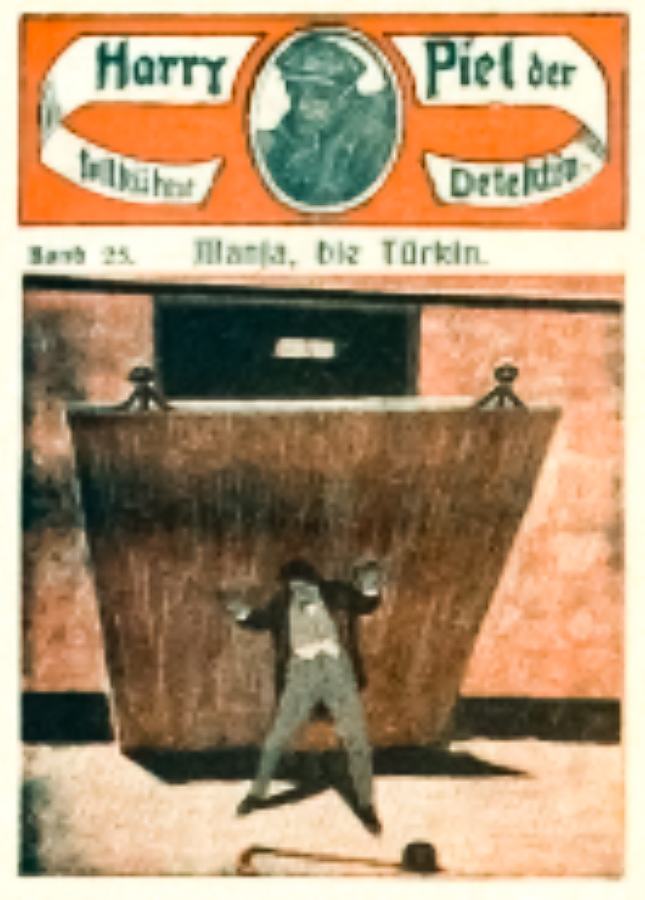
In the volatile landscape of 1915 cinema, where the medium was still wrestling with its own identity—oscillating between the proscenium-bound traditions of the stage and the untamed possibilities of the lens—Harry Piel emerged as a singular force of nature. His work on Manya, die Türkin represents a pivotal moment in the evolution of the German 'Sensationsfilm.' While many filmmakers of the era were content with the domestic moralizing found in productions like The Straight Road, Piel was already looking toward a more visceral, action-oriented future. This film is not just a relic; it is a testament to the raw power of visual storytelling before the refinement of the studio system took hold.
The film’s titular character, Manya, is portrayed with a haunting luminosity by Traute Carlsen. In an era where female roles were often bifurcated into the categories of the innocent ingénue or the predatory vamp, Manya occupies a more complex psychological space. She is a woman of the Bosphorus thrust into a European milieu that views her with a mixture of fascination and profound suspicion. This dynamic creates a friction that fuels the entire narrative engine. It is a thematic preoccupation that mirrors the cultural tensions of the time, much like the social explorations seen in the 1914 adaptation of Uncle Tom's Cabin, though Piel filters his observations through the lens of a high-octane thriller.
One cannot discuss Manya, die Türkin without acknowledging the presence of Fritz Kortner. Even in this early stage of his career, Kortner possessed an almost gravitational pull. His performance here is a masterclass in economy of movement and intensity of expression. In a period characterized by the histrionic gesticulations of silent acting—a style often seen in films like Balleteusens hævn—Kortner brings a modern, internalized tension to the screen. He doesn't just play a character; he haunts the frame. His interactions with Hermann Böttcher and Kurt Vespermann create a rich ensemble tapestry that elevates the film above the standard melodrama of its day.
Kortner’s role serves as the perfect foil to the film’s more sensationalist elements. While Harry Piel (who also wrote the screenplay) was preoccupied with the mechanics of the thrill—the chases, the narrow escapes, and the architectural use of space—Kortner ensures that the stakes remain human. This duality is what makes the film so enduringly watchable. It possesses the DNA of the detective serials like Fantomas: The Mysterious Finger Print, but anchors that excitement in a palpable, albeit stylized, reality.
Visually, Manya, die Türkin is a feast of early expressionistic tendencies. Piel utilizes shadows not merely as an absence of light, but as a narrative tool. The way the camera captures the textures of the set—the heavy drapes, the intricate latticework, the smoke-filled rooms—creates an atmosphere of claustrophobic beauty. This is a far cry from the flat, daylight-soaked frames of early American efforts like A Mexican Mine Fraud; or, The Game That Failed. Piel’s camera is inquisitive, searching for the angle that best conveys the psychological state of his characters.
The pacing of the film is remarkably brisk for 1915. Piel understood the rhythm of the edit long before the formalization of continuity cutting became the industry standard. There is a sequence involving a clandestine meeting that rivals the suspense of The Circular Staircase in its ability to manipulate the audience’s sense of space and time. By varying the distance of the camera and the duration of the shots, Piel creates a visual pulse that keeps the viewer in a state of constant anticipation.
When placing Manya, die Türkin in the broader context of 1910s cinema, its uniqueness becomes even more apparent. Contrast it with the historical pageantry of King Charles II: England's Merry Monarch, which relies on the weight of history to provide gravity. Piel’s film, conversely, generates its own gravity through pure cinematic invention. It doesn't need the crutch of historical fact because its fictional world is so vividly realized. Even when compared to the crime-focused narratives of The Burglar and the Lady, Piel’s work feels more sophisticated, trading in psychological nuance rather than just plot twists.
The film also shares a certain thematic DNA with Den tredie magt (The Third Power), particularly in its exploration of clandestine forces operating beneath the surface of polite society. However, where the Danish film focuses on political machinations, Manya, die Türkin is more interested in the personal cost of these power plays. It is a story of individuals caught in the gears of a larger machine, a theme that would become a staple of German cinema in the decades to follow.
What Harry Piel achieved with this film was the blueprint for the modern action-thriller. He understood that the audience didn't just want to watch a story; they wanted to experience it. This visceral approach to filmmaking can be traced from Manya through the career of Fritz Lang and eventually into the blockbuster era. While films like An American Gentleman or The Country Mouse were perfecting the art of the domestic comedy or the gentlemanly drama, Piel was busy exploding the boundaries of what the screen could handle.
The film’s portrayal of the 'other' is also worth a deeper look. While it certainly leans into the Orientalist tropes of its time—much like the depictions found in The Lipton Cup: Introducing Sir Thomas Lipton—there is an underlying empathy for Manya’s plight. She is not a caricature but a tragic figure, caught between two worlds and belonging to neither. This sense of displacement gives the film a melancholy undertone that balances its more sensationalist impulses.
From a technical standpoint, the restoration of such films is vital for our understanding of cinema’s infancy. The tinting and toning techniques used in Manya, die Türkin—often lost in poor quality reproductions—are essential to its mood. The deep ambers and cool blues provide a psychological roadmap for the viewer, signaling shifts in tone and location. It is a visual shorthand that Piel uses with remarkable precision, similar to the atmospheric work seen in The Adventures of Lieutenant Petrosino.
Furthermore, the collaboration between Piel and his cast suggests a directorial style that was both demanding and collaborative. Traute Carlsen’s performance, in particular, feels ahead of its time. She avoids the 'eye-rolling' cliches of the silent era, opting instead for a stillness that is far more evocative. When she shares the screen with Vespermann or Böttcher, the chemistry is palpable, creating a sense of history between the characters that many films of the 1910s lacked. It reminds one of the familial tensions in Brother Against Brother, but with a more sophisticated, cosmopolitan edge.
In the final analysis, Manya, die Türkin is a work of startling ambition. It attempts to weave together disparate threads of romance, intrigue, and cultural commentary into a single, cohesive garment. While it may occasionally stumble under the weight of its own plot complexities, the sheer audacity of Piel’s vision is enough to carry it through. It is a film that demands to be seen not just as a historical curiosity, but as a living piece of cinema that still has the power to thrill and provoke.
For those who appreciate the roots of the thriller, this film is an essential touchstone. It bridges the gap between the early experiments of the Lumière brothers and the sophisticated narratives of the 1920s. It is a film of shadows and light, of secrets and revelations, and at its heart, a story of a woman trying to find her way in a world that refuses to see her for who she truly is. In the pantheon of Harry Piel’s work, Manya, die Türkin stands as a towering achievement, a shimmering example of what the 'Sensationsfilm' could be when guided by a true visionary. It remains as evocative today as it was over a century ago, a flickering ghost of a bygone era that still speaks to us in the universal language of the moving image.
Review by the Cine-Analyst, 2024.
IMDb —
1917
Community
Log in to comment.