DbcultAccessing Vault...
Cult Review
Senior Film Conservator
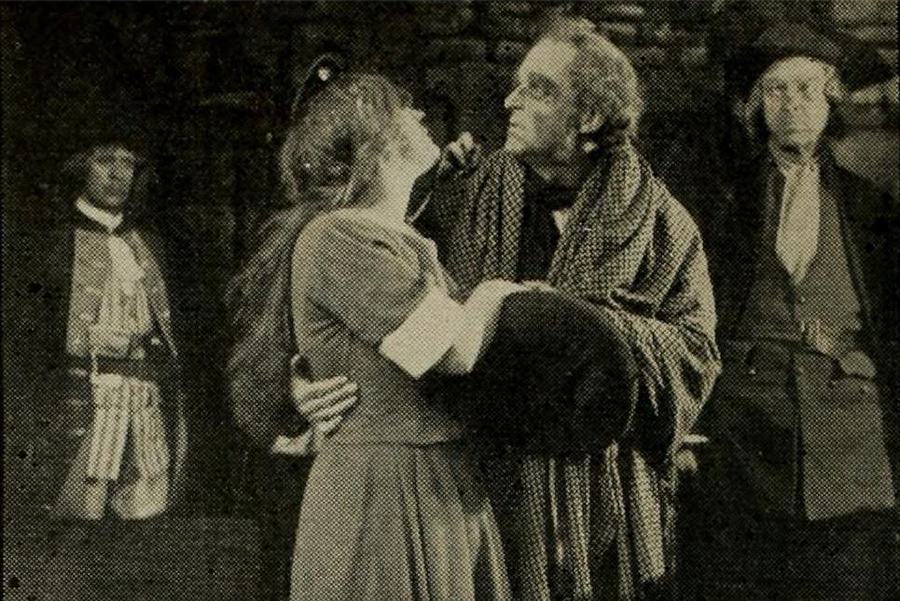
A canvas of soot-dark tenements and heather-sweet horizons, Frank Wilson’s 1914 adaptation distills Walter Scott’s doorstopper into a fever dream of silhouetted spires and trembling irises.
The flicker of nitrate becomes moral lightning: every intertitle a psalm, every close-up a wound. Jeanie—incarnated by the luminous Alma Taylor—never once overplays the martyr’s beatitude; instead she lets the camera harvest the micro-tremors in her lower lip, the way one collects dew in cupped palms.
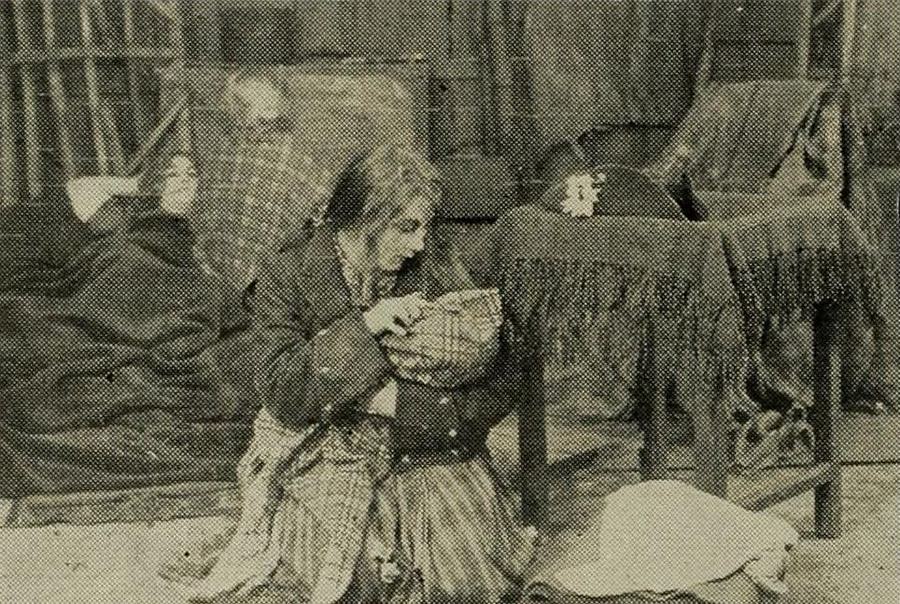
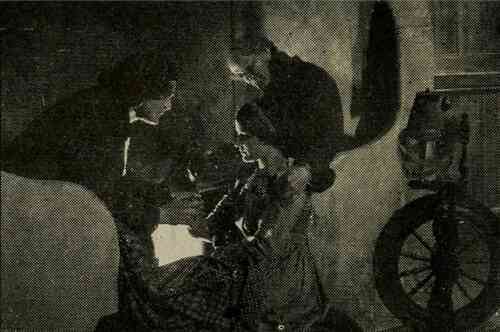
Cinematographer Percy Stow bathes Edinburgh’s wynds in tenebrous chiaroscuro, so that when Madge Wildfire (Marie de Solla) pirouettes through the crowd, her tattered gown reads like a comet across a midnight firmament. The theft of the infant is staged not as melodrama but as liturgy: a stone cloister, a shaft of sickly moon, the sudden absence of cries. The absence is louder than any orchestral stab.
Compare it to A Question of Right where maternity is a bargaining chip; here it is a death sentence. Or align it with the Venetian malignancies of The Merchant of Venice—both probe how law can curdle into vendetta, yet Midlothian allows grace to leak in through the cracked parchment.
The score, reconstructed by the BFI, layers tinny bells over cello drones—an aural reminder that salvation often arrives off-key. When Jeanie finally stands before the Queen, the frame withholds Her Majesty’s visage; we see only the crofter’s boots, mud-caked and reverent, asserting that sovereignty is, at root, a question of whose soles still bleed.
Performances oscillate between tableau stillness and Expressionist jolt. Stewart Rome’s Robertson haunts the periphery like a half-remembered sin, while Harry Royston’s Duke of Argyle exudes avuncular warmth without slipping into Whig propaganda. The ensemble knows the camera is a lie-detector; nobody dares flinch.
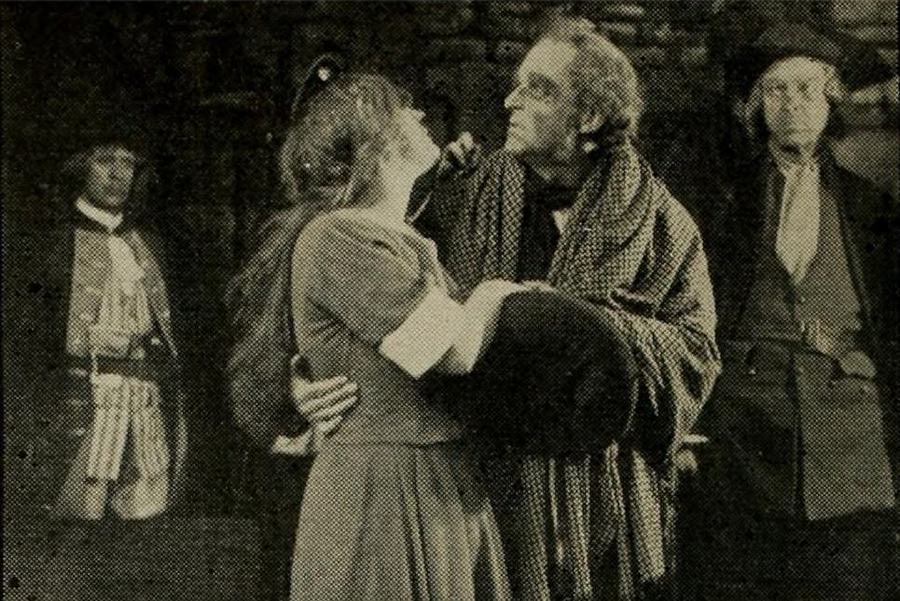
Yet the film’s boldest gambit is structural: it refuses the last-act wedding. Jeanie’s reward is not a husband but a sister’s exhale, a child’s returned breath, a nation’s uneasy conscience. In eschewing nuptial closure, Wilson anticipates the chill of Denn die Elemente hassen and the cosmic retribution of Sodoms Ende.
Restoration-wise, the tinting alternates between umber interiors and viridescent Highland vistas, each hue an emotional caption. The inevitable drop-outs—those white scars—only heighten the fragility of justice, the idea that entire histories can combust in a projector’s blink.
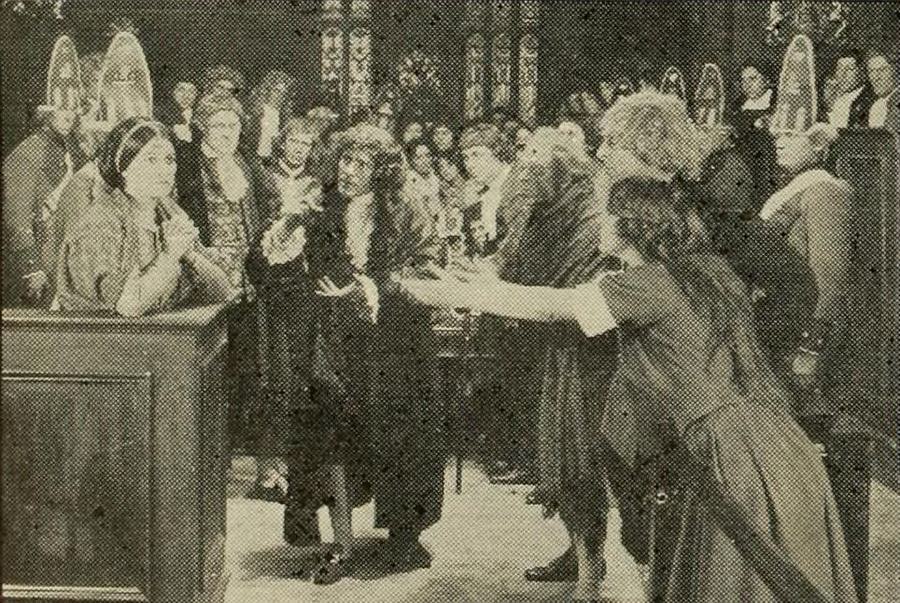
Some will carp that 68 minutes cannot contain Scott’s sprawl; I contend compression is the film’s moral engine. By amputating subplots, Wilson forces us to feel the vertiginous leap from accusation to noose, a rhythm societies still rehearse today.
In the pantheon of stolen-child parables—see Pieces of Silver or O Crime de Paula Matos—Midlothian alone grants the mother agency over absolution. Jeanie does not wait for patriarchal pardon; she walks 300 miles to demand it, her stick tapping a metronome of dissent against the moorland.
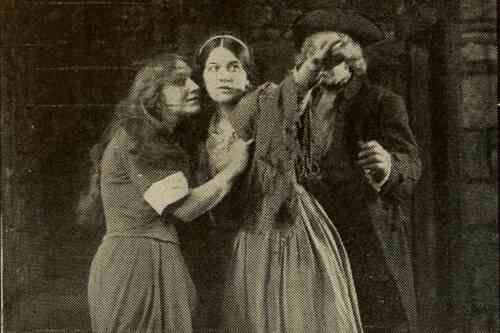
Thus the film reverberates beyond its era. It is a pre-electric #MeToo hymn, a protest against the commodification of poor wombs, a reminder that madness (Madge) and law (the tribunal) are twin progeny of the same stone-hearted mother, Respectability.
Watch it at 2 a.m. when the world feels newly indicted. Let the flickering heroine remind you that conscience is not the prerogative of palaces, that sometimes the grandest revolution begins with a blistered girl pleading for breath in a language the scepter cannot speak.
Verdict: a nitrate relic that still hisses with moral ozone—essential viewing for anyone who believes cinema can be both witness and wound.
IMDb —
1926
Community
Log in to comment.