DbcultAccessing Vault...
Cult Review
Senior Film Conservator
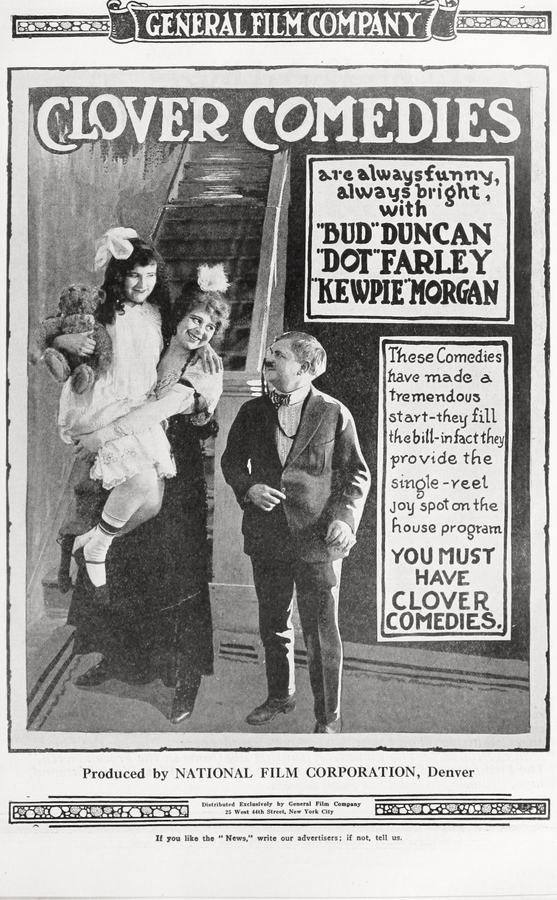
Stepping back into the nascent days of cinema, one encounters a treasure trove of forgotten gems, films that, despite their brevity or lack of grandiosity, offer profound insights into the societal mores and comedic sensibilities of their time. Among these, Oh, the Women! emerges as a particularly intriguing artifact. It’s a film that, even a century after its creation, resonates with a surprising contemporary relevance, largely due to its astute, albeit slapstick, examination of gender dynamics. This isn't just another silent comedy; it’s a spirited commentary, a visual essay on the eternal, often bewildering, interplay between men and women, presented through the exaggerated lens of early cinematic humor. The film, starring the inimitable Bud Duncan and the formidable Dot Farley, doesn't merely entertain; it provokes, it questions, and it ultimately delights with its audacious portrayal of human folly.
From the very first frame, Oh, the Women! establishes its comedic premise with an almost unapologetic directness. Bud Duncan, a master of physical comedy and expressive pantomime, embodies Reginald, a character so utterly convinced of his superior understanding of the female sex that his inevitable downfall becomes both predictable and utterly hilarious. Reginald is not merely misguided; he is a walking, talking (or rather, gesticulating) embodiment of male hubris, a figure whose every pronouncement on women's nature is swiftly, and often violently, contradicted by reality. This central conceit, the man who thinks he knows it all versus the baffling reality of human relationships, is a comedic bedrock that has sustained countless narratives across centuries, from ancient Greek plays to modern sitcoms. Yet, in the hands of these early filmmakers and performers, it feels remarkably fresh, imbued with an innocent charm that belies its sharp satirical edge.
The film’s genius lies in its ability to take this perennial theme and distill it into a series of escalating comedic set pieces. Reginald’s attempts to navigate social situations, domestic duties, or even simple conversations become elaborate traps of his own making. His fiancée, portrayed by the wonderfully expressive Dot Farley, is not a passive object of his misguided theorizing but an active participant in his comedic undoing. Farley imbues her character with a vibrant agency, a subtle defiance that punctures Reginald's inflated ego with delightful precision. Her reactions, often a blend of exasperation and amusement, serve as a crucial counterpoint to Duncan’s over-the-top antics, grounding the farce in a semblance of relatable human interaction. It's a dynamic that echoes the spirited gender role reversals seen in films like Ernst Lubitsch’s I Don't Want to Be a Man, though Oh, the Women! leans more heavily into the observational humor of men struggling within conventional frameworks rather than outright challenging them through disguise.
Bud Duncan’s performance is a masterclass in silent-era physical comedy. His exaggerated gestures, wide-eyed expressions, and the sheer physicality of his comedic falls and chases are captivating. He belongs to a lineage of performers who understood that without spoken dialogue, every movement, every facial twitch, had to convey a universe of meaning. Reginald’s descent from smug confidence to utter bewilderment is charted with remarkable clarity through Duncan’s bodily language. One particular sequence, involving a misplaced hat and a series of mistaken identities, showcases his talent for building comedic momentum from seemingly trivial incidents. This kind of escalating chaos, often driven by a central, bumbling figure, finds parallels in many early comedies, where the world conspires against an individual, much like the misadventures depicted in The Master Cracksman, albeit with a vastly different tone and intent. While the latter focuses on a cunning mastermind, Duncan's Reginald is the antithesis – a master of cracking under pressure.
Dot Farley, meanwhile, is a revelation. Often cast in supporting roles during this period, her portrayal here is nuanced and impactful. She is not merely the object of Reginald's affection or frustration but a character with agency, whose reactions are often the most sensible in the room. Her quiet eye-rolls or exasperated sighs, conveyed through subtle shifts in posture and expression, speak volumes. It's a testament to the sophistication of silent acting that such depth could be communicated without a single word. Her presence adds a layer of realism to the absurdity, preventing the film from devolving into mere caricature. The interplay between Duncan and Farley is the beating heart of the film, a comedic pas de deux that highlights the strengths of both performers. Their dynamic offers a more grounded, domestic perspective compared to the grander social satires of the time, such as those found in The Gilded Youth, which often focused on broader societal critiques rather than intimate interpersonal battles.
Kewpie Morgan’s contribution, while perhaps less central than the two leads, adds another splash of vibrant energy to the film’s already effervescent canvas. Known for his robust physicality and often menacing or eccentric characterizations, Morgan typically served as a memorable supporting player, injecting a dose of unpredictable chaos. Here, his presence, however brief, likely contributes to the general state of comedic disarray that engulfs Reginald, further solidifying the film’s theme that the world, particularly when populated by a diverse array of characters, is rarely as straightforward as one man might wish it to be. His inclusion, even if in a minor capacity, rounds out the comedic ensemble, ensuring that the visual gags and narrative complications are manifold and relentless.
Beyond the immediate laughs, Oh, the Women! functions as a fascinating piece of social commentary. It subtly critiques the prevailing attitudes towards women in the early 20th century, particularly the patriarchal assumption that women were easily understood, easily managed, or inherently less rational than men. Reginald’s repeated failures serve as a humorous rebuttal to these notions, suggesting that the complexities of female experience were far beyond the simplistic categorizations often applied. The film, in its own lighthearted way, champions a degree of female agency and unpredictability, celebrating the very qualities that Reginald finds so vexing. This makes it a surprisingly progressive film for its era, albeit one cloaked in the guise of light entertainment. It reminds us that even in the earliest days of cinema, filmmakers were engaging with complex social issues, often using humor as a powerful tool for observation and gentle critique.
The film also offers a glimpse into the domestic and social landscapes of the time. The settings, costumes, and social interactions, though exaggerated for comedic effect, provide a window into the daily lives and expectations of the period. This historical texture adds another layer of enjoyment for the modern viewer, allowing us to not only laugh at the antics but also to reflect on how much, or how little, certain aspects of human relationships have changed. The themes of misunderstanding and miscommunication, so central to the film, are truly timeless. While the specific manifestations of these issues might evolve with each generation, the underlying human experience of struggling to connect and comprehend one another remains constant. In this sense, Oh, the Women! transcends its historical context to speak to universal truths about human nature.
When placed alongside other films of the era, Oh, the Women! holds its own as a distinctive portrayal of female characters. Unlike the often idealized or melodramatic heroines found in films like The Daughter of the Don or the more stoic figures in narratives like Peer Gynt, Dot Farley’s character here is refreshingly pragmatic and spirited. She is neither a damsel in distress nor an archetype of feminine virtue, but a woman navigating the absurdities of a relationship with a self-important man. This grounded, if still comedic, approach offers a more nuanced view of women than many of its contemporaries. Even when compared to films that focus on female protagonists, such as The Little School Ma'am or Mrs. Wiggs of the Cabbage Patch, which often presented women in more traditional, nurturing, or long-suffering roles, Oh, the Women! allows its female characters to be active agents of comedic chaos and common sense, rather than simply reactive figures.
The film's comedic approach to gender dynamics also contrasts sharply with more dramatic or action-oriented narratives. For instance, while a film like High Play might explore themes of daring and adventure, Oh, the Women! finds its 'play' in the domestic sphere, turning everyday interactions into high-stakes comedic battles. Similarly, the dramatic tension and moral dilemmas often found in films like Black Orchids are replaced here with the lighter, yet equally engaging, tension of social embarrassment and romantic frustration. The film revels in the small, human moments of absurdity, proving that grand narratives are not always necessary for compelling storytelling. Even a historical epic like Mariano Moreno y la revolución de Mayo, with its focus on national destiny, highlights the vast spectrum of cinematic subjects available during this fertile period, a spectrum that Oh, the Women! confidently occupies with its intimate, comedic focus.
Furthermore, the film's playful subversion of expectations regarding male authority and female docility positions it in an interesting dialogue with other contemporary works. Unlike films where male protagonists are often heroic or authoritative, such as in Zoárd mester (Master Zoard), Reginald is consistently undermined by his own hubris and the cunning or unpredictable nature of the women around him. This inversion of power dynamics, even if played for laughs, offers a refreshing perspective. It's a precursor to later, more overt feminist critiques in cinema, demonstrating that even in an era often perceived as rigid in its gender roles, there was room for humorous questioning and subtle rebellion. The film's lighthearted tone ensures that its message is delivered with a smile, making it all the more palatable and memorable. It celebrates the vibrant spirit of women, much like the adventurous independent spirit celebrated in The Girl from Outback, but through the lens of domestic comedy and romantic entanglement.
While Oh, the Women! might not feature prominently in canonical film history textbooks, its rediscovery offers a delightful experience for cinephiles and cultural historians alike. It's a testament to the creativity and ingenuity of early filmmakers who, with limited resources, managed to craft narratives that were both entertaining and thought-provoking. The film’s energy is infectious, its humor timeless, and its observations surprisingly astute. It reminds us that laughter, particularly at our own expense, is a powerful tool for understanding and navigating the complexities of human relationships. The film's charm lies in its unpretentious delivery of a universal truth: that love and life, especially when involving the opposite sex, are often a glorious, unpredictable mess.
This film, like many of its silent brethren, serves as a vital bridge to understanding the evolution of cinematic storytelling and societal attitudes. It’s a snapshot of a bygone era, yet its comedic heart beats with a rhythm that remains familiar even today. The performances of Bud Duncan and Dot Farley are exemplary, showcasing the profound artistry required to convey emotion and narrative through purely visual means. Their chemistry, a delightful concoction of exasperation and affection, elevates the film beyond simple slapstick into a genuine comedic experience. It’s a film that encourages us to embrace the delightful chaos of human interaction, to laugh at our own follies, and perhaps, to acknowledge that some mysteries, particularly those of the heart, are best left delightfully unsolved. The enduring appeal of such straightforward, character-driven comedies, much like the charming simplicity found in Joy and the Dragon, lies in their ability to connect with audiences on a fundamental emotional level, proving that genuine human stories, even when wrapped in comedic exaggeration, never truly go out of style. Even films focused on broader societal preparedness like How Uncle Sam Prepares cannot match the intimate, universal appeal of human foibles and romantic entanglements portrayed so vividly here. Oh, the Women! is more than just a historical curiosity; it is a vibrant, hilarious, and enduring piece of cinematic art that deserves to be seen and appreciated by new generations of viewers.
IMDb —
1933
Community
Log in to comment.