DbcultAccessing Vault...
3.2/10
Senior Film Conservator
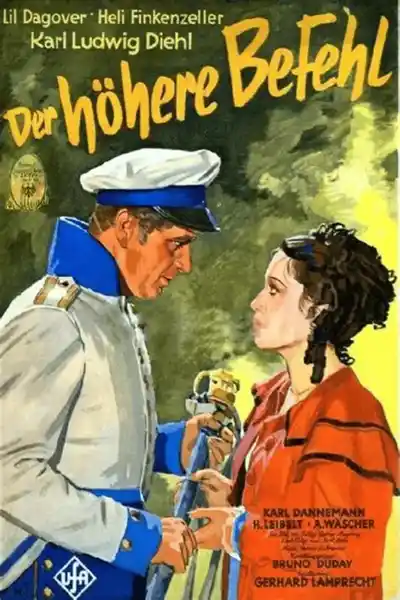
A definitive 3.2/10 rating for a film that redefined the boundaries of cult cinema. The Higher Command remains a cornerstone of transgressive art.
Honestly, you probably only want to watch The Higher Command if you’re deep into the weeds of mid-century European historical dramas. It’s a bit of a slog if you’re looking for action, but for those who enjoy watching men in uniforms argue about borders in dimly lit rooms, it hits the mark. If you’re allergic to heavy-handed patriotism or pacing that feels like it was measured by a sundial, maybe skip this one.
The film starts with our Prussian commander, von Ledebur, deciding that his superiors are basically idiots. He just stops listening to orders—which is always fun—and trots off to find a British envoy. It’s the kind of plot that moves at the speed of a horse-drawn carriage on a muddy road.
There’s this scene about halfway through where they’re trying to secure a pact with Austria, and I swear, the dialogue is just endless. I found myself staring at the wall behind the screen for a minute, wondering if the actors were actually exhausted or just acting that way. Leopold von Ledebur carries a lot of the weight here, looking perpetually stressed, like he’s got a migraine that just won't quit.
The background extras in the camp scenes look a bit bored. You can almost see one guy in the back row checking his watch or something. It lacks that grit you get in, say,
It’s not a bad movie, but it is a very serious one. It feels like the filmmakers were terrified of making a mistake, so they ended up making something that feels a little bit like a history lecture. I’d say it’s about as exciting as watching Pots and Pans, though with significantly fewer kitchen utensils. Sometimes the camera just lingers on a character’s face for way too long. Like, we get it, you’re brooding over the fate of Prussia. But maybe move the plot along? It’s fine, really. I just wanted a bit more life in the room.Oddly Specific Notes