DbcultAccessing Vault...
Cult Review
Senior Film Conservator
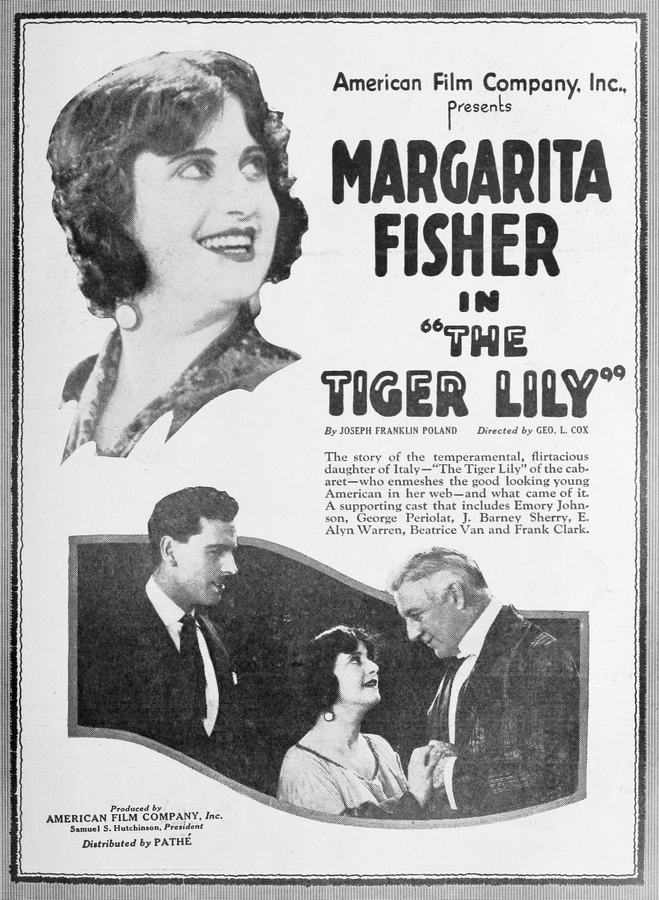
Stepping back into the golden age of silent cinema, one occasionally unearths a narrative that, despite its sepia tones and lack of spoken dialogue, resonates with a startlingly contemporary pulse. Such is the case with 'The Tiger Lily' (1928), a film whose evocative title perfectly encapsulates the fiery spirit of its protagonist. It's more than just a period piece; it's a testament to the universal struggles of love, class, and the indomitable human will. In an era often romanticized for its flappers and jazz, this picture delves into the grittier, yet equally compelling, underbelly of immigrant life in New York City, juxtaposing it with the gilded cages of high society. The film, directed with a keen eye for melodrama and character depth, stands as a fascinating artifact, offering a window into the social mores and dramatic conventions of its time, while simultaneously delivering a story that, at its heart, remains timeless. It’s a compelling argument for the enduring power of visual storytelling, proving that profound human experiences transcend the need for audible words.
At the narrative's vibrant core is Carmina, portrayed with captivating intensity by Margarita Fischer. Known throughout Luigi's bustling Little Italy inn as 'The Tiger Lily,' she is no demure wallflower. Instead, she is a woman of formidable character, her sharp wit and unwavering self-respect serving as an impenetrable shield against the boorish advances of her many admirers. Fischer imbues Carmina with an authentic blend of innocence and street-smart resilience, making her a truly compelling figure. Her expressive face and deliberate gestures, hallmarks of silent film acting, convey a complex inner world – a woman who is both deeply rooted in her community and aspirational for something more. She embodies the spirit of a new generation, navigating the complexities of tradition and modernity, fiercely independent yet yearning for genuine connection. Her rejection of Giovanni's crass monetary offer for her hand is not merely a plot point; it's a powerful declaration of agency, a refusal to be reduced to a commodity. This scene, rendered through the expressive silent film acting conventions, speaks volumes about her inner strength and moral compass. In an age where female characters often risked being relegated to mere objects of affection or distress, Carmina emerges as a proactive force, shaping her own destiny with remarkable fortitude. Her ability to command respect in the rough-and-tumble environment of the inn, while also demonstrating innate grace in the unfamiliar world of high society, showcases a rare authenticity that transcends the often-exaggerated portrayals of the era. It’s a performance that, even without audible dialogue, conveys a profound depth of emotion and conviction, making Carmina one of the more memorable heroines of the late silent era, comparable in spirit to the strong female leads found in films like Her Decision.
The arrival of Giovanni, played by Emory Johnson, injects a potent dose of simmering tension and melodramatic intrigue into the narrative. His journey from Italy is not one of hope or opportunity, but of grim purpose: to avenge his brother's ruined engagement, a quest fueled by a deeply ingrained sense of honor and retribution. This initial motivation immediately sets him apart from the other suitors, casting a darker, more complex shadow over his character. He is a man tragically bound by the codes of a bygone era, a cultural heritage that dictates vengeance as a sacred duty. However, even a man driven by such a singular, destructive goal can fall prey to the unexpected allure of love. Giovanni's sudden, profound infatuation with Carmina introduces a fascinating internal conflict. Does he abandon his quest for vengeance for the promise of a new life with the captivating 'Tiger Lily'? Or does his past inevitably dictate his future? This internal struggle, silently conveyed through Johnson’s powerful expressions and brooding demeanor, adds layers to a character who could easily have been a one-dimensional villain. His inability to comprehend Carmina's rejection of his monetary offer highlights a fundamental disconnect, a clash of values that transcends mere romantic rivalry and speaks to deeper cultural and personal differences. He represents the immovable force of tradition, a stark contrast to Carmina's fluid adaptability. It’s a testament to the film's nuanced characterizations that Giovanni is not simply evil, but a man tragically caught between his inherited obligations and a burgeoning, yet ultimately unrequited, desire. His arc explores the destructive nature of unchecked vengeance, a theme that resonates in other dramas of the period, such as Blind Man's Luck, where personal vendettas often lead to tragic outcomes.
The burgeoning romance between Carmina and David Remington (J. Barney Sherry) forms the central axis of the film's exploration of class distinction. David, the scion of Luigi's wealthy landlord, represents a world far removed from the vibrant, working-class milieu of Little Italy. Their attraction is a classic cinematic trope: love attempting to bridge an chasm of social standing. What makes 'The Tiger Lily' particularly compelling in this regard is its refusal to simplify the challenges. Mrs. Remington (Beatrice Van), David’s mother, embodies the entrenched prejudices of the upper crust, initially viewing Carmina as an unsuitable match, a stain on their family's social standing. Her warnings to David against 'marrying beneath him' are not just personal; they are echoes of societal expectations that held immense sway in the early 20th century, where social standing often dictated destiny. This social stratification is a recurring theme in silent cinema, often serving as a powerful engine for drama. Films like Hypocrisy, which directly tackles social injustice, or even The White Sister (though the latter focuses more on religious vows and sacrifice), often explored the insurmountable barriers society placed before lovers. However, 'The Tiger Lily' distinguishes itself by allowing for a nuanced evolution of character, particularly in Mrs. Remington. Her eventual admiration for Carmina, born from observing her grace and genuine character amidst high society, is a subtle yet profound commentary on the power of individual merit to transcend inherited status. It suggests that even the most rigid social structures can be swayed by authentic human connection and dignity, offering a hopeful, if still challenging, vision of the American Dream. The visual contrast between the bustling, earthy vitality of Little Italy and the more refined, perhaps sterile, elegance of the Remington estate visually reinforces this class divide, making the journey of Carmina all the more striking.
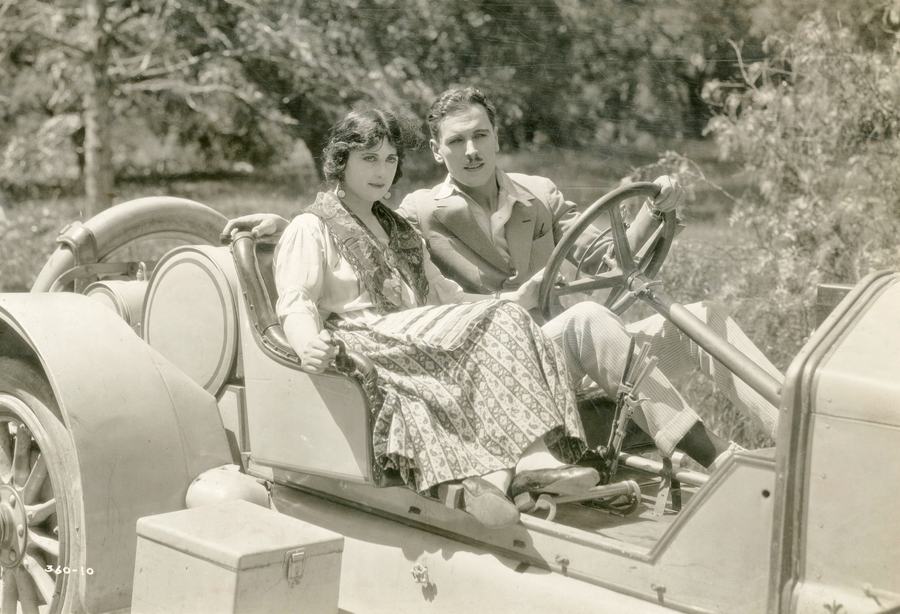
The narrative, masterfully crafted by Joseph F. Poland, is a tapestry woven with threads of romance, suspense, and dramatic irony. The revelation that David's mother was once engaged to Giovanni's brother is a stroke of genius, transforming a simple love triangle into a deeply entangled generational saga. This twist elevates the stakes considerably, intertwining personal vendetta with the fate of two families and adding layers of fated tragedy to Giovanni's actions. It also places Carmina in an unenviable position, caught between a man driven by a dark past and a society reluctant to accept her future. Her forced departure from the Remington estate, despite Mrs. Remington's nascent admiration, underscores the persistent power of social convention. It's a moment of poignant injustice, highlighting the arbitrary nature of class barriers and the slow grind of societal change. Yet, it is precisely in this moment of vulnerability that Carmina's true heroism shines. Her accidental discovery of Giovanni’s murderous plot against David’s parents is the pivotal turning point, shifting the narrative from a domestic drama to a high-stakes thriller. This plot device, while a staple of silent era melodrama, is executed with sufficient tension to keep audiences riveted. The film skillfully balances the intimate emotional beats with the grander, more perilous machinations, ensuring that the audience remains invested in both the personal journeys and the overarching suspense. The escalation of stakes, from social discomfort to literal life-or-death, is handled with a remarkable sense of urgency, a testament to the effective use of visual cues and intertitles to build a palpable sense of dread and anticipation.
The climax of 'The Tiger Lily' is a tour de force of silent film action and emotional catharsis. Carmina's courageous act of notifying the police, despite the personal risk, cements her status as a true heroine. The ensuing struggle, often characterized by exaggerated expressions and dynamic physical performances typical of the era, is more than just a fight scene; it's a symbolic battle between old world vengeance and new world justice, between prejudice and acceptance. Giovanni's eventual subdueing provides a necessary resolution to his destructive arc, allowing the film to pivot towards a more hopeful future. This kind of dramatic confrontation, where moral lines are sharply drawn and heroism shines through adversity, was a hallmark of the period, seen in films like The Trey o' Hearts which also utilized thrilling action to drive its narrative, or even the intense character confrontations in The Hidden Law. But what truly elevates the ending of 'The Tiger Lily' is the Remingtons' final acceptance of Carmina. It's not a reluctant concession, but a genuine embrace, forged in the crucible of shared danger and Carmina's undeniable bravery. This transformation of Mrs. Remington, from a bastion of snobbery to an advocate for true character, provides a satisfying emotional payoff. It implies a broader message: that genuine worth transcends superficial boundaries, and that compassion can ultimately overcome ingrained prejudice. The film concludes not just with a happy ending for the lovers, but with a powerful statement on the evolving social landscape of America, where merit, not birthright, increasingly defined an individual's place. The resolution feels earned, a testament to Carmina's unwavering integrity and the profound impact she has on those around her.
While specific directorial credits beyond the writer Joseph F. Poland are not always prominently highlighted in the surviving records of some silent films, the visual storytelling in 'The Tiger Lily' speaks volumes about the collective artistry involved. The cinematography, even when viewed through the lens of early film technology, effectively captures the contrasting worlds of Little Italy and the Remington estate. The bustling, intimate shots of the inn, often utilizing medium close-ups to emphasize facial expressions and communal warmth, stand in stark contrast to the more expansive, perhaps colder, compositions of the upper-class home, which might employ longer shots to underscore social distance and formality. The use of lighting, a critical tool in silent film to convey mood and emotion, would have been expertly employed to highlight Carmina’s innocence and strength against the shadows of Giovanni’s vengeful presence, creating chiaroscuro effects to emphasize dramatic tension. The pacing, a common challenge for modern viewers unaccustomed to silent film conventions, is remarkably well-managed, building tension gradually and delivering dramatic beats with precision. The intertitles, essential for conveying dialogue and crucial plot information, are integrated seamlessly, never feeling intrusive but rather guiding the viewer through the narrative with clarity and evocative language. The film's aesthetic choices, from costume design that subtly delineates class to set dressings that immerse the audience in the respective environments, all contribute to a rich and believable world. It’s a testament to the collaborative artistry of silent film production, where every element, from performance to visual composition, had to work in concert to tell a compelling story without the aid of spoken words. The silent era was a crucible for narrative innovation, and films like Die Heimkehr des Odysseus or Mania. Die Geschichte einer Zigarettenarbeiterin similarly showcased how visual storytelling could transcend linguistic barriers and create powerful, universally understood narratives. 'The Tiger Lily' stands proudly among them, a testament to the power of the moving image in its purest form, demonstrating a sophisticated understanding of cinematic grammar that predates the talkies.
Decades removed from its initial release, 'The Tiger Lily' retains a surprising amount of resonance. Its themes of social mobility, the clash of cultures, and the struggle for personal autonomy are as pertinent today as they were in the late 1920s. Carmina's journey from a spirited innkeeper's niece to an accepted member of high society, earned through courage and integrity rather than birthright, is a classic American narrative. It speaks to the enduring appeal of the underdog, the belief in individual merit, and the possibility of transcending one's origins. The film also serves as a valuable historical document, offering glimpses into immigrant life in early 20th-century New York and the rigid class structures that defined much of society. For film historians and enthusiasts, it provides an excellent example of the sophisticated storytelling and emotional depth achieved during the twilight years of the silent era, just before the advent of sound irrevocably transformed the industry. While often overshadowed by more widely known blockbusters of the period, films like 'The Tiger Lily' are crucial for understanding the full spectrum of cinematic output from that transformative time. It reminds us that compelling narratives, strong characters, and impactful social commentary were not inventions of the sound era, but were deeply embedded in the DNA of early cinema. Its ability to captivate, to provoke thought, and to evoke genuine emotion without a single spoken word is a powerful reminder of film’s universal language. It’s a film that deserves to be rediscovered, studied, and appreciated for its artistic merit and its enduring message. Much like Moral Suicide or Her Decision, it grapples with profound ethical questions and the choices individuals make under duress. The nuanced portrayal of Mrs. Remington's evolving perspective, for instance, offers a more complex view of human nature than simple villainy, emphasizing the potential for growth and understanding across social divides. This film, therefore, is not merely a relic but a living testament to the power of storytelling, demonstrating how foundational cinematic techniques could convey intricate human drama.
In conclusion, 'The Tiger Lily' is a wonderfully intricate silent drama that offers far more than a simple romantic entanglement. It’s a rich tapestry of cultural collision, personal growth, and societal critique, all anchored by a remarkable central performance. Margarita Fischer’s Carmina is a character who transcends the limitations of her era, embodying a fierce independence and moral clarity that is genuinely inspiring. The film’s ability to weave together a tale of vengeance, forbidden love, and social aspiration into a cohesive and thrilling narrative is a testament to the craftsmanship of its creators, particularly Joseph F. Poland’s astute writing. For anyone interested in the silent era, or simply in a compelling story well told, 'The Tiger Lily' is an absolute must-see. It serves as a poignant reminder that the most powerful stories often don't need words to convey their profound truths. Its themes of overcoming adversity, challenging societal norms, and finding acceptance through one's own merit continue to resonate, making it a truly timeless piece of cinematic art. It’s a bloom that, despite the passage of nearly a century, has lost none of its vibrant color or compelling fragrance. Seek it out; you won't be disappointed by this captivating journey into a bygone era, yet one whose echoes still sound clearly today, reminding us of the enduring power of human spirit against societal tides.
IMDb 6.3
1932
Community
Log in to comment.