DbcultAccessing Vault...
Cult Review
Senior Film Conservator
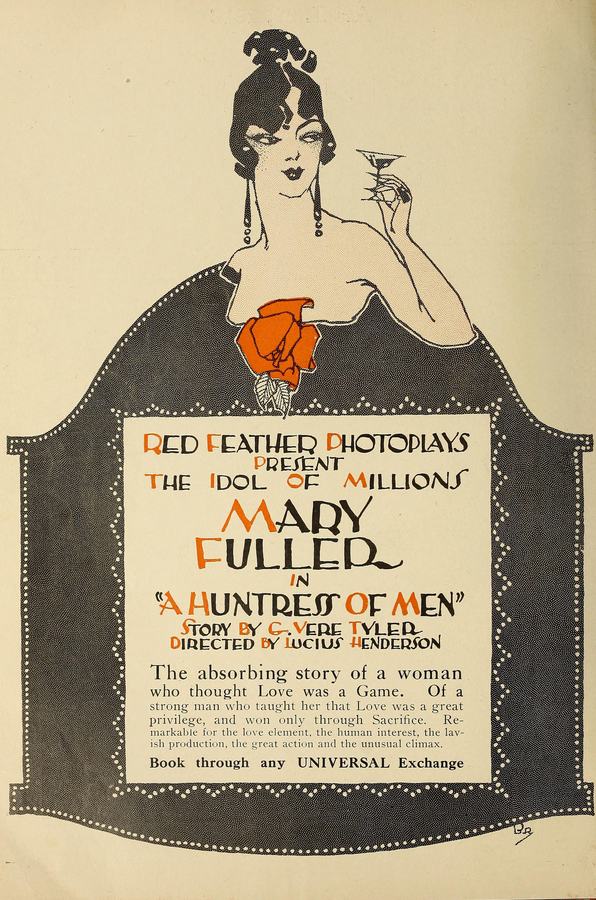
Step back into an era when the silver screen was still finding its voice, an age of grand gestures and melodramatic arcs, and you’ll encounter a film like The Huntress of Men. This 1916 silent feature, penned by Catherine Carr and G. Vere Tyler, is far more than a simple period piece; it’s a fascinating psychological study wrapped in a narrative of societal expectation versus individual desire. At its core, it’s a timeless exploration of love's complexities, the deceptive nature of superficiality, and the often-painful journey toward self-awareness. It asks us to ponder what truly constitutes happiness and whether genuine affection can ever truly tame a spirit accustomed to the spotlight’s blinding glare. The film, starring the compelling Mary Fuller, Sidney Bracey, and Joseph W. Girard, provides a vivid snapshot of early 20th-century social dynamics, while simultaneously touching upon universal human truths that resonate even today.
Mary Fuller, with her undeniable screen presence, embodies the titular ‘Huntress’ with a captivating blend of vivacity and vulnerability. Her character is not merely a woman seeking attention; she is a force of nature, a creature exquisitely attuned to the adulation of her male admirers, thriving on the effervescent energy of urban socialites and lavish parties. She is, in essence, a reflection of the burgeoning independence and changing roles for women in the early 20th century, albeit filtered through the lens of a society still grappling with these shifts. Her "wild attention craving ways" are not simply a flaw but a defining characteristic, an almost primal need for validation that the glittering city provides in spades. This portrayal offers a nuanced look at female desire, challenging the simplistic notions of what women 'should' want. Much like the protagonist in Chains of the Past, who might struggle with the weight of her history and societal expectations, The Huntress is similarly bound, though her chains are forged from her own insatiable appetites rather than external impositions.
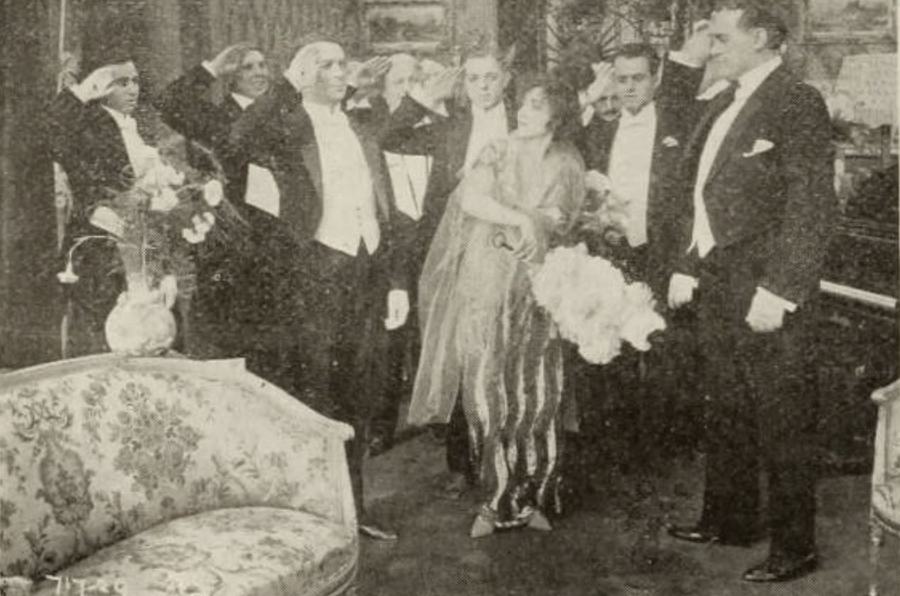
Fleming Harcourt, portrayed by Sidney Bracey, enters this dynamic as a man convinced of his own singular ability to domesticate this spirited enigma. His belief is not born of malice, but perhaps a misguided sense of romantic conquest, a desire to possess and reshape something wild into something 'his.' This patriarchal impulse, common in narratives of the era, sets the stage for inevitable conflict. He sees her allure, but misinterprets its source, believing it can be redirected or contained within the confines of a conventional marriage. It’s a classic tale of a man underestimating the depth of a woman’s intrinsic nature, a theme that echoes through countless literary and cinematic works. His decision to marry her and whisk her away to the desolate mining town is an act born of possessiveness rather than true understanding, a stark contrast to the freedom she craves.
The stark contrast between the vibrant city and the isolated mining town serves as a powerful metaphor in the film. The city, with its "lavish parties and plenty of adoring male admirers," represents the Huntress's natural habitat, a place where her particular brand of magnetism flourishes. It’s a world of fleeting pleasures and constant validation, a stage upon which she performs her life. The mining town, on the other hand, is the antithesis of all she knows and desires. It symbolizes domesticity stripped bare, a life devoid of the very elements that fuel her spirit. Its "boredom" is not merely a lack of entertainment, but a profound existential void for a woman whose identity is so deeply intertwined with external admiration. This geographical shift is not just a change of scenery; it's a forced confrontation with a version of herself she cannot recognize or tolerate. Her swift return to the city is not a betrayal, but an act of self-preservation, a desperate flight back to the environment where she feels most alive.
This narrative arc, where a character is transplanted into an alien environment and struggles to adapt, finds parallels in films like The Italian, where cultural and environmental shifts create profound personal challenges. The Huntress's inability to find contentment in the mining town highlights the film's subtle commentary on the limitations of forced assimilation and the importance of self-identity. It suggests that true happiness cannot be imposed but must arise from an authentic alignment with one's own nature. The initial failure of Fleming’s grand experiment underscores the futility of attempting to control or redefine another person's essence.
Fleming’s subsequent strategy – to make his wife jealous by flirting with other women – is a desperate, risky maneuver, yet it proves to be the unexpected catalyst for the Huntress's profound transformation. This isn't just about tit-for-tat; it's about piercing through the layers of her self-absorption. The rumors of his affairs, rather than merely inciting anger, trigger a deeper, more resonant emotional response. It’s a moment of stark realization, a sudden and brutal confrontation with the potential loss of something she had taken for granted. For a character so defined by being desired, the thought of *her* desire being unreciprocated, or worse, transferred to another, is a shock to her very core. This emotional jolt forces her to look inward, beyond the superficial thrill of external validation, and to recognize the quiet, steadfast affection that Fleming represents.
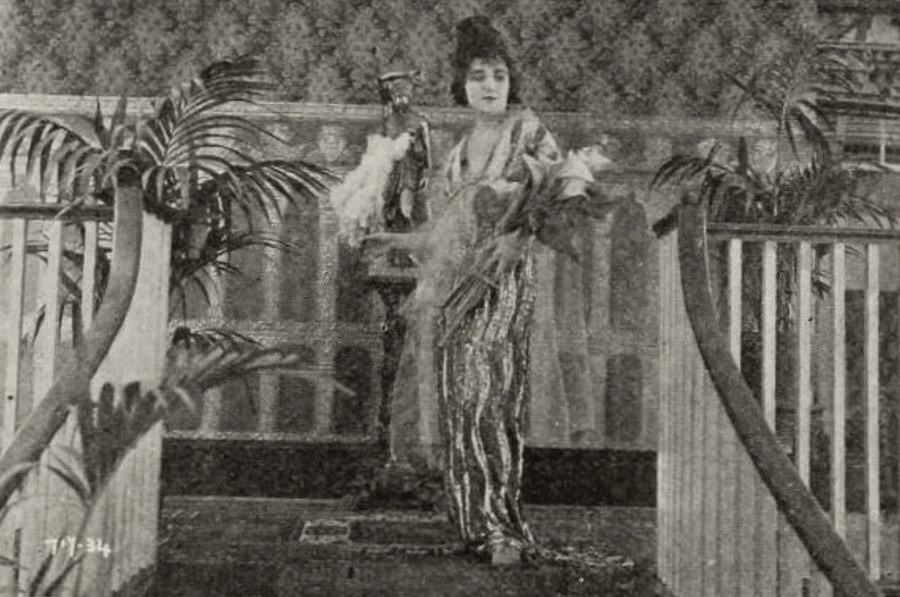
The film cleverly uses jealousy not as a destructive force, but as an unlikely instrument of enlightenment. It's a common trope, certainly, but in the context of the Huntress's character, it feels earned. Her journey from a creature of impulse and external validation to a woman capable of genuine, introspective love is the film's most compelling arc. It aligns, in a way, with the narrative of The Prodigal Son, where a journey away from what is known, through hardship or misguided pursuits, ultimately leads to a return and a deeper appreciation for what was left behind. Her realization that Fleming is her "one true love" isn't a sudden, unearned shift, but the culmination of her experiences – the emptiness of superficial adoration, the stark contrast of the mining town, and finally, the sting of potential loss. Joseph W. Girard, though perhaps in a supporting role, likely contributes to this dramatic tension, playing a part in the societal tapestry that either enables the Huntress's initial lifestyle or fuels the rumors that eventually bring her back to earth.
Mary Fuller's performance, even without dialogue, must have been a masterclass in physical acting and emotional expression. Her ability to convey both the Huntress's initial flightiness and her eventual emotional maturity speaks volumes about her skill. Sidney Bracey, as Fleming, must walk a fine line between a controlling husband and a genuinely loving man, his actions driven by a profound, if misguided, desire to secure his wife's affection. The chemistry, or lack thereof, between them in the early scenes, and its blossoming into genuine connection by the end, would have been crucial to the film's success. The narrative crafted by Catherine Carr and G. Vere Tyler is remarkably sophisticated for its time, delving into the nuances of human relationships with an insightful eye. They don't simply present a moralistic tale; they explore the psychological landscape of characters grappling with their own desires and societal pressures, much like the complex emotional currents found in Her Great Price, which similarly interrogates a woman's choices and their profound consequences.
The film, though a product of the silent era, speaks volumes through its visual storytelling. The opulent costumes and bustling cityscapes would contrast sharply with the stark, perhaps dusty, depictions of the mining town. These visual cues are not mere backdrops; they are active participants in the narrative, underscoring the characters' internal states and the thematic conflicts. The use of close-ups, common in this period, would have been vital in conveying the Huntress's shifting emotions – from boredom to defiance, from jealousy to dawning affection. The cinematography, even if rudimentary by today's standards, would have been carefully composed to highlight these emotional beats, guiding the audience through the characters' inner turmoil. One can imagine the subtle shifts in Fuller’s posture, the expressions in Bracey’s eyes, all contributing to a rich, non-verbal dialogue that transcends the lack of spoken words.
Ultimately, The Huntress of Men offers a compelling narrative about the circuitous journey to genuine love and self-realization. It challenges the notion that love is simply about attraction or possession, suggesting instead that it often requires growth, understanding, and a willingness to confront uncomfortable truths about oneself. The Huntress's transformation is not a surrender but a maturation, a recognition of value beyond the fleeting thrill of external validation. Her eventual reunion with Fleming is portrayed not as a defeat, but as a victory – a triumph of authentic connection over superficiality. This theme resonates with other films of the era that explored similar journeys of self-discovery and the true nature of happiness, perhaps even touching on the allure of material wealth versus deeper connections, as explored in One Million Dollars. The film's message, that true love often requires a catalyst, even a painful one, to reveal itself, remains as pertinent today as it was over a century ago.
The enduring appeal of stories like this lies in their capacity to reflect our own struggles with identity, desire, and the search for meaningful connection. The Huntress of Men, despite its age, speaks to the perennial human quest for belonging and the often-unforeseen paths we take to find it. It's a reminder that sometimes, the greatest lessons are learned not in the comfort of adoration, but in the crucible of jealousy and the quiet introspection it can provoke. This silent gem, a testament to the power of early cinema, invites us to consider the intricate dance between freedom and commitment, and the profound wisdom found in recognizing one's own heart. Its narrative, while rooted in a specific historical context, transcends time by exploring the universal complexities of the human condition, making it a valuable piece of cinematic history that continues to provoke thought and emotion.
IMDb —
1933
Community
Log in to comment.