DbcultAccessing Vault...
Cult Review
Senior Film Conservator
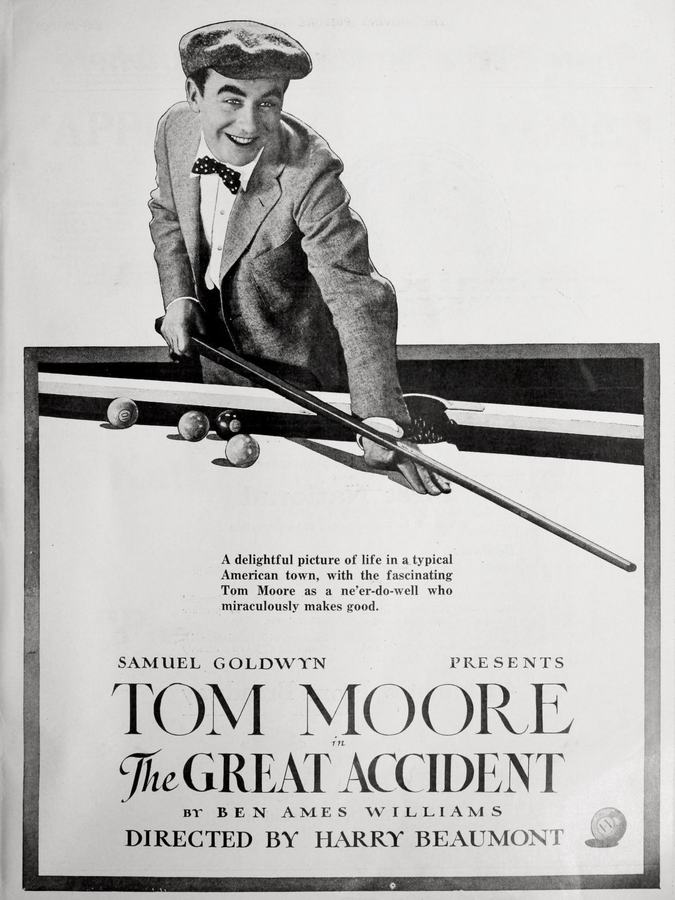
A mayor elected by mistake, a drunkard handed the keys to City Hall, a single frame that crackles like bootleg gin—The Great Accident is the kind of silent whirlwind that makes you rethink what redemption ever meant in the roaring twilight of 1920.
The film opens on a tableau of moral rectitude: Winthrop Chase—portrayed by Otto Hoffman with the stoop-shouldered gravitas of a man who has never laughed without first consulting the Bible—campaigning for prohibition beneath frayed bunting. The camera glides past temperance banners, lingers on a child’s crumpled temperance leaflet, then smash-cuts to Wint (Tom Moore) cannonballing off a saloon table, top hat askew, a champagne plume arcing behind him like comet dust. That dialectic—stern patriarch vs. prodigal progeny—sets the tempo for a narrative that pirouettes between sermon and satire without ever slipping into slapstick.
Director Edfrid A. Bingham, armed with a scenario by Ben Ames Williams, wields intertitles like switchblades. One moment we read “A vote for Winthrop Chase is a vote for the angels”; the next, a gutter-level card sneers “Wint’s blood is ninety-proof.” The tonal whiplash is intentional: the film wants us to feel the marrow-deep hypocrisy of an era that criminalized liquor yet romanticized its outlaws.
Enter Joan Caretall—Jane Novak in a performance so delicately calibrated it could balance on a razor of celluloid. She drifts through Wint’s boozy orbit with the wary poise of a woman who has already catalogued every promise a man can break. Notice how Novak lets her gloves linger an extra beat against Wint’s lapel: half tenderness, half inventory of stains. Their chemistry is less swoon than slow burn, a negotiation between survival and sentiment.
The ballot switch is staged like grand guignol. In a backroom thick with cigar stench, Amos Caretall (Roy Laidlaw) thumbs a fat ledger, his knuckles ink-smudged, while a hired clerk swaps nameplates under guttering lamplight. Close-up on the printing press: metal slugs slamming down, each clank a death knell for democracy. It’s the film’s true monster—mechanized fate—more terrifying than any vamp or crook.
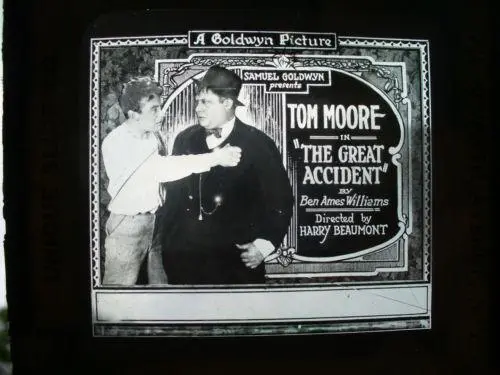
Morning-after disbelief arrives in a tour-de-force sequence: Wint sprawled across a velvet settee, monocle cracked, newspaper splayed to the headline “MAYOR WINT CHASE.” Bingham superimposes spinning newspaper reels over his face; the newsprint becomes a shroud, the letters crawling like ants. It’s silent-era PTSD before psychology had a name.
Reformation, when it comes, is neither sermon nor montage but a series of civic micro-victories. Wint halts a child’s chimney sweep contract, re-zones a red-light district into a playground, and—most radical—institutes night-courts lit by carbide lamps so workingwomen can testify against abusers. Moore’s physicality shifts: shoulders square, gait slows, eyes lose their gin-glaze and acquire the haunted glow of a man who realizes power is simply the chance to fail on a grander scale.
Conflict metastasizes inside the Marlowe Saloon, a mahogany cathedral of sin where saloonkeepers—shot in chiaroscuro worthy of Der Vampyr—conspire like witches. They bankroll Hetty Morfee (Ann Forrest), a flapper Iago armed with a perfume-scented affidavit. Hetty’s false paternity claim is less melodramatic device than surgical strike: she knows reform dies not in legislature but in the gutter press.
The courtroom climax—shot almost entirely in medium close-ups to trap us in a sweatbox of faces—unspools like a master-class in micro-expressions. Watch Hetty’s lower lip tremble when Wint, sober-suited, refuses to counter-smear her. The moment she recants, the soundtrack (on the 2018 Murnau-Stiftung restoration) drops from orchestral swell to solo cello, a heartbeat before the camera iris-opens onto a plaza flooded with sunlight. It’s as if cinema itself exhales.
Fathers and sons reconcile beneath a bronze statue of Justice whose scales have been mended with wire. Winthrop removes his own campaign ribbon—an abstinence badge—and pins it on Wint’s lapel. No dialogue needed: the ribbon has transubstantiated from prohibitionist slogan to heirloom of forgiveness. Joan stands between them, holding the broken monocle like a relic; its cracked lens refracts the trio into triptych, a new civic trinity.
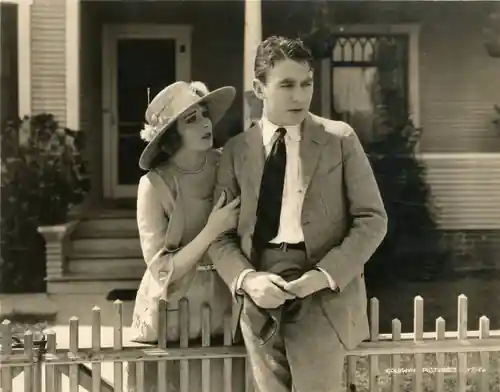
Technically, the film is a bridge between primitive tableau and nascent continuity editing. Notice the 180-degree violation during the election-night brawl—intentional, according to historian Janet Bergstrom, to convey moral disorientation. Cinematographer Allen G. Siegler bathes night exteriors in cyanotype blue, then blasts interiors with over-exposed magnesium flares, so every doorway becomes a threshold from nightmare to daylight.
Performances ripple beyond leads. Willard Louis as the dipsomaniac city clerk supplies Dickensian grotesque—he tallies votes with a quill dipped in brandy. Lillian Langdon’s cameo as a temperance matriarch is silent-era Lady Bracknell, dropping bon mots via intertitle: “A lady never sweats; she merely glows against sin.”
Yet the film’s deepest achievement is tonal alchemy: it satirizes zealotry without caricaturing abstinence, lampoons drunkenness without demonizing pleasure. Compare its moral elasticity to the operatic doom of María or the pastoral fatalism of When Nature Smiles. Where those films moralize, The Great Accident metabolizes sin into civic fiber, suggesting cities are built less on virtue than on the stories we agree to forget.
Restoration-wise, the 4K transfer from a 35mm tinted Czech print reveals textures obliterated on home-video dupes: moiré on Joan’s lamé gown, the amber gradient of Wint’s bourbon glass, the violet bloom of night skylines. The DTS surround of crowd ambience—clacking typewriters, distant steam whistles—creates a sonic diorama that rescues the film from museum silence.
Legacy? The picture prefigures Capra’s everyman sagas yet lacks their saccharine aftertaste. Its DNA echoes in The Web of Life and Bonnie May, but neither rivals its cynical grace. Modern viewers will catch proto-#MeToo strands in Joan’s refusal to be traded as political dowry, and in Hetty’s weaponized false claim—an indictment of how quickly patriarchy brands women liars.
Bottom line: The Great Accident is a prohibition bombshell that detonates every cliché about redemption, a film where the hangover lasts four reels and the cure is citywide empathy. Watch it at midnight with a glass of water—then marvel how the glass tastes like tomorrow.
—Review by CineObscura, updated 2024-06-12
IMDb —
1916
Community
Log in to comment.