DbcultAccessing Vault...
Cult Review
Senior Film Conservator
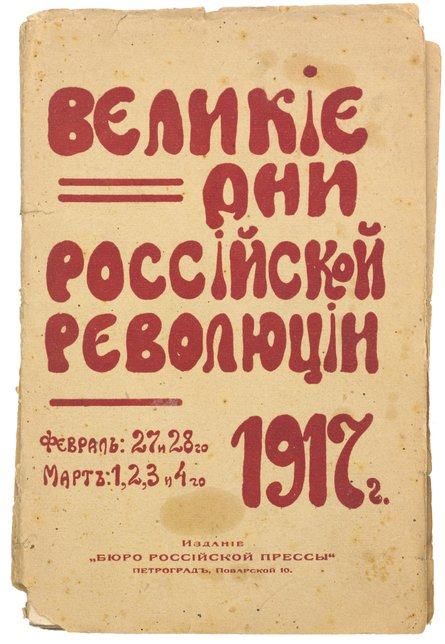
The year 1917 stands as a jagged fault line in the geography of human history, and nowhere is this rupture more palpable than in the flickering frames of Velikiye dni Rossiiskoi revolutsii s 28/II po 4/III 1917 goda. This is not merely cinema; it is an excavation of a moment where the future was being forged in the heat of street-level insurrection. While Western audiences in 1917 were consuming the moral fables of The Ninety and Nine or the domestic dramas of The Arrival of Perpetua, the Russian camera was being thrust into a crucible of genuine social annihilation.
Directors M. Bonch-Tomashevsky and Vyacheslav Viskovsky, figures typically associated with the more structured confines of early Russian studio drama, here find themselves transformed by their subject matter. They are no longer orchestrating performances; they are curating chaos. The visual language employed in this chronicle of the February Revolution possesses a raw, unvarnished quality that makes contemporary fictional efforts like La falena look hopelessly quaint. There is an absence of the 'star' system here; the protagonist is the crowd—a hydra-headed entity moving with a singular, terrifying purpose through the snowy arteries of Petrograd.
The film captures the dismantling of the old world with a literalism that is breathtaking. We see the removal of the double-headed eagle, the burning of police records, and the jubilant yet weary faces of soldiers who have turned their bayonets away from the people. In contrast to the stylized shadows of The Secret Game, which utilized lighting to suggest intrigue, the light in this documentary is flat, cold, and unforgiving, reflecting the harsh reality of a northern winter and the stark clarity of political change.
One cannot discuss this work without acknowledging the sheer bravery of the cinematographers. To stand with a hand-cranked camera amidst a revolution is an act of both madness and profound artistic commitment. The footage possesses a jittery, nervous energy. Unlike the calculated pacing of The Only Son, the rhythm of this film is dictated by the pulse of the mob. It is a syncopated, irregular beat that echoes the uncertainty of those five days between February 28 and March 4. Every frame feels like a gamble against oblivion.
When placed alongside other 1917 releases, the unique position of this film becomes even more pronounced. Consider Mothers of Men, a film that grappled with the burgeoning suffrage movement through a fictionalized, albeit progressive, lens. While that film argued for social change through narrative empathy, Velikiye dni Rossiiskoi revolutsii presents change as an unstoppable physical force. It eschews the sentimentality found in The Heart of the Blue Ridge or the melodramatic ethics of Conscience. Here, conscience is not an individual's internal struggle, but a collective awakening that manifests in the occupation of the Tauride Palace.
Even the more avant-garde or 'exotic' leanings of the era, such as Alien Souls, feel distant and artificial when compared to the grit of the Russian street. There is a sequence in the film—a wide shot of the Nevsky Prospekt—where the sheer scale of the gathering renders the individual invisible. This anticipates the 'mass hero' concept that Eisenstein and Pudovkin would later formalize, but here it is captured in its embryonic, unrefined state. It is the difference between a meticulously planned symphony and the first, discordant roar of a crowd.
Viskovsky’s involvement is particularly intriguing. Having directed several psychological dramas, his transition to this documentary format suggests a filmmaker overwhelmed by the zeitgeist. He seems to realize that the theatricality of The Rival Actresses has no place in a world where the very foundations of society are being re-scripted. The 'acting' in this film is done by history itself. The way the camera lingers on the faces of the freed political prisoners is a masterclass in observational portraiture. These are not the polished visages of At First Sight; these are faces etched with years of Siberian exile and sudden, disorienting liberation.
The film’s structure, though ostensibly chronological, often feels circular, reflecting the dizzying nature of those days. We return repeatedly to the gates of the Duma, the threshold between the old law and the new chaos. It is a liminal space, much like the monasteries in La loca del monasterio, but instead of spiritual refuge, this threshold offers only the terrifying responsibility of self-governance. The film captures the exact moment when the 'reina' (the queen) of the old order—represented by the imperial symbols—is replaced by the 'reina' of the new—the spirit of the revolution, a concept far more abstract and demanding than the monarchical simplicity found in La reina joven.
Technically, the film is a fascinating relic of early 20th-century Russian cinematography. The grain is heavy, the contrast is often extreme, and the frame is frequently invaded by the very people it seeks to document. This lack of 'cleanliness' is its greatest strength. While German cinema was beginning to experiment with the controlled mysteries of the detective genre, as seen in Wer ist der Täter?, the Russian filmmakers were embracing a lack of control. They were not looking for a culprit; they were witnessing a rebirth. The flickering quality of the projection acts as a metaphor for the precariousness of the Provisional Government itself—a strobe light illuminating a room that might disappear when the light goes out.
The intertitles deserve special mention. They are not merely expository; they are celebratory, yet tinged with an almost religious awe. They speak of 'Great Days' and 'Freedom,' using a vocabulary that was being redefined in real-time. This isn't the didactic morality of The Narrow Path; it is the ecstatic shouting of a prisoner who has just realized the door is unlocked. The film captures that fleeting, utopian window before the complexities of civil war and the eventual hardening of Soviet dogma began to set in.
To watch Velikiye dni Rossiiskoi revolutsii today is to engage with a ghost. It is a record of a beginning that contains the seeds of many endings. It lacks the polish of contemporary Hollywood or the stylistic rigor of later Soviet montage, but it possesses an authenticity that is rare in the history of the medium. It reminds us that cinema's most potent power is its ability to bear witness. While other films of 1917 were content to tell stories, this film was content to show us the world changing its skin. It remains an essential, haunting experience for anyone seeking to understand the intersection of the camera and the collective soul.
Community
Log in to comment.