DbcultAccessing Vault...
Cult Review
Senior Film Conservator
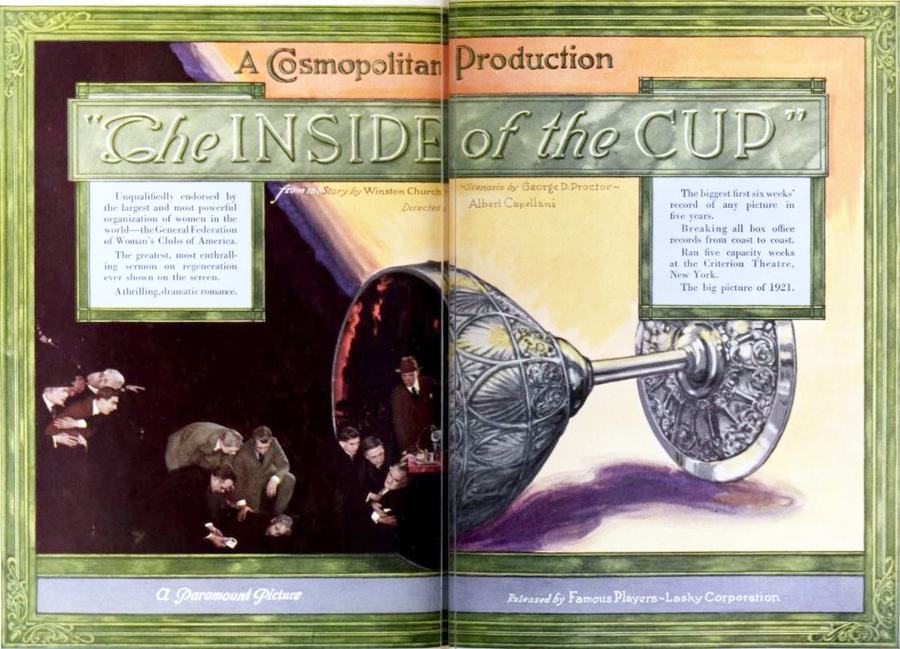
The Inside of the Cup, a film adapted from Winston Churchill's novel of the same name, is a searing indictment of the social ills that plagued the early 20th century. Directed by Albert Capellani, this silent masterpiece weaves a complex narrative that delves into the intricacies of human nature, revealing the deep-seated flaws that often lie hidden beneath the veneer of respectability. Through the character of John Hodder, the film's protagonist, we are introduced to a world where the haves and have-nots coexist in an uneasy symbiosis, each inhabiting their own distinct realm, yet inextricably linked by the threads of fate.
As Rector of St. John's, a fashionable church situated near a slum neighborhood, Hodder is acutely aware of the stark contrasts that define his community. He is determined to bridge the gap between the affluent and the impoverished, to bring about a sense of unity and understanding that transcends the boundaries of social class. However, his efforts are soon thwarted by the cunning Eldon Parr, a wealthy and influential member of the parish, who embodies the very essence of corruption and hypocrisy. Parr's Machiavellian schemes have far-reaching consequences, driving his children, Alison and Preston, away from home and into a life of uncertainty, while also destroying the lives of those around him, including the unfortunate Garvin, a man ruined by Parr's financial manipulations.
The film's narrative is a complex tapestry, woven from the threads of multiple storylines, each intersecting and overlapping in unexpected ways. As the story unfolds, we are introduced to a cast of characters, each with their own unique struggles and conflicts. There is Kate Marcy, the salesgirl who captures Preston's heart, only to be rejected by Parr due to her humble origins. We also meet Garvin, a man driven to desperation by Parr's ruthless financial dealings, who ultimately seeks revenge in a dramatic and devastating confrontation. Through these characters, the film sheds light on the darker aspects of human nature, revealing the capacity for cruelty, greed, and exploitation that often lies just beneath the surface of polite society.
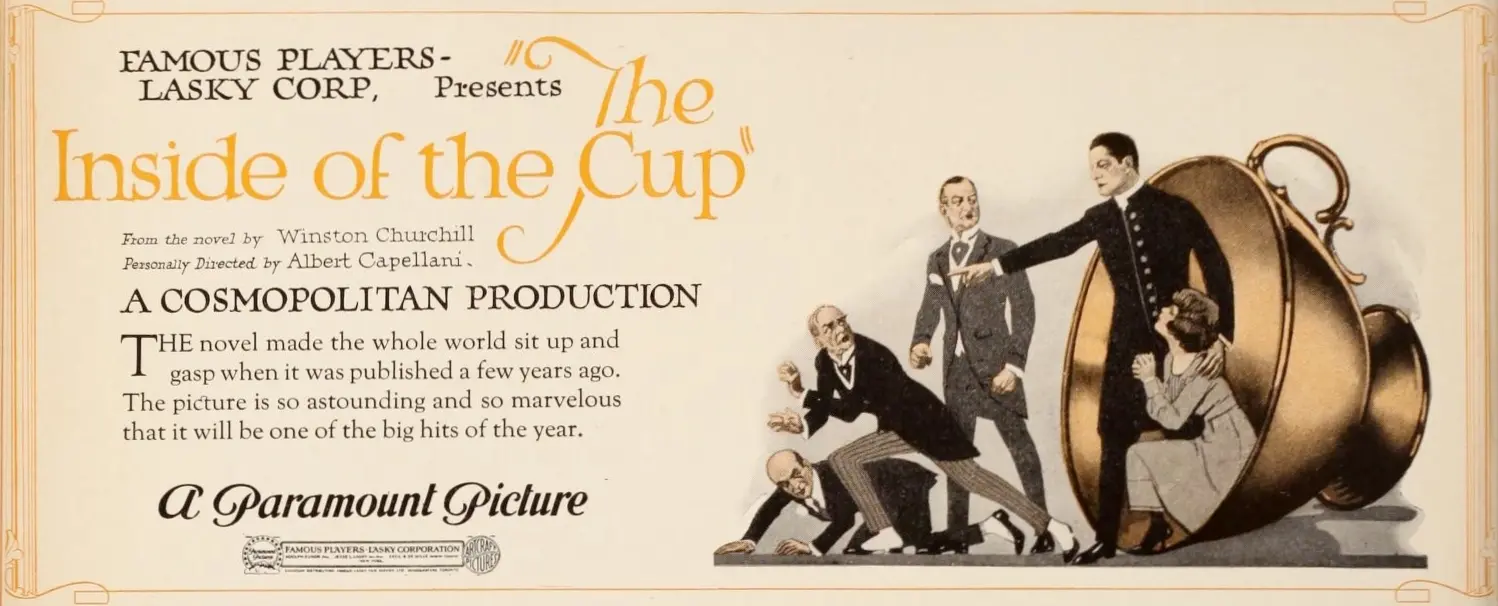
One of the most striking aspects of The Inside of the Cup is its use of visual motifs to convey the themes of the film. The contrast between light and darkness is a recurring visual motif, symbolizing the struggle between good and evil, as well as the dichotomy between the haves and have-nots. The film's use of dark orange hues, reminiscent of a setting sun, serves to underscore the sense of decay and moral rot that pervades the community, while the yellow tones that illuminate the church and its surroundings symbolize the hope and redemption that Hodder's ministry embodies. The sea blue hues that dominate the film's palette, meanwhile, evoke a sense of melancholy and introspection, drawing the viewer into the inner world of the characters and inviting them to reflect on the complexities of the human experience.
In comparison to other films of the era, The Inside of the Cup stands out for its unflinching critique of social hypocrisy and its commitment to exploring the complexities of human nature. While films like The Captive God and Two Men of Sandy Bar focus on more straightforward narratives, The Inside of the Cup delves deeper into the human condition, revealing the flaws and contradictions that make us human. Similarly, while films like Wolves of the Street and A Nine O'Clock Town offer more lighthearted, comedic fare, The Inside of the Cup presents a sobering portrait of a society in crisis, one that is both thought-provoking and deeply unsettling.
Ultimately, The Inside of the Cup is a film that defies easy categorization, a work of cinematic art that rewards close attention and reflection. As a social commentary, it offers a searing indictment of the social ills that plagued the early 20th century, while as a character study, it presents a nuanced and multifaceted portrait of human nature, one that is both deeply flawed and profoundly redeeming. Whether viewed as a historical artifact, a work of cinematic art, or a commentary on the human condition, The Inside of the Cup is a film that will continue to resonate with audiences, a powerful and thought-provoking masterpiece that invites us to reflect on the complexities and contradictions of our own world.

IMDb 6
1922
Community
Log in to comment.