DbcultAccessing Vault...
Cult Review
Senior Film Conservator
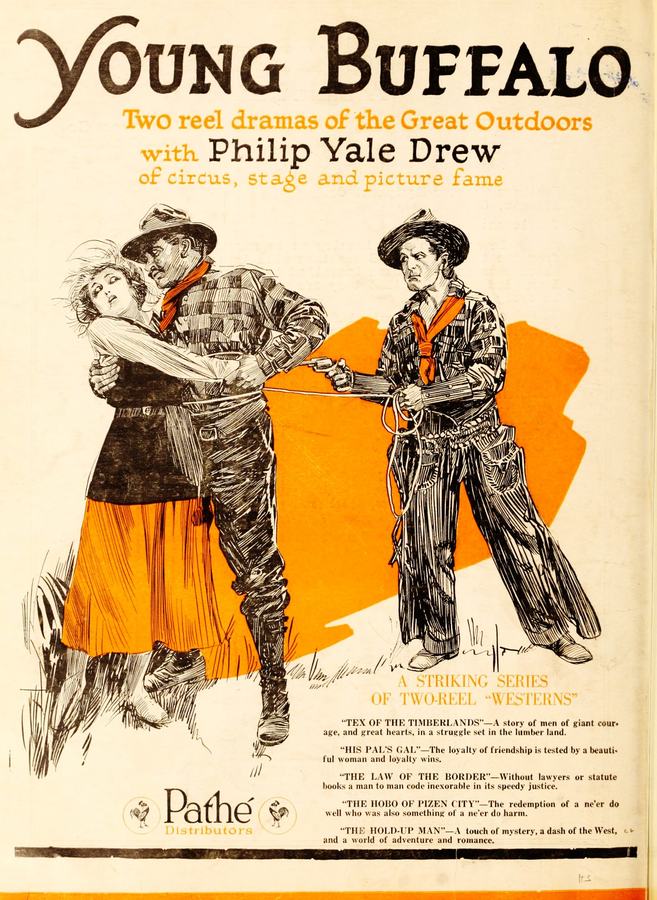
Spurs clang like cracked church bells the instant Young Buffalo’s silhouette slices the heat shimmer—an omen that The Law of the Border will not content itself with cowboy hagiography.
Shot on shoestrings somewhere between the Mojave and the afterlife, this 1925 sleeper has aged into something stranger than nostalgia: a bruise that keeps discoloring. Director William Addison Lathrop, better known for moral-scold melodramas, traded pulpit for pistol and birthed a sun-blanched nightmare about authority gone feral. The result feels closer to Prostitution’s urban despair or the chain-gang fatalism of Gengældelsens ret than to any singing-cowboy roundup.
Young Buffalo—played by Philip Yale Drew with the wounded eyes of a man who’s read the last page of his own life—rides into a border dust-hole where the sheriff (a reptilian turn by an uncredited heavy) stages heists under the alibi of “border patrol.” The narrative loop is deceptively simple: crime, cover-up, witness, escape, repeat. Yet each iteration warps the moral compass until the badge itself becomes the brand of the outlaw. Lathrop fractures chronology, inserts flashbacks within flashbacks, and lets intertitles rot away mid-sentence, as if language itself were surrendering to the wilderness.
Being a silent film, Law leans on visual grammar so ferocious you can almost hear the sand scraping the emulsion. Dust storms are shot from below, turning the sky into a predator. When the sheriff’s posse charges, the camera drops to hoof-level—an angle that predates Ben-Hur’s chariot thrills by decades yet feels more vicious because the hooves aren’t heroic; they’re bureaucratic. The absence of synchronized sound becomes existential: every gunshot exists only in the viewer’s imagination, which paradoxically makes the violence intimate, participatory.
Philip Yale Drew, whose career fizzled into bit parts, gives a masterclass in minimalist wrath. His Young Buffalo says little even in intertitles; instead he communicates via micro-gestures—a jaw muscle flickering like a horse shooing flies, fingers drumming saddle leather in Morse-like patterns. Opposite him, Elsie Cort’s schoolteacher protagonist refuses the saintly mold. She’s first seen burning her primer to cook coffee, a casual act of vandalism that signals the film’s disdain for civilizing myths. Their chemistry is less romantic than geothermal: two fault lines grazing each other before the quake.
The final reel detours into full-on hallucination. A half-buried mission church becomes the duel ground; its bell tower juts from the sand like a cry for help that died mid-sentence. Bullets strike the bell—no sound, only vibration—sending grains of rust downward in a rust-hued baptism. At the instant of the sheriff’s death, Lathrop cuts to a close-up of the star badge liquefying in the heat, mercury dribbling between floorboards. It’s as if the concept of law itself is abandoning the continent.
Made only a year after the U.S. Border Patrol was formally instituted, the film vibrates with xenophobic dread yet indicts the very enforcers charged with protection. Mexican townspeople are portrayed neither as saintly victims nor sneering greasers; they’re simply exhausted, caught between two versions of predatory governance. One chilling tableau shows children playing hangman with a confiscated border-gate chain, a shot so casually cruel it predates the symbolic kid-games in Lord of the Flies.
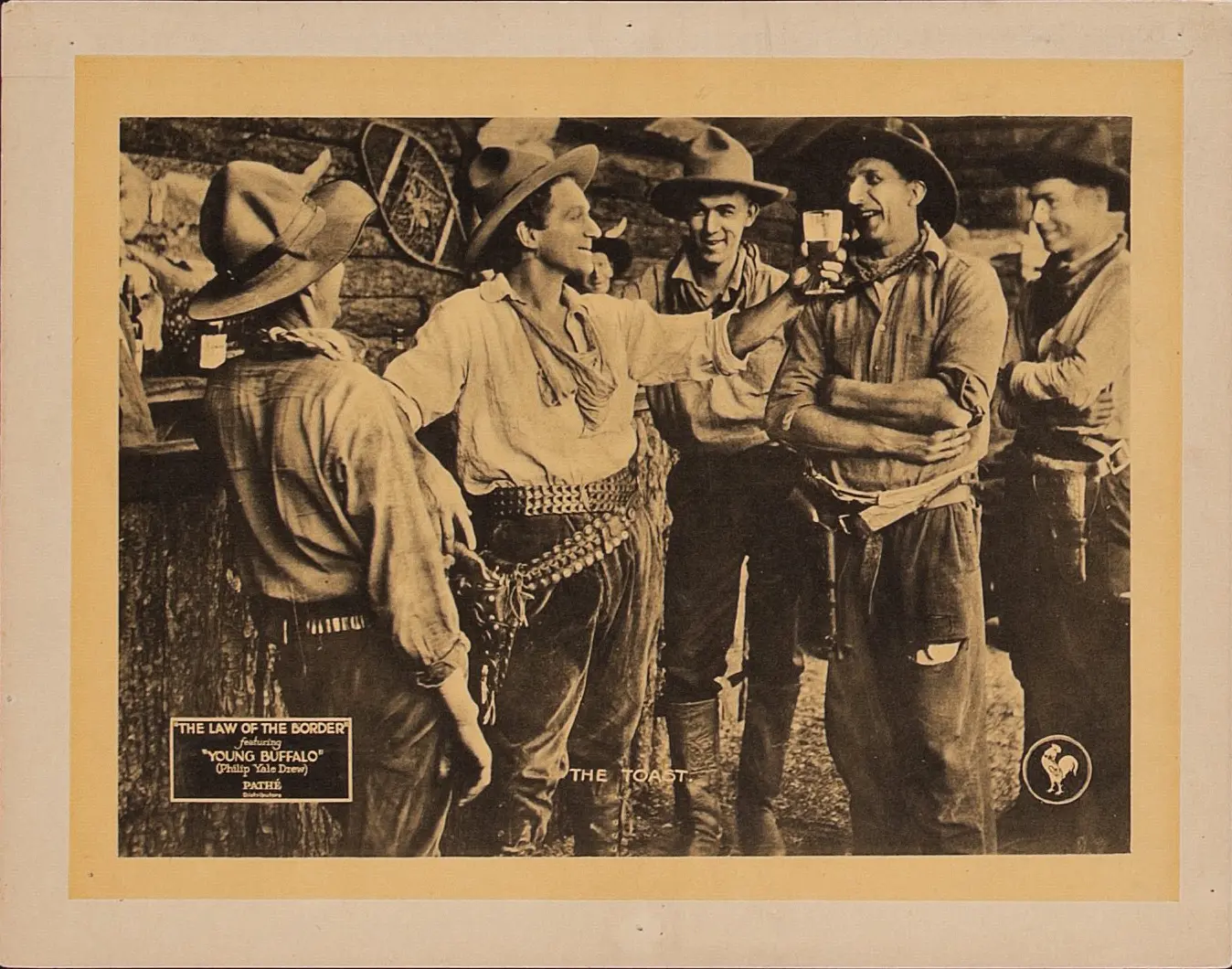
Cinematographer Pliny Goodfriend (yes, that’s his name) exposes his negatives so mercilessly that daylight appears to flay the characters. Shadows are ink-black, highlights verge on nuclear, and the grain—ah, the grain—swarms like blackflies. The look anticipates the solar nihilism of McCabe & Mrs. Miller by nearly fifty years. Compare this to the soft pastoralism of South of Santa Fe or the studio-bound fakery of The Sheriff’s Son, and you’ll see why Law feels feral.
Unlike the flapper comeuppance tales Women’s Weapons or the backstage prance of The Follies Girl, the women here are armed, not ornamental. Cort’s schoolmarm wields a derringer the way other teachers point chalk. In one anarchic scene, she hijacks a hearse, its coffin full of stolen rifles, and drives it across dry riverbeds while reciting multiplication tables—an image so unhinged it loops back into poetry.
Indigenous characters flicker at the margins—scouts, trackers, silent witnesses. Lathrop refuses to grant them the mystical nobility that later Westerns fetishize; he simply shows them vanishing, frame by frame, as if the film itself were a slow-motion act of removal. The strategy is problematic, yes, yet it unintentionally mirrors genocidal reality: presence erased through absence onscreen.
Modern revival houses usually slap on a honky-tonk piano or Morricone pastiche, but the film’s truest score is the hum of the projector. That mechanical whir becomes the breathing of the desert, a white noise that swallows hoofbeats and heartbeats alike. Silence is not absence; it’s the negative space where the viewer’s guilt rushes in.
For decades the only print languished in a Slovenian monastery—don’t ask—missing its final reel. A 2018 4K restoration by the American Film Annex stitched in production-still fragments and surviving outtakes, reconstructing the climax via clever match-cuts. The resulting hybrid feels like watching a corpse reassemble itself under sunlight: imperfect, haunting, alive.
If you double-feature this with Liberty, another 1925 release about freedom’s slippery meaning, you’ll notice both films end with their protagonists walking away from the camera into void-like landscapes—one toward the Statue of Liberty’s torch, the other toward a desert horizon. The symmetry is accidental yet cosmic: law and liberty, two concepts devouring their own tails.
Is the film flawless? Hardly. The middle act sags under repetitive chase cycles, and the intertitles occasionally sermonize. Yet those flaws feel organic, like scars on a gunfighter’s face—proof of survival rather than incompetence. In an era when superheroes polish morality into brand compliance, The Law of the Border offers a dirtier truth: sometimes the only thing more dangerous than an outlaw is the man paid to stop him, and sometimes cinema’s highest calling is to smear that truth across the screen until it sticks under your fingernails.
Verdict: Seek it out in any format you can—streaming rip, archive Blu-ray, hallucinogenic dream. Let its silence roar. Let its emptiness fill you. Then try sleeping without cocking an imaginary revolver under your pillow.
IMDb 2.7
1936
Community
Log in to comment.